


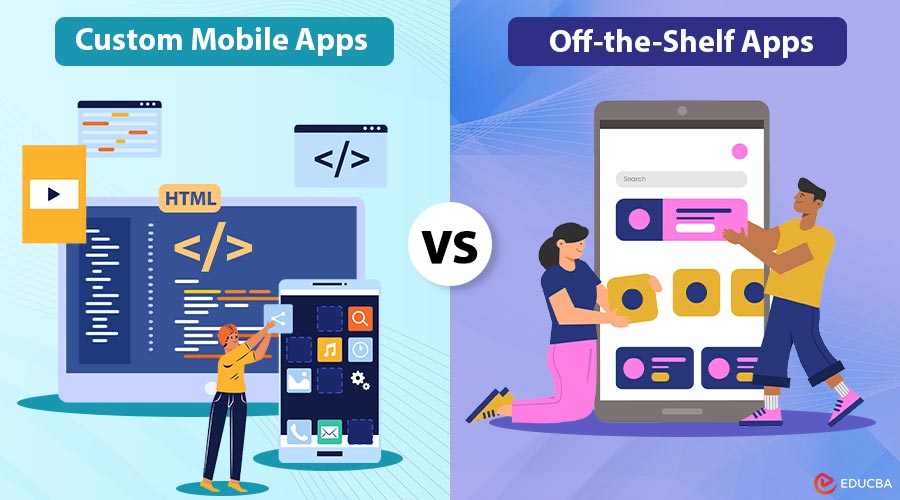
Custom Mobile Apps vs Off-the-Shelf Apps: Which is Right for Your Business?
Mobile applications have become a necessary catalyst for businesses to accelerate growth. Business owners get excited when they begin the process of transforming their idea into a future-proof application. However, a similar question every business owner faces is whether to invest in custom mobile apps or opt for off-the-shelf solutions. The decision is not always straightforward. Both of these approaches have their own advantages that are important to understand before making a final decision. The final decision depends on factors like business size, budget, long-term goals, and operational complexity. This blog examines the main differences between custom mobile apps vs off-the-shelf apps, enabling you to make an informed decision.
Understanding Custom Mobile Apps and Off-the-Shelf Apps
1. Custom Mobile Apps
Custom mobile apps are specifically developed from the ground up to address the unique needs and goals of a business. These applications integrate seamlessly into existing workflows, delivering flexibility, efficiency, and a personalized user experience. Companies in highly regulated or specialized industries often prefer custom apps because they allow for precise control over features, design, and security.
2. Off-the-Shelf Apps
Off-the-shelf apps are pre-built solutions designed for a wide range of users and businesses. They address common operational needs, such as project management, scheduling, communication, or inventory tracking. Off-the-shelf apps are typically faster to deploy and more affordable upfront, making them ideal for startups and small businesses with straightforward requirements.
Detailed Comparison Between Custom Mobile Apps vs Off-the-Shelf Apps
When businesses weigh custom mobile apps vs off-the-shelf apps, the right decision often comes down to five critical factors. Each factor impacts ROI, scalability, and long-term success.
1. Budget
Budget is a crucial factor while choosing the best approach.
- Off-the-Shelf Apps: Great option for small businesses or startups since they cost very little to get started. You just pay a subscription or license fee. The drawback is that while setup costs are low, ongoing costs can add up. A monthly or yearly fee, plus additional fees for advanced features or more users, quickly adds up.
- Custom Mobile Apps: Developing a custom application requires a greater initial investment because it is created from scratch. But it is an investment. Rather than incurring ongoing license fees, you own the product, and it is often more economical over a 3–5 year period. A custom app development company can also help you maximize features within your budget.
2. Business Complexity
The complexity of your business operations is another significant consideration.
- Off-the-Shelf Apps: Ideal for businesses with straightforward requirements, such as scheduling, basic project management, or communication. However, they rarely cater to highly specialized or industry-specific needs.
- Custom Apps: If your company operates in regulated sectors such as fintech, healthcare, or logistics, where compliance, data processing, or specialized workflows are a concern, custom apps are the ideal solution. A custom mobile app development firm can create features tailored to your specific processes.
3. Scalability
How scalable is the app for your business to grow?
- Off-the-Shelf Apps: Although upgrades or enterprise solutions are available from most providers, they are still restrictive. You are locked into the vendor’s roadmap, and scaling past their infrastructure is not always an option.
- Custom Apps: These applications include built-in scalability. You can add new modules, integrate third-party APIs, or expand features as your business expands. This allows the app to grow in line with your strategy rather than restricting it.
4. Time-to-Market
Time equals money in business, particularly in competitive businesses.
- Off-the-Shelf Apps: The greatest advantage of off-the-shelf apps is speed. They are immediately deployable, which is great if you require a speedy solution.
- Custom Apps: Weeks or months to create a custom solution, depending on complexity. Although it takes more time, the result is precisely what you want, which translates to customer delight and long-term success.
5. Data Security and Compliance
Security cannot be compromised, especially for companies handling sensitive customer information.
- Off-the-Shelf Apps: The vendor implements security measures. Although most people spend a lot on security, they often have little control over it. If compliance regulations (such as GDPR, HIPAA, or PCI DSS) apply, these apps may not meet industry-specific requirements.
- Custom Apps: With these, you have total control. You can incorporate robust encryption, access controls, and compliance models from the outset. This makes custom apps a necessity for sectors such as finance and healthcare, where a single compromise could result in millions of dollars in losses.
Comparison Table: Custom Mobile Apps vs Off-the-Shelf Apps
| Factor | Custom Mobile Apps | Off-the-Shelf Apps |
| Budget | Higher initial cost but long-term savings since you own the product. | Lower upfront cost, but recurring subscription/licensing fees add up over time. |
| Business Complexity | Tailored for complex, industry-specific workflows and compliance | Best for standard needs and simple workflows. Limited ability to adapt to unique needs. |
| Scalability | Highly scalable with features, APIs, and modules added as the business grows. | Limited by vendor roadmap; expansion may not be possible. |
| Time-to-Market | Requires weeks or months to build, but aligns perfectly with long-term business goals. | Ready to deploy instantly; great for quick fixes. |
| Data Security & Compliance | Full control over security measures, encryption, and compliance from the start. | Limited control over security; may not meet strict compliance needs (GDPR, HIPAA, PCI DSS). |
| Ownership | You fully own the app, controlling updates, integrations, and its future direction. | Vendor owns the product; you depend on their updates and policies. |
| User Experience (UX) | Custom UI/UX tailored to your brand and customer journey. | Generic UX designed for mass use. |
| Long-Term ROI | Higher ROI through efficiency, customer trust, and reduced dependency on third parties. | Lower ROI due to recurring costs and limited scalability. |
Which Approach is Right For Your Business?
- Choose Off-the-Shelf Apps if your business needs a fast, affordable, and non-complex solution. Ideal for startups, small teams, or companies with standard operational requirements.
- Choose Custom Mobile Apps if your business prioritizes scalability, security, differentiation, and long-term ROI. Working with a custom app developer ensures your app grows alongside your business and delivers a competitive advantage.
Final Thoughts
Deciding between custom mobile apps vs off-the-shelf apps requires a careful assessment of budget, business complexity, scalability, speed, and security needs. If your business requires a quick and low-cost solution, off-the-shelf apps are a viable option. However, for long-term growth, superior user experience, and full control over your digital product, investing in custom mobile app development services is the better choice. The right app strategy ensures your business stays competitive and achieves its growth objectives in a dynamic market.
Recommended Articles
We hope this guide on custom mobile apps vs off-the-shelf apps helps you make the right choice for your business. Explore these recommended articles for additional tips and insights on optimizing your mobile strategy.


