
What is Retention Marketing?
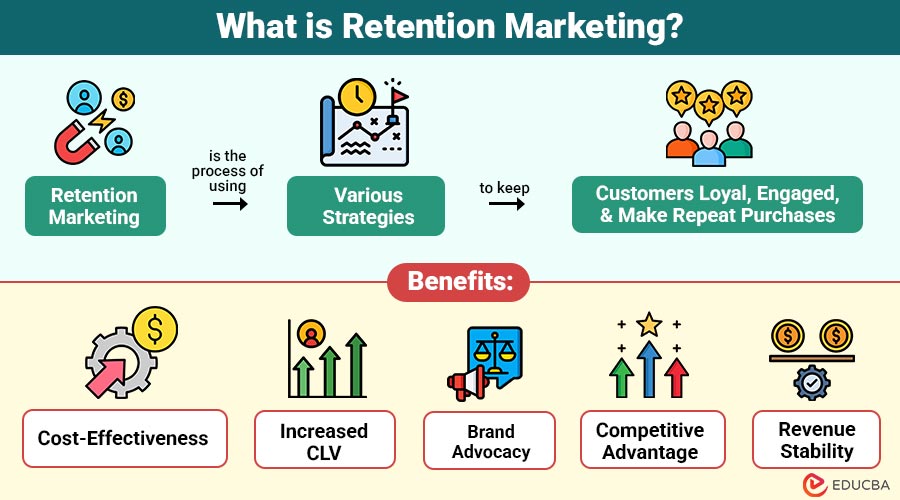
Retention marketing is the process of using various strategies to keep customers loyal, engaged, and make repeat purchases. Rather than concentrating only on attracting new customers, retention marketing focuses on boosting the lifetime value (LTV) of existing ones. Retaining customers is usually more cost-efficient and profitable than acquiring new ones.
Table of Contents:
- Meaning
- Why Retention Marketing Matters?
- Strategies
- Benefits
- Challenges
- Real-World Examples
- Best Practices
- Metrics to Measure Retention Marketing Success
Key Takeaways:
- Retention marketing enhances long-term revenue by cultivating loyal customers who consistently engage with products or services.
- Personalized experiences, proactive communication, and loyalty programs are essential strategies to keep customers satisfied and returning.
- Measuring metrics like CLV, churn rate, and repeat purchases ensures continuous improvement in retention efforts.
- Businesses that focus on retention build resilient growth, foster brand advocacy, and achieve a sustainable competitive advantage over time.
Why Retention Marketing Matters?
Here are the key reasons why retention marketing is crucial for business success:
1. Lower Costs
Retaining existing customers is more cost-effective, as it reduces acquisition expenses, since gaining new customers costs nearly five times more.
2. Higher Lifetime Value
Loyal customers consistently spend more across multiple purchases, increasing overall revenue and boosting long-term business profitability significantly.
3. Stronger Brand Advocacy
Happy, engaged customers become vocal promoters, recommending your brand to friends, family, and peers, generating organic marketing benefits.
4. Sustainable Growth
Businesses with effective retention strategies remain resilient, ensuring predictable revenues and long-term success, even during difficult economic market conditions.
Key Retention Marketing Strategies
Retention marketing requires a mix of personalized experiences, consistent communication, and value-driven engagement. Below are the most effective strategies:
1. Personalization and Segmentation
Deliver personalized experiences by leveraging customer data, tailoring recommendations, and segmenting users based on purchase history, preferences, and browsing behavior.
2. Email and SMS Marketing
Send timely, engaging follow-ups, exclusive discounts, and product updates via email or SMS to nurture relationships and re-engage inactive customers.
3. Loyalty Programs
Reward customers with points, discounts, or complimentary gifts for repeat purchases, fostering long-term relationships and enhancing lifetime value over time.
4. Subscription Models
Convert single-purchase buyers into repeat customers with recurring subscription services, offering flexible management, exclusive benefits, and reliable convenience-driven experiences.
5. Customer Support Excellence
Provide 24/7 empathetic support through multiple channels, resolving issues quickly and proactively, building lasting customer trust, and increasing brand loyalty significantly.
6. Feedback and Continuous Improvement
Collect insights through surveys, reviews, and customer feedback loops, making necessary improvements and innovations that reflect customer expectations and needs.
7. Retargeting Campaigns
Re-engage site visitors with targeted ads, abandoned cart reminders, and product suggestions, increasing conversions from initially uninterested or hesitant customers.
8. Content Marketing for Retention
Publish valuable tutorials, guides, and blogs while building communities via newsletters and social media to retain customers beyond product offerings.
Benefits of Retention Marketing
Here are some benefits of implementing retention marketing strategies:
1. Cost-Effectiveness
Retaining existing customers requires significantly lower investment compared to acquiring new ones, making it a highly cost-effective marketing strategy overall.
2. Increased CLV
Loyal customers generate higher lifetime value by making frequent repeat purchases, contributing to consistent revenue growth and long-term business profitability.
3. Brand Advocacy
Satisfied customers naturally promote your brand through positive word of mouth, online reviews, and recommendations, thereby enhancing credibility and attracting new customers.
4. Competitive Advantage
Strong retention strategies safeguard businesses from competitors, ensuring loyal customers remain committed even when rival brands offer attractive alternatives.
5. Revenue Stability
Consistent repeat purchases from loyal customers provide predictable revenue streams, enabling businesses to plan growth confidently and achieve long-term stability.
Challenges in Retention Marketing
Here are some common challenges businesses face when implementing retention marketing strategies:
1. Customer Expectations
Modern customers expect personalized, fast, and seamless experiences across all channels, making retention challenging without continuous innovation and attentive engagement.
2. Data Privacy Concerns
Regulations like GDPR and CCPA limit how businesses collect, store, and use customer data, complicating personalized retention strategies effectively.
3. Competition
With numerous alternatives available, companies must continually innovate and deliver exceptional experiences to retain customers and prevent them from switching to other brands.
4. Churn Prediction
Identifying customers at risk of leaving requires advanced analytics and monitoring, making churn prediction complex and resource-intensive for many businesses.
5. Balancing Acquisition and Retention
Businesses often struggle to allocate their marketing budget effectively between acquiring new clients and retaining existing ones without compromising either goal.
Real-World Examples of Retention Marketing
Here are real-world examples of companies successfully using retention marketing strategies:
1. Amazon Prime
Amazon retains millions of customers worldwide through Amazon Prime, which offers fast delivery, streaming services, and exclusive deals. The convenience ensures long-term loyalty.
2. Apple Ecosystem
Apple retains customers by creating an interconnected ecosystem. Once users invest in iPhones, AirPods, and Macs, they are more likely to remain within the ecosystem.
3. Sephora Beauty Insider
Sephora’s loyalty program rewards customers with points, exclusive events, and personalized recommendations, making them feel valued.
4. Spotify Wrapped
Spotify’s year-end “Wrapped” feature engages users emotionally by showing their listening trends, building a personal bond with the brand.
Best Practices for Retention Marketing
Here are some effective practices to enhance customer retention and loyalty:
1. Focus on Customer Experience
Ensure every interaction is seamless, personalized, and valuable, prioritizing customer satisfaction across all touchpoints to strengthen loyalty and long-term retention.
2. Leverage AI and Analytics
Utilize artificial intelligence and advanced analytics to comprehend customer behavior, provide personalized experiences, and refine retention strategies for optimal effectiveness.
3. Maintain Consistent Communication
Communicate regularly with customers through relevant channels, sharing updates and offers while avoiding over-communication that may annoy or disengage them.
4. Encourage Two-Way Engagement
Promote interactive engagement through surveys, community forums, and social media platforms, gathering feedback while fostering meaningful connections and building stronger brand loyalty.
5. Continuously Measure Metrics
Monitor key indicators to evaluate retention success and inform strategic changes, including the Net Promoter Score, client lifetime value, and churn rate.
Metrics to Measure Retention Marketing Success
Here are the key metrics to track and evaluate the effectiveness of retention marketing strategies:
1. Customer Retention Rate
Calculates the proportion of clients a company keeps over a given time frame, indicating customer loyalty and the success of retention tactics.
2. Churn Rate
Determines the proportion of consumers who have left over a specific period of time, which aids in identifying problems with retention and areas where strategy has to be improved.
3. Customer Lifetime Value
Helps determine marketing strategies and the priorities for retention investments by estimating the overall income a customer is likely to produce over the course of their relationship.
4. Repeat Purchase Rate
Tracks how frequently customers make additional purchases, indicating engagement, satisfaction, and the success of retention-focused campaigns or programs.
5. Net Promoter Score
Evaluates consumer loyalty and propensity to suggest a brand, acting as a crucial determinant of advocacy and long-term retention.
Final Thoughts
Retention marketing is no longer optional—it is a necessity. Businesses that focus solely on acquisition run the risk of losing long-term profitability at a time when consumers have an infinite number of options. By building deeper relationships, offering personalized experiences, and delivering consistent value, companies can transform customers into loyal advocates. Retention marketing is about turning one-time buyers into lifelong supporters, and when done right, it becomes the foundation of sustainable business growth.
Frequently Asked Questions (FAQs)
Q1. Is retention marketing more important than acquisition?
Answer: Both customer acquisition and retention are important. However, retention is often more cost-effective, boosts customer lifetime value, and supports sustainable long-term growth.
Q2. How can small businesses implement retention marketing?
Answer: They can start with simple tactics, such as personalized emails, loyalty discounts, and excellent customer service.
Q3. What industries benefit most from retention marketing?
Answer: E-commerce, subscription services, hospitality, retail, and SaaS companies benefit significantly.
Q4. How does technology help retention marketing?
Answer: AI, CRM systems, and data analytics tools enable personalization, churn prediction, and automated campaigns.
Recommended Articles
We hope that this EDUCBA information on “Retention Marketing” was beneficial to you. You can view EDUCBA’s recommended articles for more information.

