


Introduction
Sending money across borders can feel overwhelming. Excessive transaction fees, slow processing times, and the possibility of errors often make these payments challenging for businesses and individuals. Many people depend on older systems that create additional issues rather than solving them. Blockchain in cross-border payments is reshaping this scenario. It provides quicker transactions, reduced costs, and enhanced security by eliminating intermediaries such as banks or payment processors. This blog will explain how blockchain streamlines cross-border payments while lowering risks and expenses.
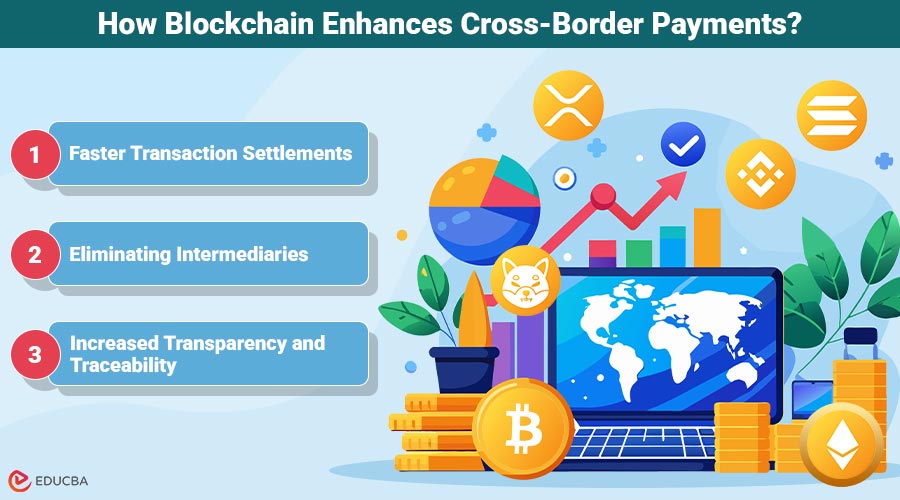
How Blockchain Enhances Cross-Border Payments?
Blockchain in cross-border payments simplifies global transactions quickly and efficiently. Its design cuts through the red tape, making payments smoother than ever before.
1. Faster Transaction Settlements
Cross-border payments often take days to process, causing delays for businesses. Blockchain reduces this time significantly by making transactions almost instantaneous. It accomplishes this by eliminating the need for traditional payment clearinghouses.
Speed in business isn’t optional; it’s survival. Smart contracts manage agreements automatically without waiting for manual approvals. Digital currencies can be transferred directly across borders, bypassing multiple bank verifications. Quicker settlements contribute to fewer delays and improved cash flow management through the use of blockchain in cross-border payments.
2. Eliminating Intermediaries
Eliminating middlemen simplifies cross-border transactions. Blockchain in cross-border payments enables businesses to process payments directly between parties using decentralized networks. Traditional systems often include banks, payment processors, and other entities that introduce delays and costs to the process.
Smart contracts automate transaction terms without requiring third-party approval. This minimizes dependency on intermediaries like banks or clearinghouses. Removing these steps reduces transaction fees and avoids unnecessary delays in payment settlements.
3. Increased Transparency and Traceability
Blockchain enforces transparency in cross-border transactions. Every payment record on a shared digital ledger is visible to all authorized parties. This clear view eliminates hidden fees and questionable practices, while fostering trust. Tracking payments becomes faster and more precise—conserving time and resources for managed IT services teams. Many businesses rely on IT firms like Power Consulting to implement blockchain in cross-border payments effectively and maintain secure global transaction frameworks.
Tracking payments becomes faster and more precise. Businesses monitor each step of the process in real-time, minimizing confusion and disputes. Traceable data helps meet regulatory compliance needs effortlessly, conserving time and resources for managed IT services teams.
Cost Benefits of Blockchain in Cross-Border Payments
Blockchain in cross-border payments cuts payment costs by trimming down excessive fees. It simplifies processes, saving businesses money and time.
1. Lower Transaction Fees
Traditional cross-border payments often include high transaction fees due to banks and middlemen. Blockchain eliminates these intermediaries, reducing costs significantly. Businesses can save money with direct transactions on digital ledgers. Cryptocurrency-based systems also reduce expenses by decreasing dependence on currency conversion services. Automated contracts simplify processes, eliminating extra administrative charges associated with manual validation. Reduced fees lead to greater savings for companies managing international payments daily with blockchain in cross-border payments.
2. Reduced Administrative Expenses
Lowering transaction fees is just one aspect of the solution. Blockchain also reduces administrative costs by automating repetitive tasks in payment processing. Smart contracts manage agreement execution without manual supervision, cutting down on paperwork and delays. Decentralization eliminates dependence on several third parties that contribute to complexity in international payments. With fewer middlemen, businesses save time and money on compliance checks, reconciliation processes, and record-keeping. Partnering with solutions such as Protek’s tech management further streamlines operations, ensuring blockchain in cross-border payments integrates smoothly with existing IT infrastructures.
Risk Mitigation with Blockchain
Blockchain in cross-border payments strengthens payment systems by making transactions more secure. It also lowers the chance of processing mistakes, saving businesses time and money.
1. Enhanced Security and Fraud Prevention
Decentralization in blockchain minimizes fraud by eliminating the necessity for a single controlling authority. Each transaction is recorded across numerous nodes, making unauthorized alterations almost impossible. This system keeps payment data secure and unchangeable. Smart contracts provide additional security during cross-border transactions. They execute automatically only when specific conditions are fulfilled, reducing human error and manipulation risks. Businesses can depend on blockchain in cross-border payments to safeguard their assets while decreasing weaknesses in payment processing systems.
2. Reduced Errors in Payment Processing
Enhanced security mechanisms naturally lead to fewer payment errors. Blockchain keeps a tamper-proof record of transactions, reducing mistakes caused by human input or system failures. Smart contracts streamline operations by automating tasks, eliminating the need for manual checks or repeated authorizations.
Cross-border transactions become smoother with decentralized digital currencies like cryptocurrency. These systems bypass traditional errors tied to currency conversion, data mismatches, or miscommunication between banks. Consistent protocols across the blockchain further minimize discrepancies in payment processing workflows.
Challenges in Blockchain in Cross-Border Payments
Implementing blockchain is not always smooth sailing. Businesses often face technical and regulatory hurdles that slow progress.
1. Regulatory Compliance Issues
Governments around the world often enforce strict regulations for financial transactions. These vary by country, creating a complex set of rules businesses must follow in cross-border transactions. Blockchain in cross-border payments faces challenges as it works within these laws. Cryptocurrencies add another layer of attention from regulators. Companies handling digital currencies must address anti-money laundering (AML) and know-your-customer (KYC) requirements. If these rules are not followed, businesses could face fines or limits on operating in some regions.
2. Interoperability Concerns
Different blockchain systems often struggle to communicate effectively with one another. This lack of compatibility makes cross-border transactions harder for businesses using other payment systems. For example, a company working with Ethereum might face issues transferring digital currencies to another operating on Ripple.
Such gaps slow down settlement speed and increase administrative expenses. These challenges also reduce clarity in financial technology processes. Addressing interoperability can simplify systems and make blockchain in cross-border payments more efficient.
Final Thoughts
Blockchain in cross-border payments is more than just a trend; it is a practical solution to long-standing issues in global money transfers. By cutting costs, reducing errors, and offering faster, more transparent transactions, blockchain is paving the way for a new era of international finance. While regulatory and technical hurdles remain, the benefits far outweigh the challenges. Businesses and individuals that adapt early will be better positioned to thrive in an increasingly connected global economy.
Recommended Article
We hope this guide on blockchain in cross-border payments was helpful. Explore related articles on cryptocurrency adoption, fintech innovations, and digital payment security to gain deeper insights into the future of global financial transactions.

