


How Chinese Language Skills in Singapore Unlock Career Opportunities?
Singapore’s economy is becoming more connected with China every year. This creates real opportunities for people who can speak both Chinese and English well. Many professionals do not realize how much their career prospects could improve with stronger Chinese language skills in Singapore.
Trade between Singapore and China reached US$70.7 billion in 2024, making China Singapore’s largest trading partner. More than 8,500 Chinese companies now operate here, from tech startups to major banks, creating steady demand for bilingual professionals.
Why Employers Value Chinese Language Skills in Singapore?
Employers in Singapore increasingly see Chinese language proficiency as essential for business growth and international collaboration.
1. Higher Salaries for Bilingual Workers
Job market data shows clear financial benefits for Chinese speakers. LinkedIn Singapore currently lists 786 positions requiring Chinese language skills across finance, technology, healthcare, and manufacturing. These roles typically pay 15-25% more than similar English-only positions. The premium exists because bilingual employees can take on more responsibilities. They manage client relationships with Chinese-speaking customers, translate documents, and facilitate business partnerships between Singapore and China-based companies.
2. Growing Business Connections
Three major government projects link Singapore and China, plus business partnerships with seven Chinese provinces. This creates a steady demand for professionals who understand both cultures and can communicate effectively across language barriers. Recent policy changes make business travel easier, too. Since February 2024, Chinese nationals can visit Singapore for 30 days without a visa. This increases face-to-face business meetings and creates more opportunities for bilingual staff.
The Learning Challenge Many Face
Learning Chinese in Singapore presents unique challenges for both students and working adults.
1. Home Language Patterns Are Shifting
Singapore has a unique language situation that affects how people learn Chinese. Census data shows 52% of Chinese Singaporeans aged 5-14 now speak English at home, compared to much lower percentages in previous generations. This means many students struggle with Chinese in school because they do not practice it at home. They find tones difficult, struggle with reading characters, and lack confidence when speaking with native speakers.
2. Traditional Teaching Methods Have Limitations
Classrooms often mix students from Chinese-speaking families with those from English-speaking households, making it hard for teachers to meet everyone’s needs. Students from English-speaking families often fall behind because lessons assume background knowledge they do not have. This creates frustration and can put people off learning Chinese altogether.
Better Ways to Learn Chinese as an Adult
Adults in Singapore can benefit from modern methods that make learning Chinese more practical and effective.
1. Technology Makes Learning More Personal
Modern language learning uses artificial intelligence to adapt lessons to individual needs. Apps can now recognise pronunciation problems and give specific feedback. Character learning becomes easier with spaced repetition systems that show difficult characters more often. Some language centres combine traditional teaching with these new tools. For example, Miss SY Wang’s Chinese Distinctions uses bilingual teaching methods where instructors explain concepts in English when students get stuck, then guide them back to Chinese. This prevents the confusion that often stops adult learners from making progress.
2. Focus on Practical Business Skills
Working professionals need different skills from school students. Business Chinese courses emphasise vocabulary for meetings, presentations, and client interactions. Students learn to read contracts, write professional emails, and understand industry-specific terms. The most effective programs also teach cultural knowledge alongside language skills. Understanding Chinese business etiquette, gift-giving customs, and relationship-building practices helps language skills translate into real career advantages.
Strategic Career Benefits of Chinese Language Skills in Singapore
Professionals who invest in Chinese language learning in Singapore are positioning themselves for long-term career growth.
1. Multiple Industries Offer Opportunities
Financial services firms value Chinese speakers for wealth management roles serving Singapore’s growing Chinese millionaire population. Technology companies like Alibaba, Tencent, and ByteDance are expanding their Singapore operations and need bilingual staff. Healthcare professionals can tap into medical tourism from China. Manufacturing and logistics companies need people who can coordinate supply chains between Singapore and Chinese factories.
2. Leadership Roles Favour Bilingual Candidates
Senior positions increasingly require cross-cultural skills. Companies expanding into China need managers who can build relationships with Chinese partners. Regional leadership roles favour candidates who can operate in both English and Chinese-speaking markets. Chinese language skills also demonstrate valuable soft skills like adaptability, cultural awareness, and persistence – skills that help in any leadership position.
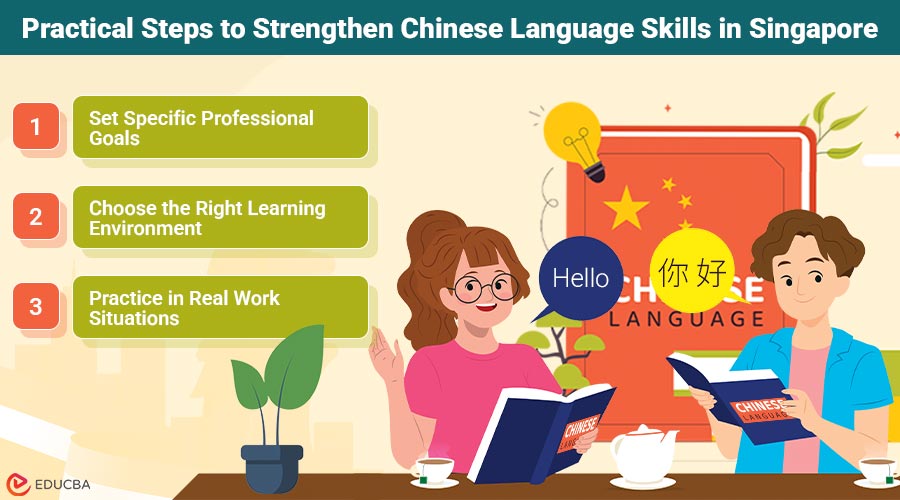
Practical Steps to Strengthen Chinese Language Skills in Singapore
Professionals can follow structured steps to improve their language abilities and see real career results.
1. Set Specific Professional Goals
Adult learners do better when they connect language study to immediate work needs. Instead of general fluency goals, focus on specific outcomes like conducting meetings in Chinese, reading industry reports, or building relationships with Chinese clients. Divide bigger goals into manageable milestones that can be reached within 3–6 months. This keeps motivation high and provides regular proof of progress.
2. Choose the Right Learning Environment
Group classes work well for networking with other professionals facing similar challenges. One-on-one tutoring allows customized focus on your industry and specific language needs. Online platforms offer flexibility for busy schedules. The best approach often combines multiple methods. Regular classes provide structure, tutoring addresses specific gaps, and apps maintain daily practice habits.
3. Practice in Real Work Situations
Look for opportunities to use Chinese at work, even at basic levels. Volunteer to help with Chinese-speaking visitors, offer to translate simple documents, or attend Chinese business events in Singapore. Real-life experiences build confidence faster than classroom exercises alone. They also help you identify what specific skills need more work.
Final Thoughts
The demand for Chinese language skills in Singapore will only grow as regional trade and collaboration expand. The Belt and Road Initiative, new trade agreements, and digital cooperation between countries create more opportunities for bilingual talent. Professionals who develop strong Chinese language skills now will be in the running for leadership roles in a more connected region.
The question is not whether Chinese skills give you career benefits – it is how quickly you can develop them to seize the opportunities now. For working professionals considering this investment, the evidence is clear – act sooner rather than later. Singapore’s economic growth and China’s growth mean there will be returns on bilingual competency development for years to come.
Recommended Articles
We hope this guide to Chinese language skills in Singapore helps you advance your career. Explore these recommended articles for more tips and insights to support your professional growth.

