


Battery Management System: Overview
The world is changing very fast. We are moving towards clean energy and electric vehicles. Batteries are at the heart of this change. They power our cars, homes, and even big energy storage systems. But to make batteries safe and last longer, we need something very important – the Battery Management System (BMS). The BMS acts as the battery’s brain. It keeps the battery safe, checks its health, and makes sure it works properly. In this blog, we will talk about what a BMS is, why innovation matters, and the top 10 new ideas that are shaping the future of this industry.
What is a Battery Management System?
A Battery Management System (BMS) functions similarly to a battery’s brain. Just like our brain controls and protects our body, a BMS controls and protects the battery. When you use a battery in an electric car, a solar system, a mobile phone, or even in a big energy storage unit, it is not just one big battery inside. Many small battery cells connect to form the entire system. These cells need to work properly and safely, or else the battery can get damaged, stop working, or even catch fire.
Key Functions of a Battery Management System
1. Checks How Much Energy is Left (State of Charge)
The BMS measures the charge level of the battery, like a fuel gauge in a car. It shows how much energy is left, so you know when to recharge.
2. Monitors Temperature
Batteries can become excessively hot or cold while charging or in use. If the temperature goes too high, it can cause a fire or an explosion. If the battery level gets too low, it will not work well. The BMS makes sure the battery stays at a safe temperature.
3. Balances All Battery Cells
A battery pack has many cells inside. Sometimes, some cells charge more than others. This is dangerous because overcharged cells can fail or catch fire. The BMS balances the charge so all cells work equally. This makes the battery last longer.
4. Protects from Overcharging and Over-Discharging
If you charge a battery too much, it can overheat and fail. If you use the battery until it is empty, it can damage the cells. The BMS prevents this by cutting off charging or discharging at the right time.
5. Sends Alerts and Data
Modern BMS can send information to your phone or computer. It informs you about battery health, faults, and potential dangers.
Why is a BMS so important?
Without a BMS, the battery would be unsafe, unreliable, and would not last long. A BMS makes the battery:
- Safe: Avoids fire or damage
- Efficient: Works at the best performance
- Long-lasting: Gives you more life from the battery
Why Innovation Matters in BMS?
As batteries become bigger and more powerful for electric vehicles and energy storage, the BMS must also become smarter. A traditional BMS can only do basic checks. But modern batteries need advanced features like remote monitoring, smart analytics, and wireless control.
Innovation in BMS means:
- Better safety for users
- Longer battery life
- Improved performance of electric vehicles and storage systems
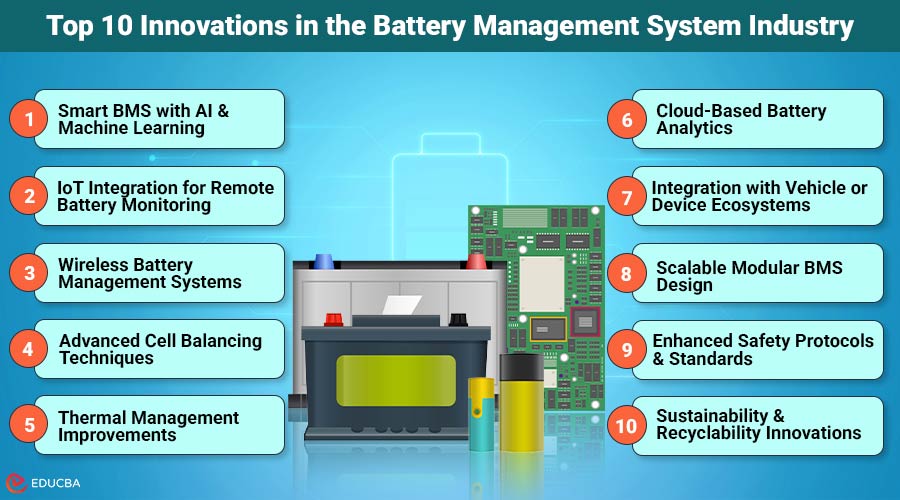
Top 10 Innovations in the Battery Management System Industry
1. Smart BMS with AI and Machine Learning
Artificial Intelligence (AI) and Machine Learning help BMS predict battery problems before they happen. This means fewer breakdowns and better performance.
2. IoT Integration for Remote Battery Monitoring
With IoT, users can monitor battery health remotely through a smartphone or computer, ensuring real-time updates and improved maintenance. This is very useful for electric cars and solar systems.
3. Wireless Battery Management Systems (WBMS)
Wireless BMS eliminates the need for long wires inside the battery pack. This makes the system lighter, safer, and easier to maintain.
4. Advanced Cell Balancing Techniques
Balancing means making sure all battery cells have equal charge. New methods improve this balance, which makes the battery last longer.
5. Thermal Management Improvements
Heat is a big problem for batteries. New cooling technologies keep batteries at the right temperature and prevent overheating.
6. Cloud-Based Battery Analytics
Data from batteries can now go to the cloud, where companies analyze it to improve performance and safety.
7. Integration with Vehicle or Device Ecosystems
BMS now works with cars, solar inverters, and other smart devices for better energy use and efficiency.
8. Scalable Modular BMS Design
This means BMS can grow with your needs. For example, if you add more batteries, the BMS can easily expand.
9. Enhanced Safety Protocols and Standards
New safety rules and technologies reduce the risk of fires and accidents in electric vehicles and energy storage.
10. Sustainability and Recyclability Innovations
Modern BMS enables recycling and reuse of old batteries, reducing waste and supporting environmental sustainability.
Real-World Examples
The Battery Management System (BMS) industry is growing rapidly, with many companies worldwide introducing innovative ideas and technologies to enhance battery safety, intelligence, and reliability. Here are some real examples:
1. Tesla: Smart BMS with Artificial Intelligence
Tesla, the company that makes electric cars, is known for using advanced technology. Their cars use a very smart Battery Management System (BMS) that is powered by Artificial Intelligence (AI).
- This Battery Management System (BMS) does more than just check battery health.
- It studies how the battery is being used and learns from that data.
- It can predict problems before they happen, such as overheating or cell failure.
- It also helps improve the driving range and battery life for Tesla cars.
2. General Motors (GM): Wireless BMS for Electric Vehicles
General Motors, another big car company, has created a Wireless Battery Management System (WBMS).
- In normal batteries, there are many wires inside to connect different parts. These wires make the system heavy and harder to maintain.
- GM’s wireless BMS removes those wires and uses wireless signals instead.
- This makes the battery pack lighter, easier to design, and safer because fewer wires mean fewer chances of failure.
Think of it like Bluetooth for batteries—everything connects seamlessly without messy wires.
Xbattery: Modular BMS for Large-Scale Energy Storage in India
Xbattery, an Indian company, is working on advanced Battery Management System (BMS) technology for big energy storage systems. These systems store power from renewable sources like solar and wind.
- Their Battery Management System (BMS) uses a modular design, allowing easy expansion. If you need to add more batteries in the future, you can do it without changing the whole system.
- It also includes smart features like real-time monitoring, safety controls, and data analytics.
- This is very important for power backup in factories, commercial buildings, and renewable energy projects.
How do These Innovations Benefit End Users?
All these new technologies in battery management systems are not just for engineers or big companies. They bring real benefits to people who use batteries every day, whether in homes, cars, or businesses. Here is how:
1. Longer Battery Life
A smart BMS takes care of the battery and makes sure it is not overcharged or overused. It also keeps all battery cells balanced. This means the battery lasts much longer, and you do not have to replace it often.
2. Better Safety for Homes, Vehicles, and Businesses
Poorly managed batteries can become dangerous. They can overheat or even catch fire. A modern BMS has safety features that prevent these risks. It can cut off charging or send an alert if there is a problem. This makes your home, car, and business safer.
3. Lower Energy Costs Through Smart Monitoring
A smart BMS can show you how much energy you are using. It can help you use energy more wisely and save money. For example, it can suggest the best time to charge your battery when electricity is cheaper.
4. Peace of Mind with Real-Time Updates on Battery Health
Modern BMS can send updates to your phone or computer. You can check your battery status anytime and know if everything is okay. This gives peace of mind because you know your system is working safely and efficiently.
What is Next for Battery Management Systems?
The future of BMS is very exciting. Here are some things we will see soon:
- More Artificial Intelligence (AI): The BMS will become even smarter. It will learn from how you use your battery and make predictions to improve safety and performance.
- More Data Analytics: Companies will collect data from numerous batteries and use it to develop more effective systems.
- Complete Wireless Systems: In the future, BMS may not need any wires inside the battery. This will make batteries lighter and easier to maintain.
BMS will be essential in electric vehicles and renewable energy systems, ensuring efficient energy use, safety, and battery longevity. This will make these technologies safer, more reliable, and more affordable for everyone.
Final Thoughts
The battery management system is like the heart and brain of modern batteries. Without it, batteries cannot work properly or safely. As technology advances, BMS will continue to improve with features like AI, IoT (Internet of Things), and wireless control. These innovations will make batteries safer, smarter, and more eco-friendly. This is very important for the future of electric vehicles, renewable energy, and a world that wants clean and reliable power.
Frequently Asked Questions (FAQs)
Q1. Can a BMS be upgraded or replaced separately from the battery pack?
Answer: Yes, in many systems, especially modular or large-scale setups, the BMS can be upgraded or replaced without changing the entire battery. However, compatibility between the BMS and the battery chemistry is crucial.
Q2. How much does a Battery Management System cost?
Answer: The cost of a BMS varies depending on the application. For small devices, it may cost a few dollars, while for electric vehicles or industrial energy storage systems, it can range from hundreds to thousands of dollars.
Q3. Do Battery Management Systems require regular maintenance?
Answer: Most modern BMSs require little maintenance, but performing periodic software updates and visual inspections (especially in large installations) helps ensure performance and safety.
Recommended Articles
We hope this guide on the battery management system gave you valuable insights. Explore these recommended articles for more on battery technology and smart energy solutions.

