


Financial Stability for Long-Term Security
Learning personal finance is key to long-term stability, as it helps you make smart financial choices, manage debt, and save for the future. Achieving financial stability requires a combination of good money habits, informed decision-making, and continuous learning. Let us explore the essential elements of personal finance and explain how each plays a role in building a secure financial future.
The Importance of Financial Literacy
Financial literacy encompasses the knowledge of personal finance and the skill to make informed money decisions. This understanding aids in achieving life goals like funding education, planning for retirement, and managing debt responsibly. It equips financially literate individuals with essential financial skills for managing money wisely, investing smartly, and preparing for a secure future. Without these skills, one might face significant issues such as excessive debt and an inability to save for retirement.
Poor financial literacy can result in serious outcomes such as overwhelming debt, damaged credit, bankruptcy, and even the loss of a home through foreclosure. Understanding key financial concepts such as budgeting and compound interest is crucial for long-term financial stability. Fortunately, many resources are available online, making financial literacy education accessible to anyone willing to improve their financial knowledge.
Starting to build financial literacy at an early age is highly beneficial, but it is never too late to begin. By promoting financial education and encouraging informed financial decisions, individuals can reduce financial stress and achieve long-term financial security. Being financially literate plays a crucial role in making sound financial choices and attaining financial independence.
Building a Strong Financial Foundation
Individuals may experience financial stress and difficulties in reaching their financial goals. This often occurs when they lack a solid foundation in financial knowledge. A financial plan serves as a compass to track progress and adjust strategies. Continual financial education is crucial for adapting to economic shifts and maintaining financial well-being.
Budgeting, savings, and debt management form the foundation of personal finance. Regularly reassessing financial goals helps align them with current circumstances, reducing stress during significant life changes. By understanding personal finance, managing money effectively, and making informed financial decisions, individuals can build a secure future and achieve long-term financial stability through effective money management.
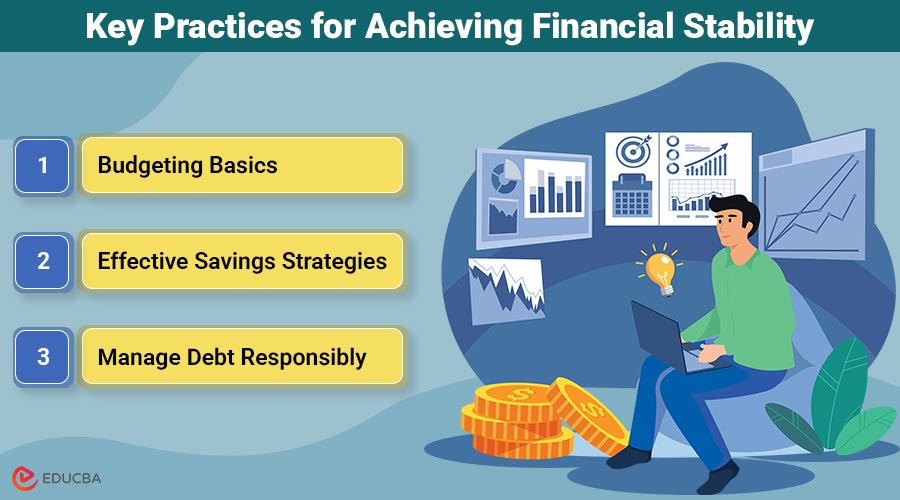
Key Practices for Achieving Financial Stability
The following sections highlight essential strategies that lay the groundwork for lasting financial health.
1. Budgeting Basics
One of the most important aspects of personal finance is making and sticking to a budget. It helps individuals manage spending, avoid debt, and reach their financial goals. You can categorize expenses into fixed (rent, mortgage), variable (utilities), and discretionary (eating out). Tools such as budgeting apps and Excel spreadsheets can simplify tracking income and expenses.
Setting realistic goals for spending and regularly reviewing and adjusting the budget as needed are crucial steps in personal budgeting. Understanding and managing cash flow enables sound financial choices that enhance financial health and stability. Proper budgeting covers living expenses, meets savings goals, and plans for future costs, supporting long-term financial success and security.
2. Effective Savings Strategies
Effective savings strategies are vital for achieving financial security and independence. Key components include:
- Establishing a savings goal can motivate individuals by providing a clear target to work towards.
- Creating an emergency fund that ideally covers three to nine months of living expenses provides a financial cushion in case of unexpected events.
- Recognizing that this fund is crucial for financial stability and can prevent the need to incur debt during emergencies. Additionally, it is important to develop strategies that enhance these savings efforts.
Developing effective saving strategies and managing money wisely ensures financial well-being and economic stability. Regular contributions to savings accounts and setting realistic financial goals pave the way for long-term financial success.
3. Manage Debt Responsibly
Handling debt wisely is a vital component of effective personal finance management. Understanding the types of debt, secured versus unsecured, helps in developing effective repayment strategies. A good strategy for reducing debt includes:
- Focusing on paying down the loan with the highest interest rate first to minimize overall interest costs.
- Negotiating with lenders for better repayment terms.
- Consolidating debts to manage repayments more effectively.
Knowing the distinction between secured and unsecured debt is crucial for making well-informed financial decisions. Responsible credit card use is particularly important. For instance, evaluating different options, such as the best HSBC credit cards, allows individuals to choose products that align with their spending and repayment habits.
The Role of Insurance in Financial Stability
In personal finance, insurance is essential since it creates a safety net that allows one to deal with unknown costs without incurring debt. Insurance helps protect against financial risks and ensures financial stability in case of emergencies. Health insurance and house insurance are especially important. Health coverage ensures access to care without excessive out-of-pocket costs. Similarly, house insurance safeguards homeowners against loss from accidents, theft, or natural disasters.
1. Health Insurance
Having health insurance is crucial for offsetting medical costs and preventing significant financial burdens during health crises. It mitigates high medical costs, making healthcare more accessible and preventing potential bankruptcy from medical bills. Health insurance coverage often improves health outcomes by providing timely access to medical care and preventive services. In the U.S., many people receive coverage through their employers, while a large number depend on government programs. Health insurance ensures financial security and well-being, preventing medical emergencies from causing financial instability.
2. House Insurance
House insurance safeguards homes and personal belongings against unexpected damage, ensuring financial protection in case of disasters. It protects homeowners against financial losses caused by natural disasters or accidental damage. Insuring your home can also cover liability for injuries that occur on your property, offering additional financial security. Having house insurance provides peace of mind, knowing that one’s home and possessions are financially protected. It is an important aspect of personal finance, ensuring that unexpected costs do not derail financial plans and contribute to financial insecurity. House insurance is essential for long-term financial stability and security.
Making Informed Financial Decisions
Smart decision-making is at the heart of financial stability. This involves comparing options before committing to loans, credit cards, or investments. Services like The Loan Connection provide private housing loans tailored to specific needs, improving affordability and long-term planning.
1. Credit Cards and Loans
Understanding credit reports and choosing the right credit card are crucial for managing personal finances. Obtaining a free credit report is essential for assessing your credit status and making informed financial decisions. If consumers find errors in their credit reports, they should dispute them with the credit bureau to ensure accuracy. The suitability of a credit card to a person’s financial circumstances, along with the advantages of its features, will determine which one is best. Understanding the features of the best HSBC credit cards can help users choose one that aligns with their spending habits and financial goals.
2. Investment Options
It is possible to reduce risks and improve overall portfolio stability by investing in a variety of asset classes. Stocks and real estate can be sources of investment income. You can classify this income as either passive or active. Gold and silver, as precious metals, are often seen as a hedge against inflation. They also act as a store of value for investors. Rebalancing your portfolio regularly is a key strategy for managing investments over time, including mutual funds. People can reach their financial objectives and ensure a stable financial future by making wise investment choices.
Retirement Planning for Maintaining Financial Stability
A successful retirement plan allows individuals to invest early for future financial stability, with some estimates suggesting that retirees may need around 80% of their pre-retirement income. By planning for retirement, individuals can achieve long-term financial security and independence.
1. Retirement Accounts
Employer-sponsored 401(k) plans are advantageous due to automatic payroll deductions and potential employer matching. These features enhance savings. If available, signing up and contributing enough to receive the full employer match is beneficial. An alternative to a 401(k) for retirement savings is an Individual Retirement Account (IRA). Examples of employer-sponsored retirement accounts include 401(k) and IRA. If you need help determining how much money you will need to retire comfortably, seek financial advice from a financial advisor.
2. The Power of Compound Interest
Compound interest grows savings by generating earnings on both the original principal and the interest already accrued, leading to faster wealth accumulation over time. The earlier one starts saving, the more substantial the benefits from compound interest due to a longer accumulation period. Compound interest allows earnings to generate their earnings, significantly enhancing savings growth over time. Understanding the power of compound interest is crucial for achieving long-term financial success and security. By starting to save early and taking advantage of compound interest, individuals can secure a stable financial future.
Continuous Learning and Adaptation
By continuously learning and adapting to financial changes, individuals can ensure their financial strategies remain effective and aligned with their financial goals. Proactive financial planning is vital for long-term financial stability and success.
1. Utilizing Educational Resources
The Consumer Financial Protection Bureau offers free adult education resources to improve financial literacy. Online platforms like Khan Academy provide free resources for learning about budgeting, saving, and investing. The National Endowment for Financial Education offers various free workshops and materials that focus on personal finance concepts.
Utilizing educational resources is vital to improve financial literacy and ensure better financial decision-making. Self-education and working with financial advisors can greatly enhance financial literacy. Readers are encouraged to stay proactive, stay informed, and make use of reliable tools and resources that support their financial growth and well-being.
2. Adapting to Financial Changes
Adaptability in financial planning involves:
- Aligning actions with changing financial circumstances.
- Saving for retirement early allows more time for savings to compound, resulting in more money accumulated.
- Regularly reviewing financial plans to manage unexpected financial challenges effectively.
By being adaptable and proactive in financial planning, individuals can ensure their financial strategies remain effective and aligned with their financial goals. Effectively managing unforeseen events and unexpected financial challenges is essential for preserving long-term financial stability and security.
Final Thoughts
Financial stability is not just about the amount of money you have — it is about how wisely you manage it. By building financial literacy, budgeting effectively, saving consistently, managing debt, protecting yourself with insurance, and planning for the future, you can achieve lasting security. Start applying these strategies, and you will be better prepared for whatever the future brings.
Recommended Articles
We hope this comprehensive guide to financial stability helps you build a secure and stress-free future. Check out these recommended articles for more tips and strategies to strengthen your financial well-being.


