

Benefits of Organic Food: How Does it Promote Sustainability and Healthy Eating?
Organic food has become popular because it may offer health benefits and help the environment. Organic farming isn’t new; it actually reflects traditional agricultural methods that work in harmony with nature. In contrast, industrial agriculture relies heavily on chemical fertilizers and pesticides, which can cause health and environmental problems.
As people become more health-conscious and environmentally aware, they increasingly join the movement to return to organic farming methods, contributing to a larger, positive change. So, let’s explore the benefits of organic food and see how it promotes sustainable and healthy eating.
What is Organic Food?
Organic foods come from farming methods that follow organic farming standards. These standards vary worldwide but generally include practices that cycle resources, support ecological balance, and protect biodiversity. Here, farmers do not use synthetic pesticides, fertilizers, GMOs, antibiotics, and growth hormones. Instead, they use natural processes and resources, like crop rotation, green manure, compost, and biological pest control.
Top Benefits of Organic Food
#1. Health Benefits
People prefer organic food due to its potential health benefits. Here are some health-related pros of organic foods.
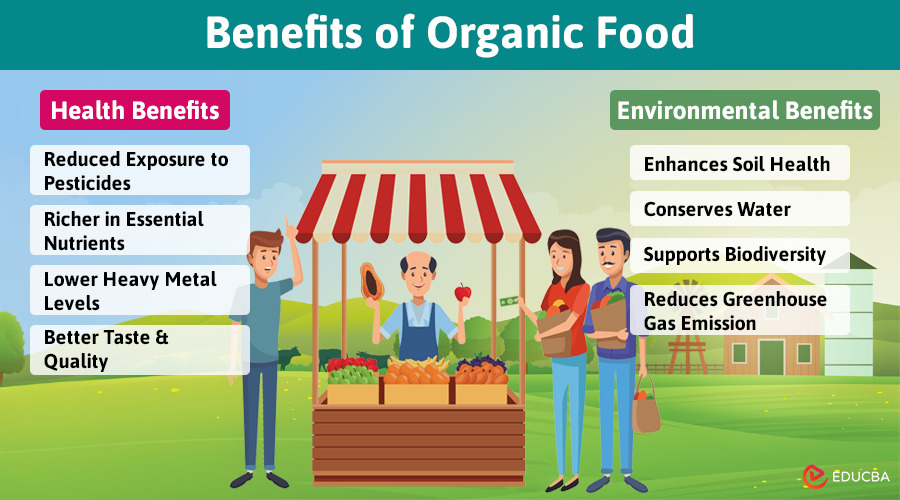
- Reduced Exposure to Pesticides: Organic farming avoids synthetic pesticides and fertilizers, reducing exposure to harmful chemicals. Traditional farming techniques often leave pesticide traces on fruits and vegetables. Eating these over time might be harmful.
- Richer in Essential Nutrients: Studies suggest that organic fruits and veggies pack higher levels of vitamins, minerals, and antioxidants. These are important for staying healthy.
- Lower Heavy Metal Levels: Organic farming can reduce the heavy metals in the soil and produce. Take cadmium, for instance; it’s a toxic metal that can build up in the body. Organic crops often have far less of it.
- Better Taste and Quality: A common belief is that organic food surpasses traditional food in taste. It might be linked to natural farming practices and the lack of synthetic additives or preservatives.
- No Antibiotics or Growth Hormones: Organic farming avoids using antibiotics or growth hormones in animals. This method lowers the chance of developing antibiotic resistance and minimizes exposure to synthetic hormones that can harm health.
#2. Environmental Benefits
Not only does organic farming help us stay healthy, but it also does wonders for our environment. Let’s understand how it nurtures sustainability:
- Enhances Soil Health: Farming the organic way boosts the richness and structure of soil. Through compost, green manure, and crop rotation, we care for the soil and reduce erosion. It also boosts organic matter content. Healthy soil is key to sustainable farming. It nourishes crops and keeps ecosystems balanced.
- Conserves Water: Organic farming helps reduce water pollution. It doesn’t use artificial pesticides or fertilizers, which often seep into lakes and rivers. This contamination can negatively impact underwater creatures. Organic farming methods also improve soil structure, enhancing water retention and cutting down on the need for irrigation.
- Supports Biodiversity: Organic farming promotes biodiversity by cultivating a harmonious ecosystem. Crop rotation, cover crops, and natural pest management foster diverse plant and animal species, which are essential for ecosystem resilience and stability.
- Reduces Greenhouse Gas Emission: Organic farming plays an important role in slowing down climate change. It reduces greenhouse gasses. Different farming techniques, like crop rotation and reduced tillage, increase carbon sequestration in the soil. That’s not all. Organic farming also means less usage of man-made fertilizers. These fertilizers are known for releasing nitrous oxide, a potent greenhouse gas.
Examples
The table below shows some common examples of organic foods:
|
Fruits:
|
Organic Bananas |
| Organic Apples | |
|
Vegetables:
|
Organic Tomatoes |
| Organic Spinach | |
| Organic Carrots | |
|
Grains:
|
Organic Rice |
| Organic Oats | |
|
Dairy Products:
|
Organic Milk |
| Organic Cheese | |
| Meat: | Organic Chicken |
How Can You Incorporate Organic Food into Your Diet?
India’s food culture is full of depth, using fresh, locally sourced ingredients. Organic food complements traditional Indian dietary practices, renowned for their emphasis on natural, hearty foods. Here’s how to include organic food into your diet:
- Fruits and Vegetables: Indian cuisine features organic fruits and veggies in many ways. You can enjoy them in salads, curries, snacks, even desserts. Eating different organic produce provides us the nutrients our bodies need.
- Grains and Pulses: India is a land rich in varied grains and pulses! Think rice, wheat, and millet. Now, imagine growing them organically. Sounds nutritious, right? These wholesome basics can whip up tasty dishes. Give your dal, khichdi, or roti an organic touch to make them even better.
- Dairy Products: Indian meals often include organic milk, yogurt, and desi cow ghee. These items don’t have antibiotics or growth hormones, highlighting their benefits as healthier options for everyone in the household.
- Spices and Herbs: Indian cooking deeply values organic spices and herbs. Organic turmeric, cumin, coriander, and more spices enrich every meal, making it tastier and healthier.
- Snacks and Beverages: Traditional Indian snacks and drinks can be made using organic ingredients. Desserts and drinks can have organic jaggery for sweetness. Organic tea and coffee? Yes. They’re better than the conventional options.
Tips for Choosing Organic Food
Here are some tips for consumers looking to incorporate organic food into their diet:
- Look for Certification: Choose ingredients with an organic certification from recognized authorities. It ensures the food meets the criteria for organic production.
- Buy Local: Support local farmers and producers by buying organic ingredients from farmers’ markets and organic stores. You can also buy from community-supported agriculture programs.
- Pick Seasonal Produce: Opt for seasonal fruits and vegetables for fresher and more nutritious food.
- Grow Your Own: Think about planting your own organic vegetables and herbs at home. It allows you to control the freshness and quality of your food.
Final Thoughts
Choosing organic food is important. It’s a leap towards better health and taking care of the earth. Organic food is free from harmful chemicals, it’s packed with nutrients, and it matches what we believe about eating food that’s natural and good. Plus, for farmers, going organic offers a path to sustainable agriculture. It improves soil health and biodiversity.
As more people become aware and decide to support organic food, this could be an important part of diets. It’s good for our health, makes us feel good, keeps our earth healthy, and maintains ecological balance for future generations. By picking organic, we help make a healthier society and a sustainable planet.
Recommended Articles
If this blog on the benefits of organic food helps you, here are other blogs you might like.

