


Who is Aryabhata?
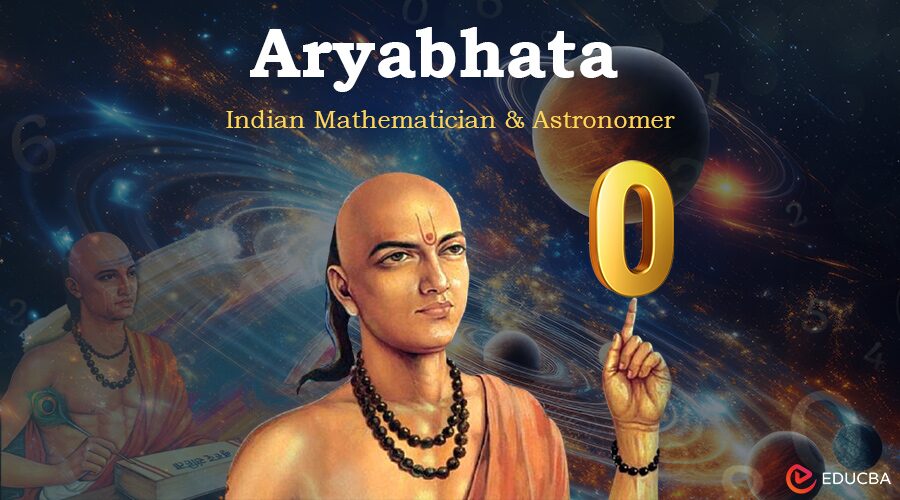
Aryabhata, also called Aryabhata the Elder, was born in 476 CE, possibly in Ashmaka or Kusumapura, India. He was a brilliant mathematician and astronomer who lived in Kusumapura, near modern-day Patna, during the Gupta dynasty. Aryabhata wrote important works, including the Aryabhatiya around 499 CE and the now-lost Aryabhatasiddhanta. His discoveries in mathematics and astronomy were groundbreaking and still influence these fields today. This article explores his life and achievements.
Early Life and Background
Aryabhata’s exact place of birth is a subject of debate, with possibilities including Ashmaka and Kusumapura, which is believed to be modern-day Patna, India. He flourished during a period when the Gupta dynasty ruled, particularly in the region around Patalipurta (modern Patna). Despite the limited information available about his early life and education, Aryabhata’s work is a testament to his profound knowledge and intellectual prowess.
Major Works of Aryabhata
Aryabhata is known for composing at least two significant works during his lifetime: the “Aryabhatiya” and the now-lost “Aryabhatasiddhanta.” These works had a far-reaching impact on the fields of mathematics and astronomy.
1. Aryabhatasiddhanta
The “Aryabhatasiddhanta” primarily circulated in the northwest region of India. It also profoundly influenced Islamic astronomy through the Sāsānian dynasty in Iran. While the original text is lost to history, its contents have been preserved to some extent in the writings of later scholars like Varahamihira, Bhaskara I, and Brahmagupta. One of its noteworthy features is the assignment of the start of each day to midnight, a concept that influenced subsequent astronomical calculations.
2. Aryabhatiya
“Aryabhatiya” gained popularity, particularly in South India, where numerous mathematicians wrote commentaries on it over the centuries. This work, composed in verse couplets, covers a wide range of topics in mathematics and astronomy, making it a comprehensive treatise.
Aryabhata’s Contributions to Mathematics
Aryabhata made groundbreaking advances in mathematics, which can be summarized in the following key points:
1. Ganita (Mathematics)
In the “Ganita” section, Aryabhata introduced a new system of representing numbers using consonant-vowel monosyllables. He also provided algorithms for obtaining square and cubic roots within the decimal number system. Aryabhata made significant strides in geometric measurements, approximating π as 3.1416, very close to its actual value. He delved into properties of similar right-angled triangles and intersecting circles. His use of the Pythagorean theorem led to one of the methods for constructing a table of sines. The section also covers mathematical series, quadratic equations, compound interest, proportions, and solutions to linear equations.
2. Concept of Zero
Aryabhata and the Concept of Zero Aryabhata played a crucial role in the evolution of the place-value number system, one of the most transformative innovations in mathematics. Although he did not use a symbol for zero, his system clearly implied zero as a placeholder, allowing numbers to be represented efficiently based on powers of ten. This conceptual breakthrough paved the way for the modern decimal numeral system, later refined by Indian mathematicians and transmitted globally.
3. Approximation of Pi (π)
Aryabhata made noteworthy strides in approximating the value of pi (π). In his work, he provided an approximation formula:
caturadhikaṃ śatamaṣṭaguṇaṃ dvāṣaṣṭistathā sahasrāṇām ayutadvayaviṣkambhasyāsanno vṛttapariṇāhaḥ.
“Take the number one hundred and add four to it. Then, multiply the result by eight. Finally, add sixty-two thousand. By following this rule, we can approximate the circumference of a circle with a diameter of 20000.”
This yields:
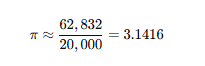
This formula suggests that for a circle with a diameter of 20,000, the circumference is approximately 62,832. This approximation, 3.1416, is remarkably close to the modern value of pi (π), demonstrating Aryabhata’s mathematical prowess. Importantly, Aryabhata may also have realized that pi is irrational, a concept not proven in Europe for centuries.
Aryabhata’s Trigonometric Formulas
In Aryabhata’s work, specifically in Ganitapada 6, he provided a fundamental formula for calculating the area of a triangle:
tribhujasya phalaśarīraṃ samadalakoṭī bhujārdhasaṃvargaḥ
This Sanskrit phrase can be translated to mean: “For a triangle, the result of a perpendicular with the half-side is the area.” This formula elegantly relates the triangle’s area to its side lengths. Aryabhata’s work was a precursor to the development of more advanced trigonometric concepts that later mathematicians would explore.
The Birth of “Sine”
Aryabhata contributed significantly to trigonometry by introducing the concept of “ardha-jya,” which literally translates to “half-chord.” This concept was a precursor to what we now know as the sine function. To simplify calculations and convey the idea more easily, people began referring to “ardha-jya” as “jya.” When Arabic scholars translated Aryabhata’s works from Sanskrit into Arabic, they adopted the term “jiba.”
However, an interesting transformation occurred when translating “jiba” into Latin in the 12th century. Gherardo of Cremona, an Italian translator, substituted the Arabic “jaib” for the Latin term “sinus,” which means “cove” or “bay.” This Latin term was chosen because it represented a fold or pocket in a garment, akin to the shape of a sine wave. From the Latin “sinus,” we eventually arrive at the English term “sine.” Thus, the term “sine” used in trigonometry today has its origins in the work of Aryabhata and the evolution of terminology through various cultures and languages.
Contributions to Astronomy
Aryabhata made several pioneering discoveries in astronomy, which can be highlighted through the following key points:
1. Kala-kriya (Time Calculations)
The “Kala-kriya” section delves into the realm of astronomy, focusing on planetary motion along the ecliptic. Aryabhata discussed various units of time, models of planetary motion, planetary longitude corrections for different locations on Earth, and the concept of “lords of the hours and days,” which has astrological implications.
2. The AudAyaka System and Days Reckoned from Dawn
Aryabhata’s astronomical system, known as the audAyaka system, had a unique approach to reckoning days. Instead of starting from midnight or sunrise, days in this system were reckoned from “Uday,” which denotes the dawn at the equator, specifically at Lanka. This distinctive perspective demonstrated Aryabhata’s innovative thinking in the realm of timekeeping.
3. Earth’s Rotation
One of Aryabhata’s most notable assertions was his insistence that the Earth rotates about its axis daily. This was a revolutionary idea in his time, as the prevailing belief was that the sky rotated, causing the apparent movement of stars. Aryabhata challenged this view by explaining that the apparent motion of the heavens is a relative motion caused by the Earth’s rotation. In the first chapter of his work, the “Aryabhatiya,” he quantified the Earth’s rotations in a “yuga.” This bold assertion marked a significant departure from contemporary astronomical beliefs and laid the foundation for our modern understanding of the Earth’s rotation.
4. Geocentric Model of the Solar System
Aryabhata’s astronomical model was primarily geocentric, placing the Earth at the center of the universe. In this model, the Sun and the Moon were each carried by epicycles, which were small circles that revolved around a larger circle. These epicycles, in turn, orbited around the Earth. Notably, Aryabhata’s model included epicycles for the Sun and Moon, suggesting that he recognized the complexities of their apparent movements in the sky. This geocentric model was consistent with the prevailing views of his time and laid the groundwork for later developments in Indian astronomy.
5. Planetary Motions and Epicycles
Aryabhata’s model also accounted for the motions of the planets in the Solar System. He described a system in which each planet moved around the Earth at specific speeds, representing their motion through the zodiac. The planets’ positions and periods were calculated relative to moving points, providing a framework for tracking their movements. In particular, Aryabhata’s model incorporated two types of epicycles for each planet: a smaller “manda” (slow) epicycle and a larger “śīghra” (fast) epicycle. This system was a precursor to the more complex planetary models developed by later astronomers.
Heliocentric Hints and Historiographical Debates
While Aryabhata’s primary model was geocentric, some historians have suggested that his writings contain hints of a heliocentric understanding. The term “śīghrocca,” referring to the basic planetary period in relation to the Sun, has raised questions about Aryabhata’s underlying beliefs.
However, it is essential to note that the prevailing consensus among historians of astronomy is that Aryabhata’s model was primarily geocentric and that any hints of heliocentrism are subject to interpretation.
Astronomical Calculations and Calendar Systems
Aryabhata’s methods for astronomical calculations gained widespread use in the Islamic world and were instrumental in the computation of Arabic astronomical tables (zijes). Notably, the astronomical tables found in the work of the 11th-century Spanish scientist Al-Zarqali were translated into Latin as the “Tables of Toledo” in the 12th century. These tables remained the most accurate ephemeris in Europe for centuries.
Additionally, Aryabhata’s calendric calculations played a vital role in the practical determination of the Panchangam, the Hindu calendar. These calculations have been continuously employed in India for centuries. Moreover, in the Islamic world, Aryabhata’s methods influenced the development of the Jalali calendar in 1073 CE, which remains in use today in Iran and Afghanistan, albeit with modifications made in 1925. Like Aryabhata’s earlier Siddhanta calendars, the Jalali calendar is based on actual solar transit, offering a more accurate representation of time.
Honors and Institutions
Various honors and institutions commemorate Aryabhata’s profound contributions:
- Aryabhata Knowledge University (AKU): The government of Bihar established AKU in Patna in his honor. The university specializes in developing and managing technical, medical, management, and other professional educational infrastructure.
- Aryabhata Satellite: India named its first satellite, Aryabhata, in his honor and featured it on the reverse of the Indian 2-rupee note.
- Aryabhata Research Institute of Observational Sciences (ARIES): Located near Nainital, India, this institute conducts research in astronomy, astrophysics, and atmospheric sciences, continuing Aryabhata’s legacy of scientific exploration.
- Aryabhata Maths Competition: An inter-school competition named after him encourages young minds to excel in mathematics.
- Bacillus Aryabhata: Scientists named a bacterial species discovered in the stratosphere in 2009 after Aryabhata to honor his pioneering spirit.
Influence on Indian Mathematics and Astronomy
Aryabhata’s work had a lasting impact on Indian mathematics and astronomy, summarized in the following key points:
- Advancement of Number System: Aryabhata’s contributions to the decimal number system and the concept of zero were transformative. With its place value notation, the decimal system streamlined mathematical calculations and laid the groundwork for the sophisticated mathematical developments that followed in India.
- Algebraic Contributions: Aryabhata’s work in algebra, as evidenced in Aryabhatiya, included solving indeterminate and quadratic equations. His algebraic methods provided a systematic approach to problem-solving, influencing later mathematicians in India and beyond.
- Transmission of Knowledge: His mathematical and astronomical ideas found resonance in the works of the Kerala School of Mathematics, a group of scholars who flourished between the 14th and 16th centuries. The Kerala School integrated Aryabhata’s concepts and further developed mathematical and astronomical theories.
- Aryabhata’s Influence on Madhava: Madhava, a prominent mathematician of the Kerala School, drew inspiration from Aryabhata’s trigonometric concepts. Madhava developed the series expansions for trigonometric functions by building on the groundwork Aryabhata laid in the Aryabhatiya.
- Named After Aryabhata: In honor of the ancient mathematician and astronomer, India launched the Aryabhata satellite in 1975 for scientific research. This reflects the enduring respect and recognition accorded to Aryabhata’s scientific contributions.
- Mathematics Awards: Various awards and honors in India and internationally honor Aryabhata’s legacy. These awards recognize individuals who have made outstanding contributions to the field of mathematics and carry forward Aryabhata’s spirit of mathematical excellence.
- Integration of Science and Philosophy: Aryabhata’s work integrates scientific inquiry with philosophical insights. His writings often blended mathematical precision with a contemplative understanding of the cosmos, fostering a holistic worldview that transcends mere calculations.
- Cultural Reverence: Indian culture honors Aryabhata by naming educational institutions, scientific organizations, and research centers in his honor. This cultural reverence emphasizes the enduring impact of Aryabhata’s legacy on India’s intellectual and scientific heritage.
Conclusion
Aryabhata, the ancient Indian mathematician and astronomer, made important contributions to science and mathematics. His work in mathematics, astronomy, and trigonometry helped later scholars and scientists develop new ideas. Even today, people remember and respect Aryabhata for his intelligence, and his achievements continue to inspire those who study the history of Indian science and mathematics.

