
What is 360 Degree Feedback?
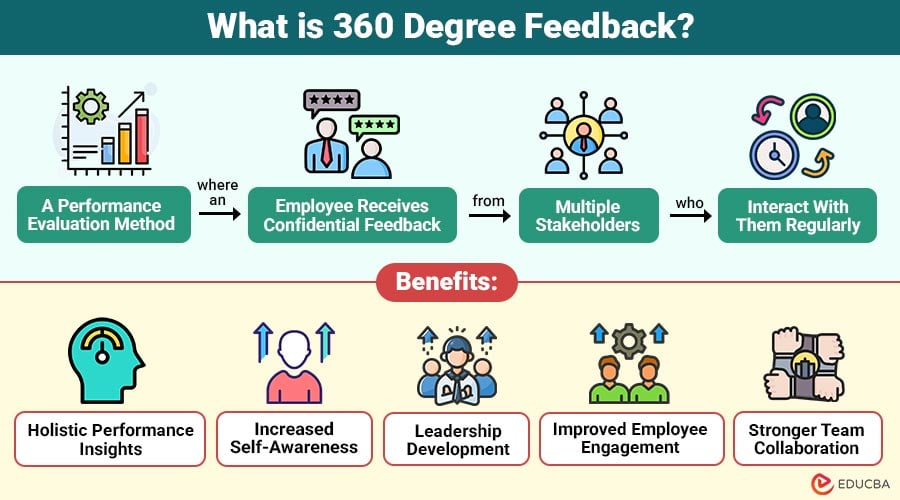
360 Degree Feedback is a performance evaluation method where an employee receives confidential feedback from multiple stakeholders who interact with them regularly.
These typically include:
- Direct manager
- Peers and colleagues
- Subordinates (for managers and leaders)
- Internal or external customers
- Self-assessment
Unlike traditional reviews that rely only on a manager’s opinion, 360 Degree Feedback provides a multi-dimensional perspective on an individual’s competencies, behaviors, communication style, and leadership effectiveness.
Table of Contents:
- Meaning
- Key Objectives
- Working
- Key Components
- Benefits
- Use Cases
- Challenges
- Real-World Example
- Role of HR and Leadership
Key Takeaways:
- 360 Degree Feedback provides multi-source insights, reducing bias and giving a balanced view of employee performance.
- It enhances self-awareness by revealing strengths, weaknesses, and perception gaps for personal growth.
- Supports leadership development, succession planning, and coaching by effectively identifying skill gaps.
- It fosters collaboration, trust, and a feedback-driven culture, improving engagement and team performance.
Key Objectives of 360 Degree Feedback
The key objectives of 360 degree feedback are:
1. Comprehensive Feedback
Ensure employees receive balanced insights from multiple sources to support accurate performance evaluations and opportunities for improvement.
2. Self-Awareness
Help individuals understand behaviors, strengths, and weaknesses to foster continuous growth and personal effectiveness.
3. Leadership Development
Identify leadership potential and skill gaps to guide training, succession planning, and career advancement strategies.
4. Strengths & Gaps
Highlight employees’ core competencies and areas for improvement to align performance with organizational goals effectively.
5. Culture & Collaboration
Encourage open communication, trust, and teamwork to strengthen workplace relationships and overall organizational performance.
How Does 360 Degree Feedback Work?
Below are the steps involved in implementing a 360 Degree Feedback process in an organization:
1. Define Purpose and Scope
Organizations clearly identify whether the feedback is for leadership development, behavioral improvement, or skill enhancement.
2. Select Competencies
Organizations choose key competencies such as communication, teamwork, decision-making, emotional intelligence, and leadership.
3. Choose Raters
Feedback providers are selected based on their working relationship with the employee to ensure relevance and credibility.
4. Collect Feedback
Organizations use structured questionnaires or surveys to collect anonymous feedback, ensuring honesty and psychological safety.
5. Analyze Results
Responses are aggregated and compared across rater groups, highlighting patterns and perception gaps.
6. Share Feedback
Employees receive a consolidated feedback report, often supported by coaching or HR facilitation.
7. Create Development Plans
Teams create actionable development plans to improve identified areas and leverage strengths
Key Components of 360 Degree Feedback
The following are the key components that make up a 360 Degree Feedback process:
1. Self-Assessment
Enables individuals to reflect on strengths, weaknesses, and areas for improvement, fostering personal growth and awareness.
2. Manager Feedback
Provides insights from supervisors on expectations, performance standards, and areas needing development or improvement.
3. Peer Feedback
Collects input from colleagues to evaluate teamwork, collaboration, communication, and contribution to shared goals and projects.
4. Subordinate Feedback
Gathers feedback from team members to assess leadership, guidance, motivation, and people management effectiveness.
5. Customer Feedback
Evaluates service quality, responsiveness, professionalism, and satisfaction from clients or stakeholders interacting with the individual.
6. Competency Framework
Aligns feedback with organizational values and the key skills and competencies necessary for role success and development.
Benefits of 360 Degree Feedback
Here are the key benefits that demonstrate how 360 Degree Feedback supports individual growth and overall organizational effectiveness.
1. Holistic Performance Insights
Collects feedback from multiple sources, reducing bias and providing a balanced, comprehensive understanding of individual performance strengths and weaknesses.
2. Increased Self-Awareness
Helps employees recognize differences between their self-perception and others views, promoting personal growth, reflection, and opportunities for improvement.
3. Leadership Development
Offers managers insights into leadership style, communication effectiveness, decision-making, and overall influence on team performance outcomes.
4. Improved Employee Engagement
Inclusive feedback processes help employees feel acknowledged, respected, and valued, boosting motivation, satisfaction, and organizational commitment.
5. Stronger Team Collaboration
Constructive feedback enhances relationships, communication, trust, and collaboration across teams, improving productivity and cross-functional cooperation.
Common Use Cases of 360 Degree Feedback
Here are the most common use cases for 360 Degree Feedback that effectively support development and organizational success.
1. Leadership and Executive Development
Provides leaders with comprehensive feedback from multiple sources, enhancing skills, decision-making, influence, and overall organizational effectiveness.
2. High-Potential Talent Programs
Identifies emerging talent, evaluates competencies, and guides development plans to prepare employees for future critical roles.
3. Succession Planning
Offers insights into strengths and gaps, helping organizations strategically prepare capable successors for key positions.
4. Culture Transformation Initiatives
Uses feedback to align behaviors, values, and practices with desired organizational culture, driving meaningful change.
5. Coaching and Mentoring Programs
Provides employees at all levels with practical insights to enable individualized coaching, skill development, and professional advancement.
6. Team Effectiveness Improvement
Enhances collaboration, communication, accountability, and trust within teams, improving performance and enabling the efficient achievement of collective organizational goals.
Challenges of 360 Degree Feedback
While 360 Degree Feedback can provide valuable insights, it also comes with several potential challenges:
1. Feedback Overload
Excessive feedback data can overwhelm employees, creating confusion and stress and making it difficult to identify actionable areas for improvement.
2. Lack of Trust
If anonymity is broken, feedback may become dishonest, biased, or politically motivated, reducing reliability.
3. Poorly Designed Surveys
Vague, irrelevant, or poorly structured questions yield unhelpful insights, reducing the effectiveness of feedback.
4. Misuse for Appraisal Decisions
Using 360 feedback directly for promotions or pay can compromise authenticity and honest employee responses.
5. Insufficient Follow-Up
Without coaching, development plans, or proper action, feedback loses value and fails to drive meaningful change.
Real-World Example of 360 Degree Feedback
Here is a practical example that demonstrates how 360 Degree Feedback supports behavior change and performance improvement.
Team Leader Scenario
A team leader receives 360 Degree Feedback from managers, peers, subordinates, and customers. While self-ratings highlight strong performance, feedback reveals gaps in communication and delegation. With coaching and targeted development actions, the leader improves collaboration, team engagement, and overall performance.
Role of HR and Leadership in 360 Degree Feedback
Here are the roles HR and leadership play in ensuring the successful design, implementation, and impact of 360 Degree Feedback.
1. Designing Fair and Relevant Feedback Frameworks
HR creates structured, unbiased frameworks to ensure feedback aligns with organizational goals, roles, and competencies.
2. Selecting Reliable Tools and Platforms
HR selects reliable systems and platforms that enable accurate, secure, and efficient collection of 360-degree feedback.
3. Ensuring Confidentiality and Compliance
HR safeguards anonymity, privacy, and regulatory compliance to maintain trust and integrity in the feedback process.
4. Supporting Coaching and Development Initiatives
HR provides guidance, resources, and follow-up to help employees understand feedback and implement meaningful improvement strategies.
Final Thoughts
360 Degree Feedback is a powerful tool that moves organizations beyond traditional evaluations toward meaningful development. When implemented with trust, clarity, and follow-through, it enhances self-awareness, strengthens leadership, improves collaboration, and fosters a feedback-driven culture. By providing comprehensive insights, it helps organizations grow individuals and the business sustainably, aligning people, performance, and continuous improvement effectively.
Frequently Asked Questions (FAQs)
Q1. Is 360 Degree Feedback anonymous?
Answer: Yes, anonymity is essential to ensure honest and unbiased feedback.
Q2. How often should 360 feedback be conducted?
Answer: Typically annually or biannually, depending on organizational goals.
Q3. Should 360 feedback affect compensation?
Answer: Best practice recommends using it for development, not direct compensation decisions.
Q4. Who should receive 360 Degree Feedback?
Answer: Managers, leaders, high-potential employees, and roles with high collaboration.
Recommended Articles
We hope that this EDUCBA information on “360 Degree Feedback” was beneficial to you. You can view EDUCBA’s recommended articles for more information.


