


Should You Put Your Money Into XRP? An Investment Perspective
Ripple’s native token recently broke through the $3 barrier, marking a significant milestone not seen in years. This price surge has reignited conversations across the crypto community about XRP’s investment potential. Many people are wondering: Is XRP a good investment considering today’s market conditions and regulatory landscape? This article provides a comprehensive perspective on XRP investment, examining opportunities, risks, and strategies to consider.
Understanding XRP’s Unique Purpose
Think of XRP as the express lane for international money transfers. While Bitcoin aims to be digital gold and Ethereum powers decentralized apps, XRP targets a specific problem: slow and expensive cross-border payments. Traditional bank transfers between countries typically take 3-5 business days and charge fees of $25-50 per transaction. XRP completes the same transfers in under 5 seconds for less than a penny. All 100 billion XRP tokens were created at launch there is no mining involved. Ripple manages a significant portion of these tokens and releases them gradually into circulation.
XRP’s Current Market Position
XRP currently ranks third among cryptocurrencies by market capitalization, at approximately $187 billion. The token delivered 235% gains in 2024 compared to Bitcoin’s 119% increase. The Chicago Mercantile Exchange introduced XRP futures contracts in early 2025, representing a watershed moment for mainstream acceptance. Trading volumes have exploded since Ripple’s legal challenges began resolving.
Why Investors are Bullish on XRP Investment?
Several factors are driving investor optimism; the following points explain why XRP is attracting growing attention in the crypto market.
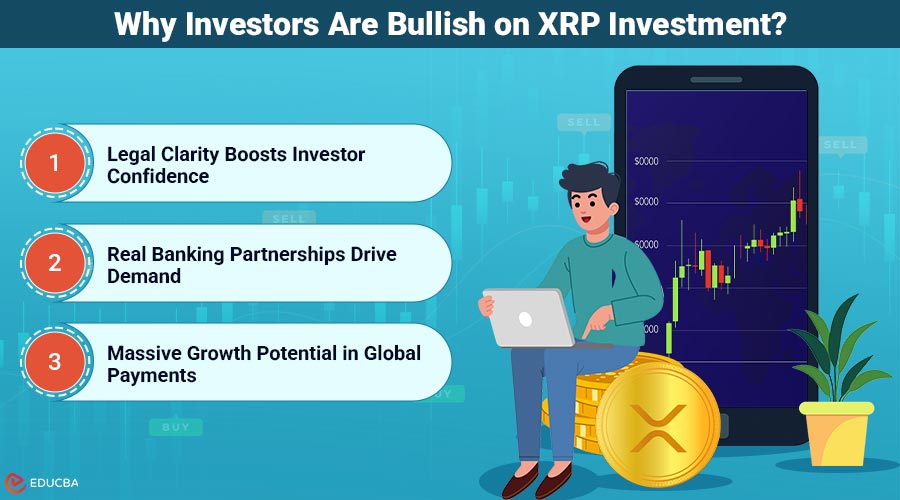
1. Legal Clarity Boosts Investor Confidence
The regulatory storm around XRP is finally clearing:
- A 2024 court ruling confirmed that XRP sales on public exchanges do not qualify as securities.
- New SEC leadership favors constructive cryptocurrency regulation.
- Banks and financial institutions can now engage with XRP without regulatory worries.
Implication: Legal clarity reduces uncertainty a key factor for serious XRP investors.
2. Real Banking Partnerships Drive Demand
XRP is not just theoretical it solves real banking problems:
- Traditional correspondent banking locks up billions in pre-funded accounts.
- XRP’s integration reduces costs and speeds up transactions.
- Major banks in Brazil, India, the Philippines, and Qatar use Ripple’s technology.
Investor insight: Partnerships create fundamental demand, supporting XRP’s long-term value.
3. Massive Growth Potential in Global Payments
Ripple aims to capture 14% of SWIFT’s $5 trillion daily transaction volume by 2030.
- The global cross-border payments market exceeds $200 trillion annually.
- Even capturing 1% of this market could dramatically increase XRP demand.
For XRP investors, this represents significant upside if adoption continues.
Critical Investment Risks
The following points highlight the key challenges associated with XRP investment.
1. Intense Competition
- SWIFT is modernizing its network.
- Banks like JPMorgan have blockchain-based payment solutions.
- Stablecoins (USDC, USDT) can facilitate transfers without the volatility of XRPy.
- Central bank digital currencies may reduce demand for private cryptocurrencies.
2. Centralization Concerns
- Ripple’s large token holdings allow significant market influence.
- This centralization may concern investors looking for decentralized assets.
3. Platform Success Does Not Guarantee Token Value
- Banks can use Ripple’s network without buying XRP.
- Ripple’s adoption does not automatically translate to XRP price growth.
Price Forecasts Show Wide Variation
- Conservative forecasters suggest prices may reach $2-4 by 2030, assuming modest institutional adoption.
- Optimistic scenarios suggest $25 or higher if Ripple successfully captures significant SWIFT market share.
- The actual outcome will likely be somewhere between these extremes.
Investment Strategy by Risk Profile
- Risk-averse investors should probably avoid XRP entirely due to volatility and speculative elements.
- Balanced investors might allocate 3-5% of their cryptocurrency portfolio to XRP using dollar-cost averaging over several months.
- Aggressive growth seekers can justify larger allocations of 10-15% within their crypto holdings, provided they can tolerate significant volatility.
How to Invest Smartly?
MEXC provides one of the most reliable platforms for accessing the XRP/USDT trading pair, offering deep liquidity and competitive fees for both new and experienced traders.
- Smart strategy emphasizes gradual position building rather than lump-sum purchases.
- Set protective stop-loss orders at 20-30% below your average cost to limit potential downside.
- Maintain exposure to Bitcoin, Ethereum, and traditional assets to balance cryptocurrency-specific risks.
Final Investment Decision
XRP presents a compelling opportunity for investors who believe blockchain technology will transform global payments. Advantages include:
- Genuine utility and real-world use cases.
- Growing institutional adoption and banking partnerships.
- Regulatory clarity that reduces previous uncertainties.
However, risks like fierce competition, centralization, and uncertain token demand remain. Most investors should treat XRP as a speculative allocation within a diversified portfolio. Ultimately, your XRP investment decision depends on your belief that blockchain will displace traditional banking infrastructure, your risk tolerance, and your investment horizon. Those with high risk appetite and a long-term outlook may find XRP a promising addition to their crypto portfolio.
Recommended Articles
We hope this comprehensive guide on XRP investment helps you make informed decisions. Check out these recommended articles for more insights and strategies to enhance your cryptocurrency portfolio.

