


Updated July 1, 2026
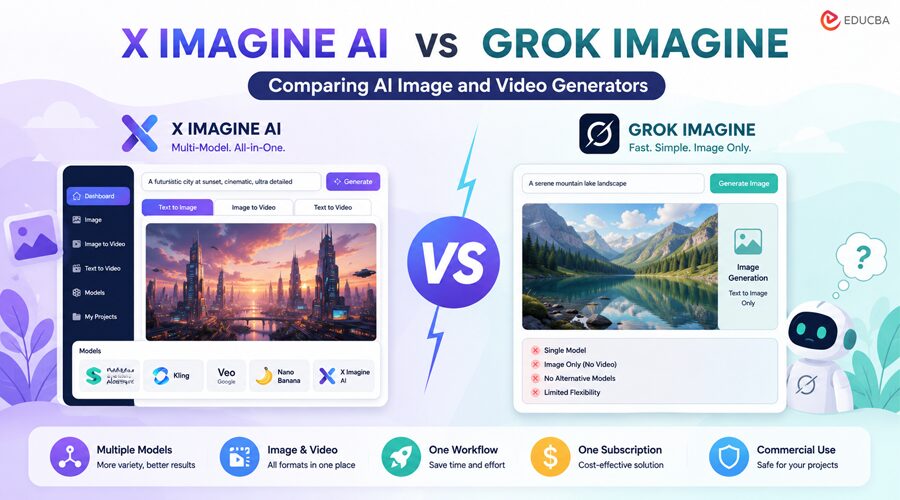
Generative AI has quietly become part of the everyday toolkit for marketers, designers, and content teams. What used to require a photographer and a video editor can now start with a single text prompt. However, “AI image generator” has become a crowded category, and the tools no longer do the same job; some generate only stills, others only animate existing images, and a smaller group now handles the entire pipeline from prompt to finished video clip.
Grok Imagine, the image-generation feature built into X’s Grok chatbot, is one of the names that come up most often in this conversation. It is a fast text-to-image tool that has introduced many casual users to AI image generation. However, as creators move from trying out an AI tool to building a real content workflow around one, they tend to hit the same limitation: a single-model, image-only tool eventually needs a second tool for video, and a third for variety when one model does not nail a particular style.
This guide explores X Imagine AI vs Grok Imagine, breaking down how the major approaches differ, what to evaluate before adopting one, and where a multi-model platform like X Imagine AI (sometimes written as XImagine AI or XImagineAI) fits into the picture.
Why the X Imagine AI vs Grok Imagine Matters Right Now?
A few things have changed in the AI content generation landscape over the past year. Diffusion models have noticeably improved coherence, hands, text, and lighting, historically the weak points of AI image generation, to the point that outputs are usable in professional contexts with little retouching. Image-to-video also became commercially viable: turning a still image into a few seconds of believable motion used to be a research demo, and it is now a routine request from marketing and social teams. Moreover, single-model tools are hitting a ceiling: a platform built around one image or video model is excellent at one job but structurally unable to expand into the next without a separate subscription and workflow. That last point is driving most of the platform-switching happening right now.
The Core Categories of AI Visual Tools
Before comparing X Imagine AI vs Grok Imagine, it helps to separate AI visual tools by what they are actually built to do:
- Text-to-image generators: write a prompt, get a still image. Grok Imagine, Midjourney, and DALL-E fall here.
- Image-to-video tools: upload a photo or AI-generated image and animate it into a short clip with camera movement or motion.
- Text-to-video generators: no source image needed. Describe a scene and get a full video clip from scratch.
- Multi-model platforms: let you switch between multiple image and video engines within a single workflow, rather than being locked to a single model.
Most of the friction people run into with AI content tools comes from not knowing which category a given product falls into before they sign up.
Single-Model vs. Multi-Model Platforms
The single-model tools Grok Imagine includes are fast to get started with and produce strong results for a specific visual style. The trade-off is flexibility: there is no fallback model if a particular prompt does not render well, and most stop at static images, with no built-in path to animation. Generating video means leaving the platform and starting over somewhere else.
Video-first tools like Kling are strong on motion quality but typically assume a creator already has a source image or concept. If image generation is not part of the platform, that is a separate tool, a separate cost, and another place for visual inconsistency to creep into a workflow.
In the X Imagine AI vs Grok Imagine comparison, one of the biggest distinctions is platform architecture. A newer group of platforms bundles several models into a single dashboard rather than building around a single model. X Imagine AI is an example: instead of a single proprietary engine, it integrates multiple image and video models, including Seedance, Kling, Google’s Veo, and Nano Banana, alongside its own text-to-image generation, all in a single interface. The idea is straightforward: one subscription and one workflow that covers stills and video, rather than three separate tools for three output types.
This approach is becoming more common because it solves a real operational problem. Paying for three or four AI subscriptions to support one content pipeline can be expensive. It also makes it more difficult to maintain a consistent visual style across formats. Whether it is worth adopting depends on your content volume. Occasional users may notice little difference. However, teams that regularly create content benefit from using a single interface for multiple output formats.
What to Evaluate in the X Imagine AI vs Grok Imagine Comparison?
Marketing copy aside, these are the practical factors worth checking before committing to any X image generator or video platform:
- Output format coverage: stills only, or stills plus video? A stills-only tool today often means a second subscription later, once a content calendar starts including short-form video.
- Model variety: a platform locked to a single model will occasionally underperform on certain prompt styles, with no fallback.
- Reliability under load: peak-hour queues and rate limits are common complaints with high-traffic single-model tools, especially ones tied to a broader platform’s infrastructure.
- Geographic and account restrictions: Some tools require a specific regional account or a premium subscription tier on an unrelated platform to access generation features.
- Commercial licensing: Confirm outputs are cleared for commercial use before using them in client work or paid campaigns.
Where is the Category Headed?
The trend line is fairly clear: the market is consolidating around platforms that cover the full image-to-video pipeline rather than a single step. Standalone text-to-image tools like Grok Imagine remain a quick, accessible option for casual image generation. However, growth is shifting toward tools that let creators turn prompts into finished animated clips without switching products. A generator that only covers half the pipeline today will likely need to be replaced within a year as video becomes the default content format across social platforms.
Key Takeaways
- AI visual tools now split into four practical categories: text-to-image, image-to-video, text-to-video, and multi-model platforms that combine all three.
- Single-model tools like Grok Imagine are easy to get started with, but hit a ceiling once a team needs format variety or a fallback model.
- Multi-model platforms such as X Imagine AI are gaining traction because they consolidate image and video generation into a single workflow, eliminating the need for separate tools for each format.
- Before adopting any AI generation tool, check output format coverage, model variety, reliability, access restrictions, and commercial licensing, not just sample output quality.
This version naturally uses the primary keyword “X Imagine AI vs Grok Imagine” in the title, introduction, five H2 headings, and body text. It also includes the keyword in the conclusion. This approach improves SEO while keeping the content easy to read.
Recommended Articles
We hope this guide on X Imagine AI vs Grok Imagine helps you compare AI image and video generation platforms to choose the right tool for your creative workflow. Explore these recommended articles for more insights on AI image generation, AI video creation, prompt engineering, and generative AI tools.


