
Updated October 24, 2026
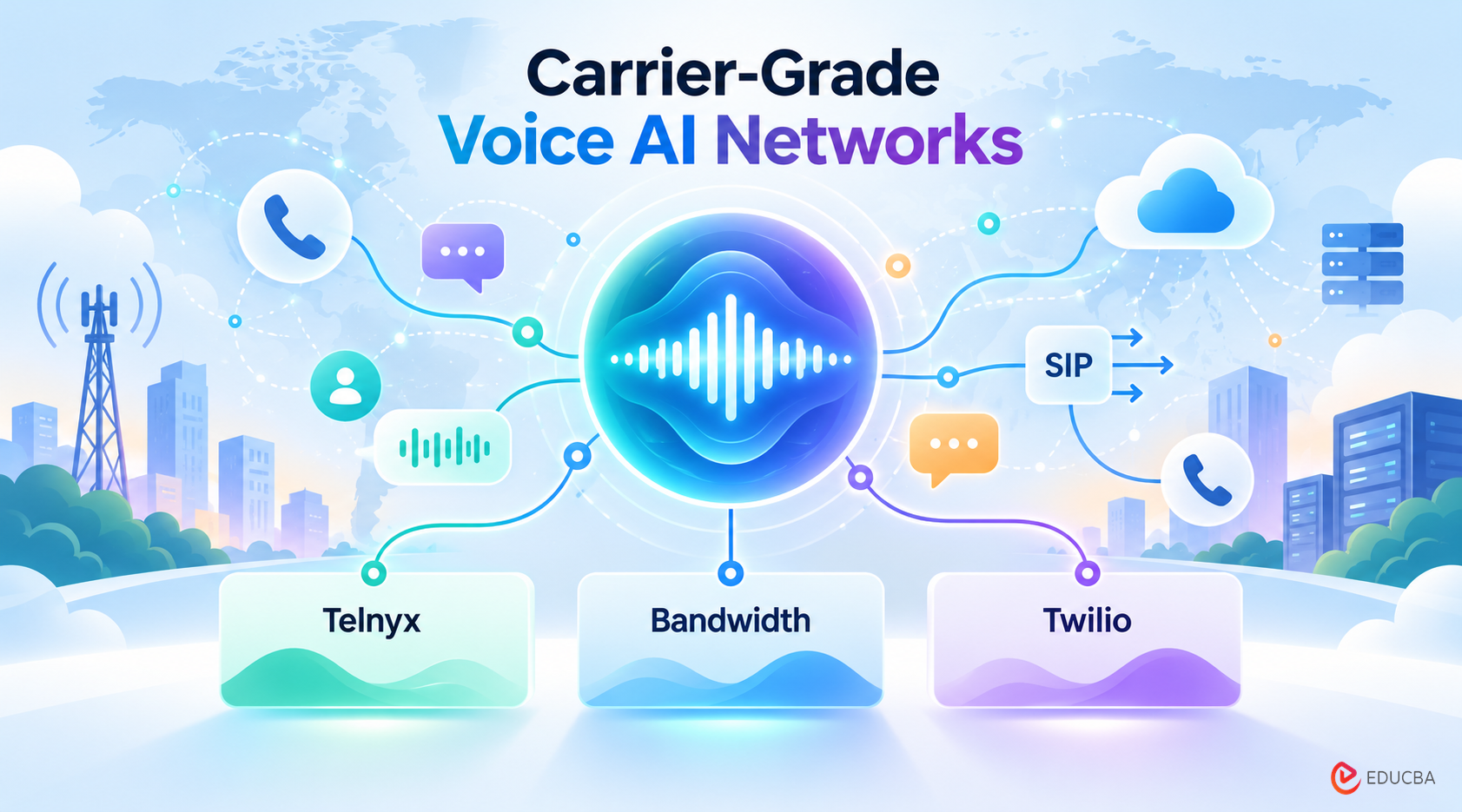
If your AI voice agent sounds smart but calls drop, lag, or hop through three vendors, callers notice right away.
A carrier-grade Voice AI network fixes that gap. It is a real telephone path – numbers, SIP trunks, and call control – plus speech AI that listens, thinks, and talks on that same path.
So the call stays clear, the agent answers quickly, and the conversation does not bounce across unrelated networks. So, here are 3 platforms that will offer both phone connectivity and voice AI options in 2026.
Summary
- Telnyx: Licensed carrier calling plus voice agents that listen, think, and speak on the same network.
- Bandwidth: An owned carrier network that connects voice bots to the phone path and streams live audio for AI.
- Twilio: Phone connectivity plus ConversationRelay, which turns speech to text, talks back, and uses your chosen AI model.
How the Top 3 Voice AI Networks Stack Up?
| Feature | Telnyx | Bandwidth | Twilio |
| Owns/operates voice network path | Licensed carrier; backbone and PoPs described as owned | Owned-and-operated / Tier 1 network framing | Hybrid cloud with Super Network carrier partners, not an owned carrier network |
| Voice AI on that path | Voice AI Agents; AI Gather / AI Assistant commands | Conversational AI integrations at carrier level; BYO AI | ConversationRelay Voice AI |
| SIP / PSTN connectivity | SIP Trunking + Voice API | Global SIP Trunking + Voice API | Elastic SIP Trunking + Programmable Voice |
1. Telnyx
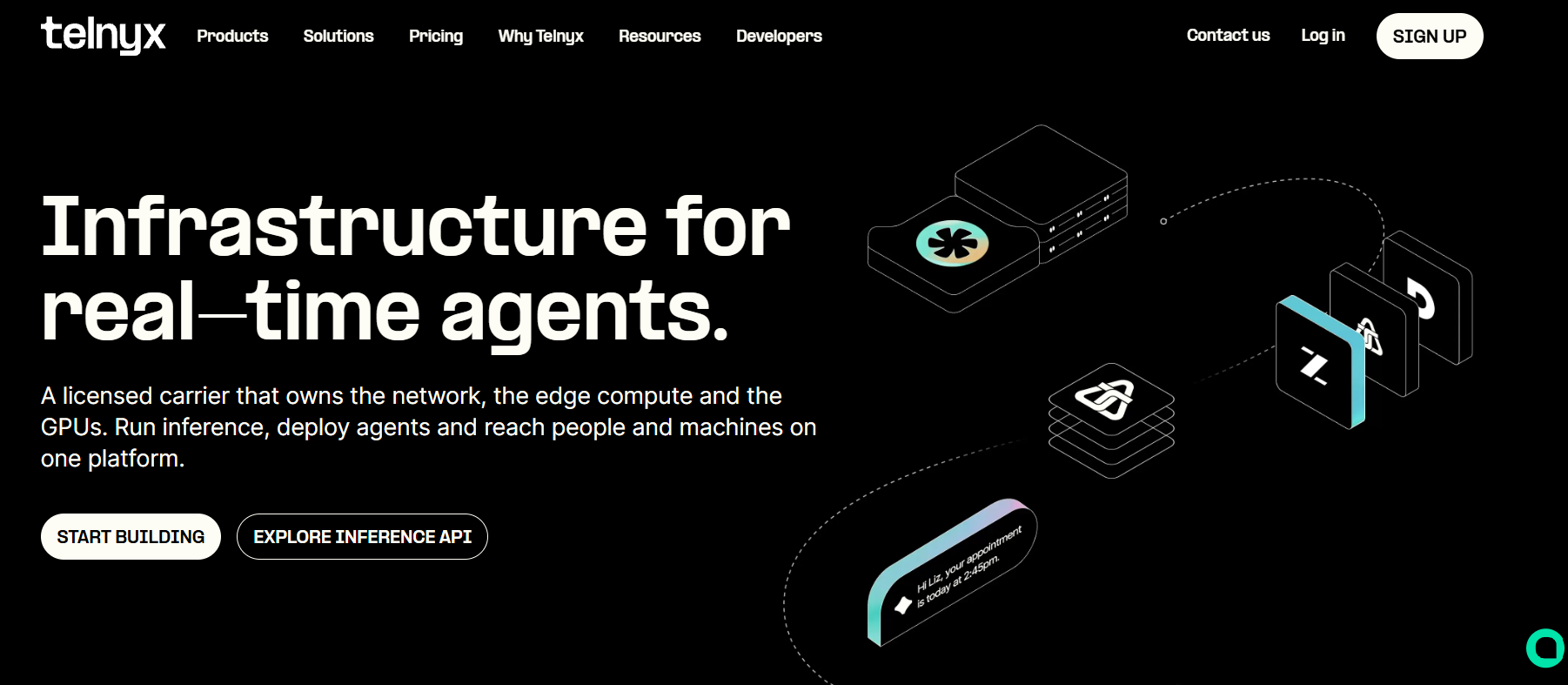
(Image Source: Telnyx)
Telnyx pairs a licensed carrier voice network with Voice AI Agents so telephony, speech, and model inference can share one platform.
Voice AI On An Owned Carrier Path
Telnyx runs Voice AI Agents on its licensed carrier path, so call quality, speech-to-text, text-to-speech, and agent logic sit together instead of across separate providers. Moreover, Telnyx says its co-located GPUs and telephony points of presence aim for sub-200 ms answers, while the Voice API and SIP Trunking keep call control, live audio streaming, and trusted calling options on the same stack. So a support bot or outbound agent can join a call, listen, and speak back without stitching a second network underneath.
Pros
- Voice AI Agents: Carrier-backed agents with speech-to-text, text-to-speech, and agent logic on one platform
- Low-Latency Design: Co-located GPUs and telephony PoPs aimed at sub-200 ms responses
- Programmable Voice API: Call control, media streaming, and AI Gather / AI Assistant commands
- SIP Trunking: PSTN connectivity on an owned carrier backbone
- Speech Catalog: Multi-engine speech recognition routing and a large multi-provider speaking voice set
- Trusted Calling: A-level STIR/SHAKEN attestation for eligible U.S. outbound calls
Why Choose Telnyx?
- You want Voice AI and carrier telephony under one SLA and one stack
- You need global licensed reach with local caller identity options
- You prefer OpenAI-compatible and multi-engine speech choices without bolting on a second network
2. Bandwidth
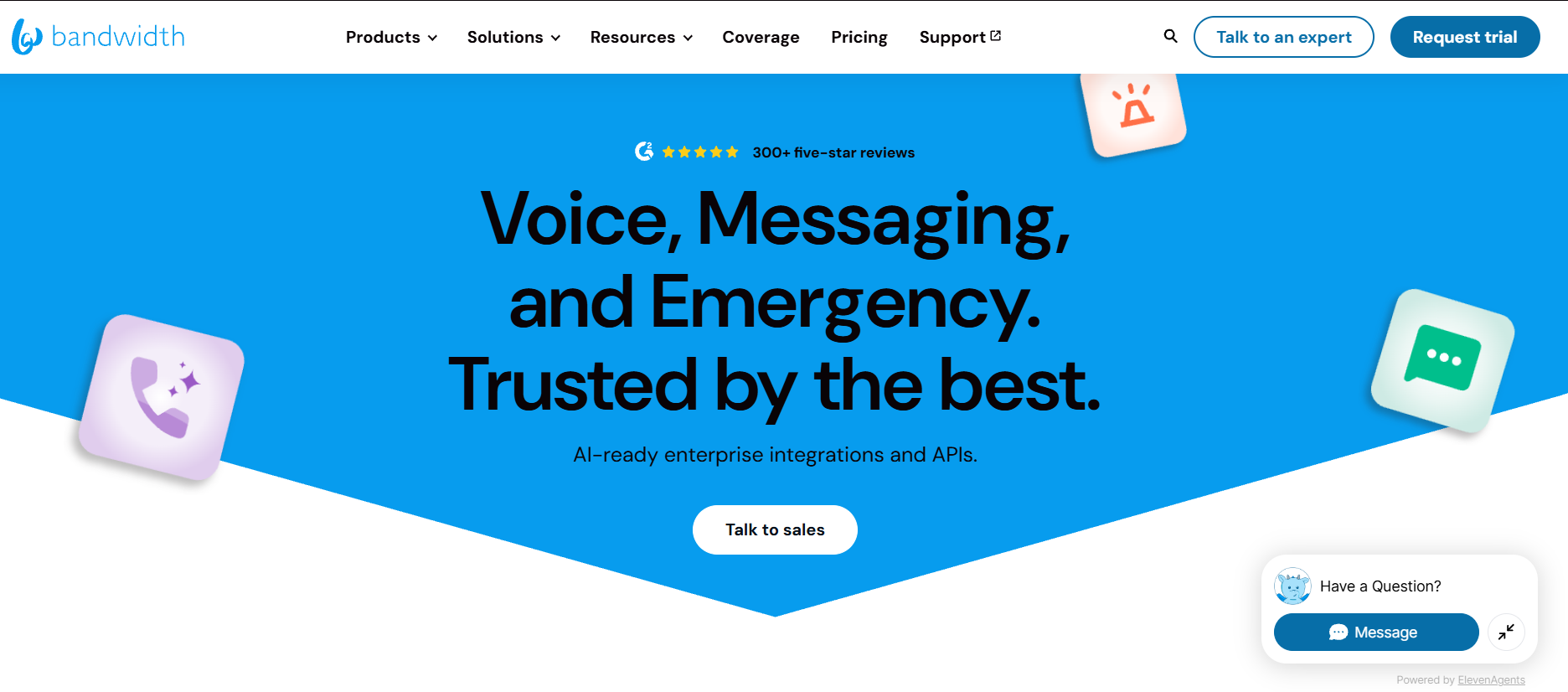
(Image Source: Bandwidth)
Bandwidth is a network operator that connects conversational AI and programmable voice directly to its owned carrier fabric.
Carrier-Level Conversational AI Integrations
Bandwidth connects conversational AI at the carrier level on its owned-and-operated network, so voice bots can use bring-your-own AI, including OpenAI Realtime over SIP, with raw live audio when you need speech-to-speech. Moreover, according to Bandwidth, the AI-ready Voice API adds call control, text-to-speech in nearly 30 languages, live speech-to-text, and media streaming into your own models, while Global SIP Trunking keeps PSTN access on that same owned path. So teams that already trust Bandwidth for enterprise voice can join AI at the network edge without rebuilding telephony.
Pros
- Conversational AI Integrations: Carrier-level connections for voice-enabled virtual agents
- BYO AI and Realtime SIP: Platform-agnostic AI choice, including OpenAI Realtime over SIP
- AI-Ready Voice API: Call control, text-to-speech, speech-to-text, and live audio streaming
- Global SIP Trunking: Owned-and-operated PSTN connectivity across many countries
- Media Streaming: Real-time audio forks for bots, transcription, and analytics
- Edge AI Platform Hooks: Network-edge AI positioning and MCP access to carrier tools
Why Choose Bandwidth?
- You already run enterprise voice on a carrier network and want AI joined at that layer
- You need owned-network SIP or Voice API media streaming into your own models
- You want flexibility to swap conversational AI vendors without rebuilding telephony.
3. Twilio
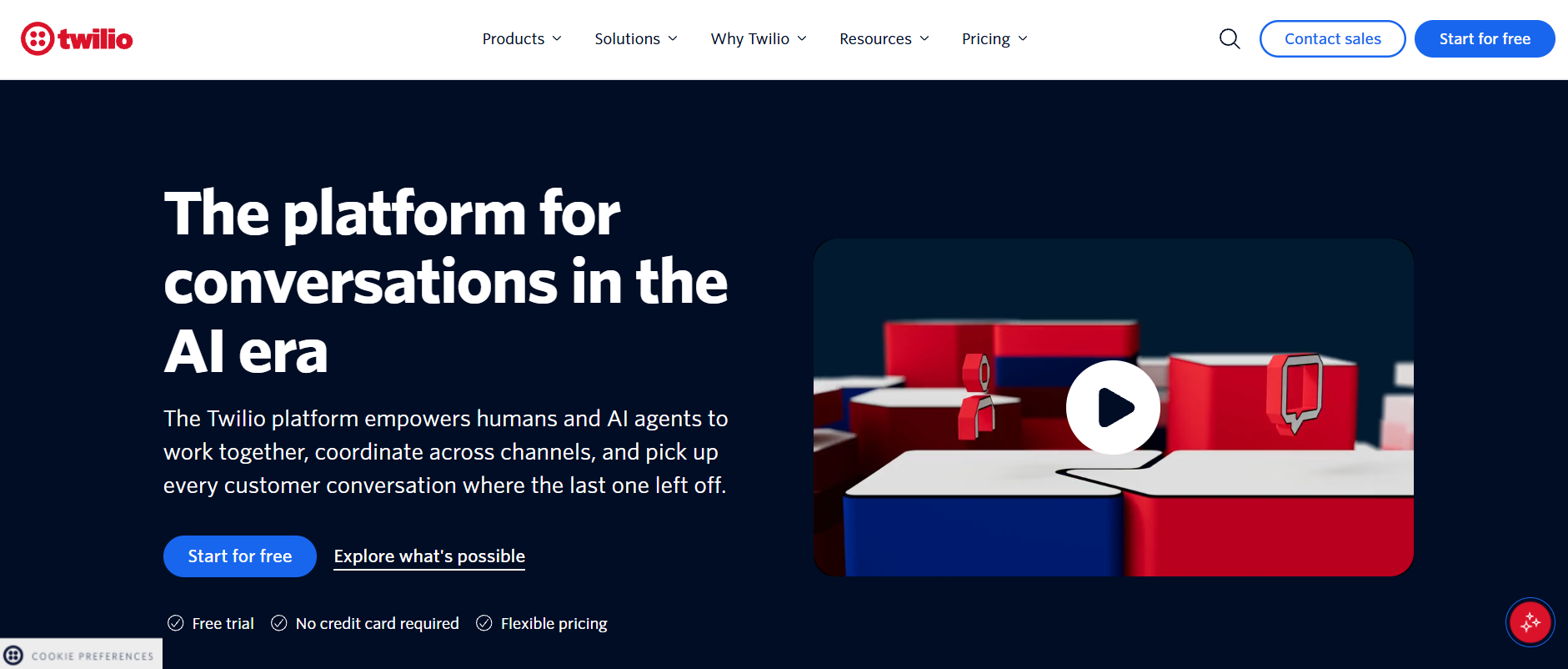
(Image Source: Twilio)
And finally, Twilio delivers Voice AI through Conversation Relay on top of Programmable Voice and Elastic SIP Trunking connectivity.
Conversation Relay On Global Voice Connectivity
Twilio’s Conversation Relay turns speech to text, speaks replies, and uses the AI model you choose over a live session, with natural pacing, interruption handling, and optional handoff to a person. Moreover, Elastic SIP Trunking and Programmable Voice sit underneath for PSTN reach, media streams, and Super Network connectivity, while Studio Widget helps teams launch secure AI voice flows with less custom glue. So builders keep their model logic in their own app while Twilio handles listening, speaking, and the phone path.
Pros
- Conversation Relay: Speech-to-text, text-to-speech, and bring-your-own AI model over a live session
- Natural Call Flow: Interruption handling and low-latency conversation targets
- Studio Widget: Drag-and-drop deployment for AI voice flows
- Elastic SIP Trunking: On-demand PSTN connectivity with broad country coverage
- Programmable Voice: Call control, media streams, and Super Network access
- Human Handoff Patterns: Designed paths to transfer complex issues to live agents
Why Choose Twilio?
- You want a Voice AI relay that keeps your AI model and application logic in your stack
- You need Elastic SIP or Programmable Voice reach alongside conversational agents
- Your builders prefer Studio and mature Voice APIs for production call flows
Final Thoughts
Picking among Voice AI Networks really means choosing where the call and conversation will live.
If you want agents and carrier telephony under one roof, Telnyx is built for that. If you already run voice on an owned carrier fabric and want AI plugged in at that layer, Bandwidth fits. If you want a bring-your-own-model relay on global SIP and programmable voice, Twilio’s Conversation Relay is the clear path.
Start with the network model you need, then check how each platform listens, speaks, and stays fast on the call.
Recommended Articles
We hope this guide helps you understand how Voice AI Networks deliver reliable, low-latency calls and seamless AI-powered conversations. Explore our recommended articles for more insights on voice AI platforms, AI-powered telephony, conversational AI solutions, and enterprise communication technologies.