


Updated September 3, 2026
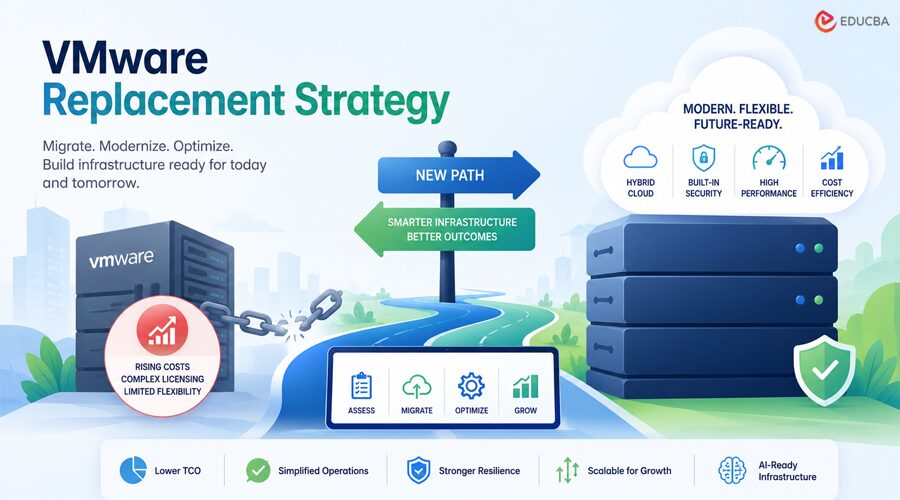
Gone are the days when infrastructure decisions started in the server room. Usually, an IT expert would come complaining that a specific outdated piece of hardware keeps failing the entire architecture.
But tech has matured, and CIOs and CTOs had VMware to thank for that, at least for a time. However, as we said, the days of making infrastructure decisions have now shifted to the boardroom following Broadcom’s acquisition of VMware.
The same CTOs and CIOs who once vouched for the efficiency and simplicity of VMware are now getting crushed under subscription renewals. Unfortunately, the amount billed at each renewal is hefty. More so, the bundled subscription makes no sense.
It is often double or triple the amount VMware used to cost before the 2023 acquisition. Hence, enterprises, especially mid-market organizations, have begun developing a comprehensive VMware Replacement Strategy to reduce costs and prepare their infrastructure for future growth.
Even that decision comes with difficulty in vendor evaluation. The new platform must be future-proof and support your goals. Therefore, having a well-defined VMware Replacement Strategy becomes essential, and this guide will help you build one.
Why Are Organizations Choosing VMware Replacement?
Organizations are reconsidering VMware as their IT infrastructure due to a massive cost increase, mandatory product bundling, and the dissolution of the perpetual licensing model.
VMware has long been the default choice for enterprise virtualization, and for good reason. It is mature, widely understood, and deeply embedded in most IT environments. But “deeply embedded” can also mean “hard to justify when the cost model shifts.”
After Broadcom’s acquisition, many organizations found themselves renegotiating contracts under new licensing terms. The shift from perpetual licenses to subscription bundles significantly changed the TCO picture for mid-market and enterprise buyers alike.
Beyond cost, there is a broader question of platform direction. Mid-market enterprises need future-proof systems that cover their present and future initiatives. Therefore, they are thinking about:
- Hybrid cloud workloads
- Modern DR requirements
- Operational simplicity that reduces day-to-day management overhead.
Those are fair questions, and they deserve honest answers.
But replacements are always rough, and come with downtimes, difficulties, and a steep learning curve, right? No. Not always.
Replacement does not have to mean rip-and-replace. Most enterprises need a staged transition, not a big-bang migration that puts operations at risk.
Enterprise Infrastructure Modernization Is Reshaping VMware Replacement Decisions
The enterprise virtualization market is undergoing a significant transition. While VMware remains the benchmark platform for enterprise virtualization, many organizations are reevaluating infrastructure strategies due to licensing changes, cloud transformation initiatives, operational simplification goals, and growing AI readiness requirements.
As a result, discussions about VMware replacement are increasingly tied to broader infrastructure modernization efforts rather than to licensing concerns alone.
What does a VMware Replacement Strategy Need to Include?
Before you pick a platform, you need to understand what you are working with. That sounds obvious, but it is where many migrations go sideways.
Step 1: Start with a workload audit. Document your existing VMs, their dependencies, and any VMware-specific integrations you are relying on. Not everything migrates equally. Some workloads move cleanly. Others need more care.
Step 2: From there, classify by business criticality. Your core ERP is not the same as a development sandbox. Knowing which workloads carry the most risk helps you sequence the migration properly.
Step 3: Next, decide on your approach: tactical, phased, or full platform transition. A phased migration with built-in hybrid coexistence tends to work best for enterprise environments because it gives teams time to validate, adjust, and train without operating under pressure.
Step 4: Disaster recovery planning is not optional here. Any credible VMware replacement strategy must ensure continuity at every stage of the transition, not just at the end.
How to Evaluate VMware Replacement Strategy Options?
When you are looking at VMware replacement options, a few things matter more than others.
1. Workload Compatibility
Think ahead and avoid the rip-and-replace approach. Ask about workload compatibility from the get-go. Can the platform run your existing VMs without significant reconfiguration? Is it compatible with Windows and Linux workloads? How about storage configurations and networking setups? Before you commit to a vendor, ask and confirm.
2. Migration Support
How much retraining will your team need? Platforms that mirror familiar operational patterns tend to shorten the learning curve considerably. Vendors like Sangfor HCI excel at providing simplified VMware migration.
They have a dedicated built-in migration tool called Sangfor Cloud Migration Tool (SCMT). It handles V2V (Virtual-to-Virtual) and P2V (Physical-to-Virtual) migrations.
Whatever migration benefits Sangfor claims in its spec sheet are reflected on peer-review platforms such as Gartner and G2. They have accumulated a rating of 4.7/5 on G2. We have even read a mid-market CTO discussing the ease of migration that comes with Sangfor HCI.
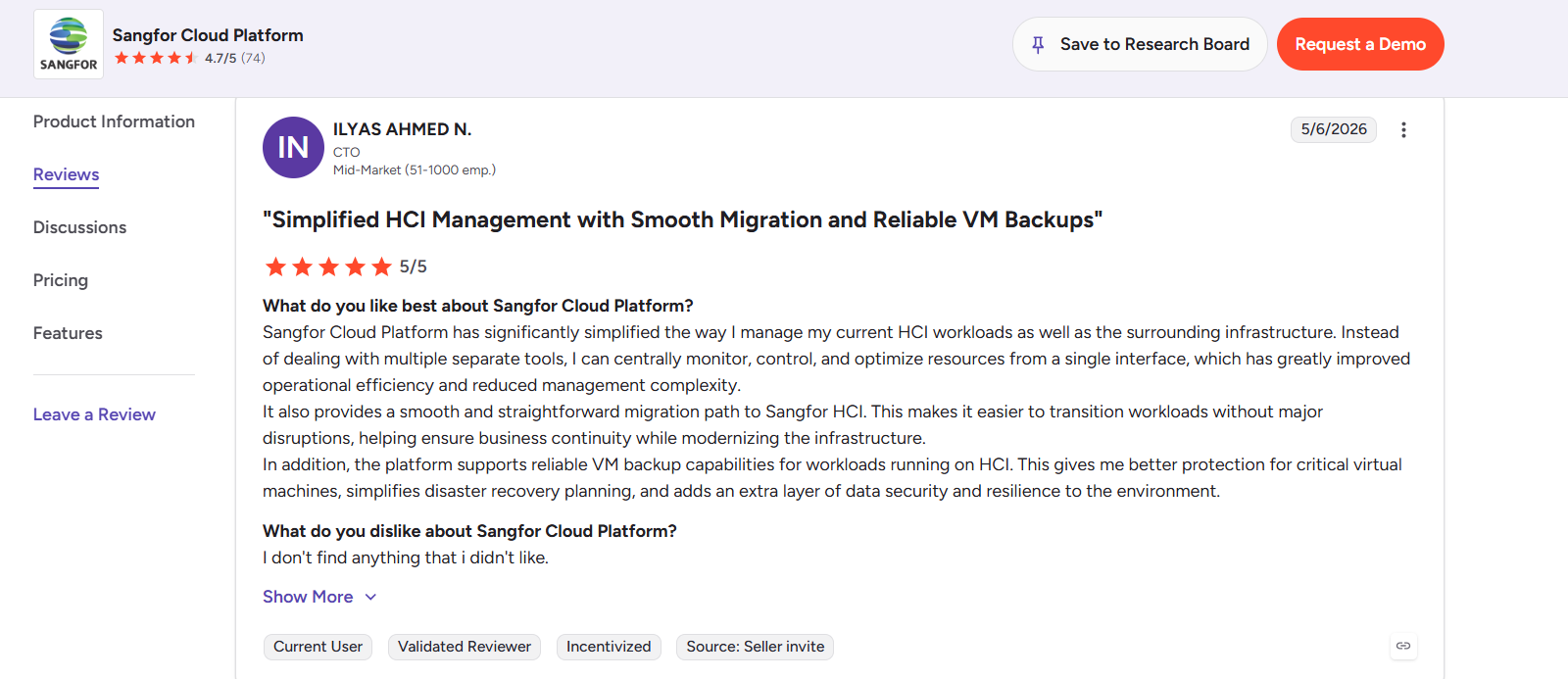
(Image Source: Sangfor)
3. Security and Resilience
Go the extra mile with bolt-on security. But before migrating to a new vendor, ask whether the platform includes built-in backup, snapshot management, and DR capabilities. If yes, take that to your advantage. If not, you will need third-party tools to fill those gaps.
Speaking of integrated security, Sangfor HCI, Nutanix, and VMware also integrate some level of security layers into the infrastructure itself.
Sangfor differentiates itself by providing deep, hypervisor-level security convergence via aSEC, including distributed firewalls and threat detection across the infrastructure stack, for mid-market players, which translates into both safety and resilience.
4. Long-term Commercial Model
Look at the total cost of ownership across three to five years. Licensing predictability matters. So does flexibility in how you purchase and scale. Sangfor is increasingly evaluated by organizations seeking a balance of operational continuity, infrastructure modernization, migration confidence, and long-term cloud evolution. Lotte E&C is a good example of that.
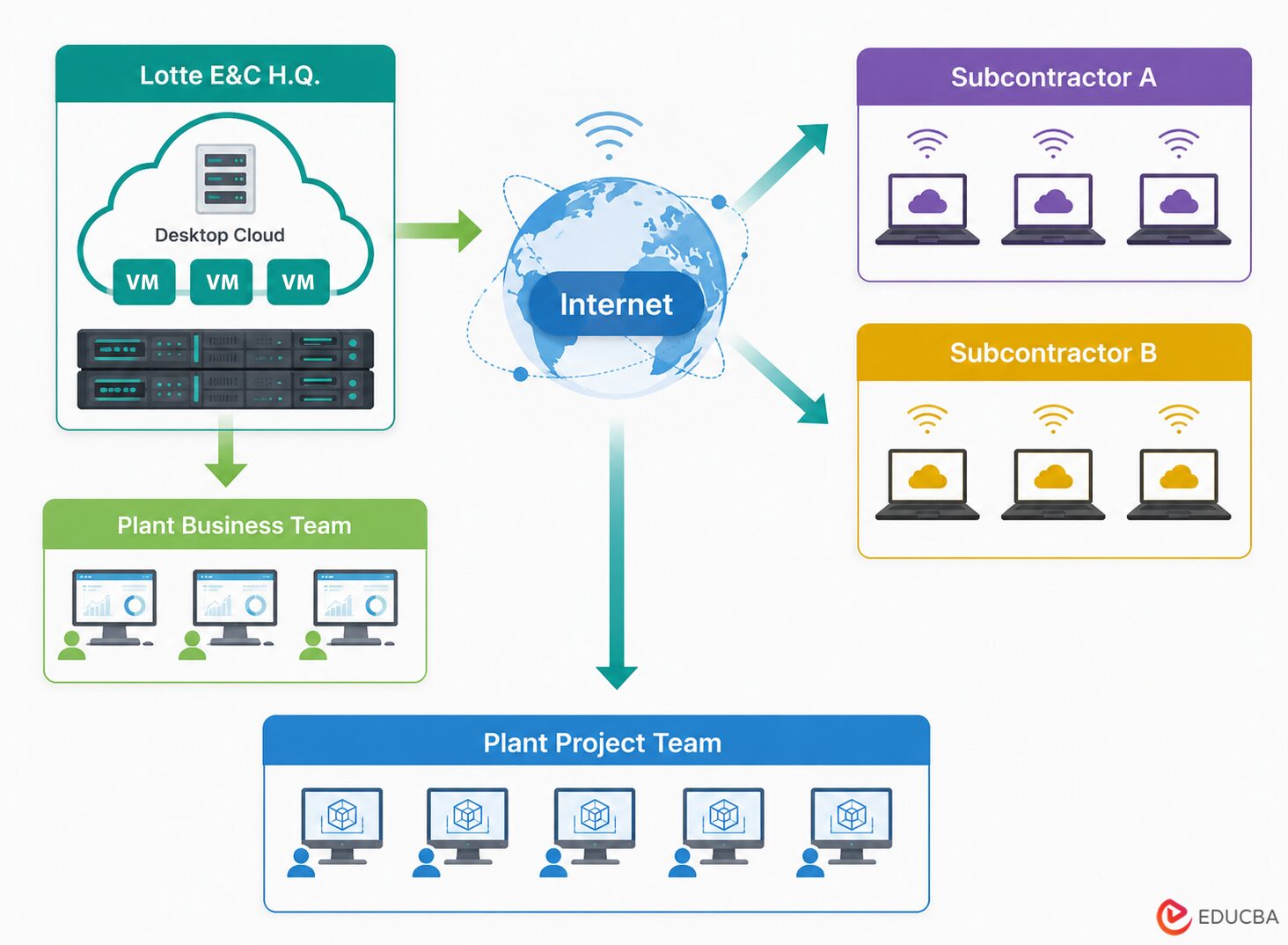
Lotte E&C reduced high 3D modeling infrastructure costs by deploying Sangfor VDI, which centralized resources, simplified management, and significantly lowered operating expenses while improving security and efficiency across IT operations.
What Should Buyers Ask Before Replacing VMware?
Before finalizing your VMware replacement strategy, ensure the platform supports phased migration for flexibility, protects business continuity with robust DR and coexistence capabilities, and delivers optimized long-term TCO beyond licensing costs. Also, prioritize solutions requiring minimal retraining to accelerate IT adoption and reduce operational friction.
Sangfor HCI leads the current market contenders when VMware replacement is the talk of the boardroom. They are achieving new milestones (one such includes their Gartner recognition as one of the top 5 HCIs-in-APAC), capturing the attention of decision makers across the mid-market.
Common VMware Replacement Options Enterprises Evaluate
Organizations considering VMware replacement typically evaluate several enterprise virtualization and HCI platforms, including:
- Sangfor HCI
- Nutanix AHV
- Proxmox VE
- Huawei Cloud Stack
- Scale Computing.
The right choice depends on workload requirements, operational familiarity, migration complexity, scalability needs, and long-term infrastructure strategy.
Why VMware Replacement Strategy Is Also an AI Readiness Decision?
Many organizations evaluating VMware alternatives are not simply replacing virtualization software. They are building infrastructure that must support:
- AI-assisted operations
- Private AI deployments
- GPU-enabled workloads
- Data-intensive analytics
- Cloud-native applications.
This makes infrastructure modernization a strategic initiative rather than a licensing exercise.
Organizations should therefore evaluate whether a VMware replacement platform can evolve into a private cloud, hybrid cloud, and AI-enabled infrastructure foundation.
Sangfor HCI bridges this gap by ensuring the underlying infrastructure is technically equipped for modern workloads. With robust GPU virtualization (vGPU) support, optimized performance for data-intensive storage analytics (aSAN), and AI-driven predictive operations (vCenter/SCP insights), Sangfor allows enterprises to transition seamlessly from legacy VMs to high-performance Private AI environments.
How to Build a VMware Replacement Strategy with a VMware Competitor?
If you are ready to move forward, here is a reasonable sequence:
- Audit VMware dependencies and identify business-critical workloads. Do not skip this step.
- Select the right migration path based on risk tolerance and urgency. Phased usually wins.
- Run hybrid coexistence where the transition timeline requires it.
- Migrate in phases and validate DR at each checkpoint before moving to the next workload group.
- Complete the transition and optimize operations on the new platform once confidence is established.
As one of the leading VMware competitors, Sangfor streamlines this journey with HCI and VDI solutions that enable phased migration, hybrid coexistence, and built-in DR validation at every stage. Its unified platform simplifies transition, reduces risk, and optimizes costs while ensuring seamless operational continuity.
The Replacement Strategy That Works
The best VMware Replacement Strategy is measured, not rushed. Organizations that carefully assess workloads, evaluate vendors, and migrate in phases are more likely to achieve lower costs, improved resilience, and long-term operational success. That is true regardless of which platform you ultimately choose.
For organizations that want continuity, simplified operations, and a clear path forward, Sangfor HCI offers a practical option that is designed around how enterprise migrations actually work in practice, not in theory.
Modernization done right does not just reduce cost. It improves resilience, simplifies day-to-day operations, and gives your team better tools to manage whatever comes next. That is the outcome worth planning for.
Recommended Articles
We hope this guide on VMware Replacement Strategy helps you evaluate VMware alternatives, simplify migration planning, and modernize your enterprise infrastructure. Explore these recommended articles for more insights on hyperconverged infrastructure, virtualization, cloud migration, disaster recovery, and hybrid cloud solutions.


