


Updated August 26, 2026
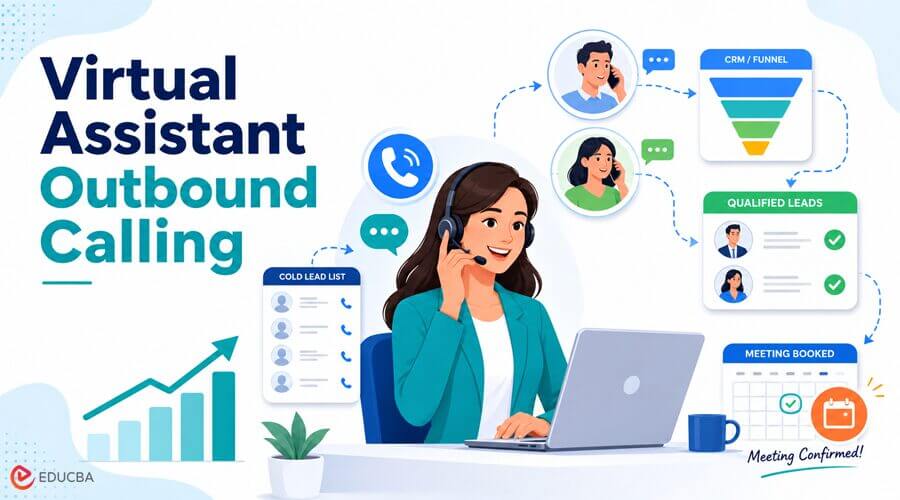
Most founders believe they can hustle their way to the next level by making their own cold calls. This is a trap. Manual dialing drains mental energy and leaves you depleted before you even reach a closing call. If you are still the one handling cold outreach personally, you have a job, not a business. Cold calling still works in 2026. In fact, it works better than ever, precisely because digital channels are drowning in AI-generated email and text spam. A real human voice on the phone is now a rare, high-value touchpoint that cuts through the noise. The question is not whether cold calling works. The problem is finding someone who can do it consistently and skillfully, without burning out your own sales team. This is exactly where virtual assistant outbound calling changes the equation.
A trained calling VA turns a cold, unresponsive list into a stream of qualified conversations, freeing your closers to focus entirely on the calls that actually convert.
Why Cold Calling Still Works, and Why Most Teams Fail at It?
More than half of B2B leads still originate from outbound activity, and most C-level executives say they prefer the phone over other channels when a real conversation is warranted. Cold calling is not dead. What is dead is the idea that sporadic, half-hearted dialing sessions squeezed between other tasks will produce results. The math on why most in-house cold calling fails is simple. Most sales require five or more follow-up attempts before a prospect engages seriously.
However, nearly half of sales reps give up after just one attempt. That gap between what closing actually requires and what gets executed is where deals quietly disappear. A dedicated outbound calling VA does not have this problem, because calling is their entire job. They are not juggling calls between closing existing deals, answering emails, and putting out other fires. They focus on working the list, following up persistently, and moving prospects toward a qualified conversation.
What an Outbound Calling VA Actually Does?
A cold calling virtual assistant handles the full outbound cycle from the first dial to the booked meeting, so your sales team only steps in once a prospect is warm and ready to talk business. Prospecting and list preparation happen before the first call. Your VA studies your target market, buyer profiles, and the objections prospects typically raise in your industry, so they sound credible and consultative from the first call rather than reading from a script. The calls themselves follow an approved framework, not a rigid word-for-word script. Your VA introduces your business, clearly delivers the value proposition, and asks qualifying questions that reveal whether the prospect is worth pursuing further.
A skilled VA treats every call as a real conversation, not a recitation. Objection handling is where a trained human genuinely outperforms automation. When a prospect says they are not interested, a skilled VA can tell the difference between polite deflection and a hard no, and responds accordingly. They know when to push gently, when to offer a different angle, and when to close the conversation respectfully and move on. Lead qualification happens in real time during the call. Your VA asks about budget, timeline, decision-making authority, and genuine need, then categorizes the prospect accordingly. Only prospects who meet your criteria get moved forward to a booked appointment.
Appointment setting closes the loop. Once a prospect is ready, your VA books the meeting directly onto your sales team’s calendar, sends confirmation details, and logs the full interaction in your CRM so your closer walks into the call with complete context. Daily and weekly reporting keeps you informed without requiring you to join every call. Call volume, connect rates, qualification outcomes, and booked meetings are all tracked and reported so you can see exactly what is working.
The Numbers Behind a Dedicated Calling VA
A dedicated outbound calling VA typically makes 50 to 150 calls per day, depending on list quality and call complexity. Most clients see two to six qualified meetings booked per week per VA, with conversion rates improving as the campaign matures and the VA refines their approach to your specific market. Pricing for a dedicated cold calling VA generally runs $8 to $15 per hour for offshore talent, most commonly sourced from the Philippines, where English proficiency and sales training are strong.
A full-time VA making that volume of calls costs roughly $1,400 to $2,600 per month, a fraction of what a local, in-house SDR would cost once salary, benefits, and overhead are factored in. The return is straightforward. If a VA books four qualified meetings per week and your team closes even one out of every eight meetings, that is roughly two additional closed deals per month generated entirely from outbound activity that was not happening consistently before.
Why Human Callers Still Beat Automated Systems?
AI-powered voice tools have improved significantly and can now hold basic conversations, handle simple objections, and qualify leads without human intervention. For high-volume, low-complexity outreach, these tools have a real place. However, for anything requiring genuine rapport building, nuanced objection handling, or reading the emotional tone of a hesitant but interested prospect, a trained human still wins.
A real conversation is the fastest way to qualify high-intent prospects because a skilled human can adapt on the fly in ways scripted automation cannot fully replicate, especially in industries where trust and relationships matter before a deal moves forward. The strongest setups in 2026 often combine both. Automated systems handle the highest-volume, lowest-intent portion of a list. A dedicated human VA handles the higher-value segments where a real conversation and careful objection handling can change the outcome.
Setting Up Your Outbound Calling System
Start with a clean, well-researched list. A VA calling against a poorly targeted list wastes time and produces frustrating results regardless of skill. Build your ideal customer profile clearly before outreach begins. Provide a clear call framework, not a rigid script. Include your value proposition, common objections in your industry, and how you want qualification handled. Give your VA real flexibility to adapt within that framework rather than forcing robotic delivery.
Set clear qualification criteria upfront. Define exactly what makes a lead worth booking a meeting for, so your VA filters consistently, and your sales team only receives genuinely qualified conversations. Review call recordings and reporting weekly, especially in the first month. This lets you catch what is working, refine the pitch, and adjust objection handling based on real prospect reactions rather than guesswork.
Final Thoughts
Cold calling remains one of the most effective ways to generate genuine sales conversations in 2026, precisely because so few companies are doing it well anymore. Founders and sales leaders who delegate this work properly build a real competitive advantage over those still trying to squeeze cold calls into an already packed day.
Virtual assistant outbound calling turns a cold, static list into a steady stream of qualified conversations without requiring your closers to absorb the rejection and grind that cold calling demands. Set up the system correctly, hire a skilled caller, and let your sales team focus on what they do best: closing the qualified leads the calling VA brings in each week.
Recommended Articles
We hope this guide helps you understand how virtual assistant outbound calling can improve cold outreach and generate more qualified sales conversations. Explore these recommended articles for more insights into outbound calling, cold calling, virtual assistants, lead generation, appointment setting, and sales support.


