
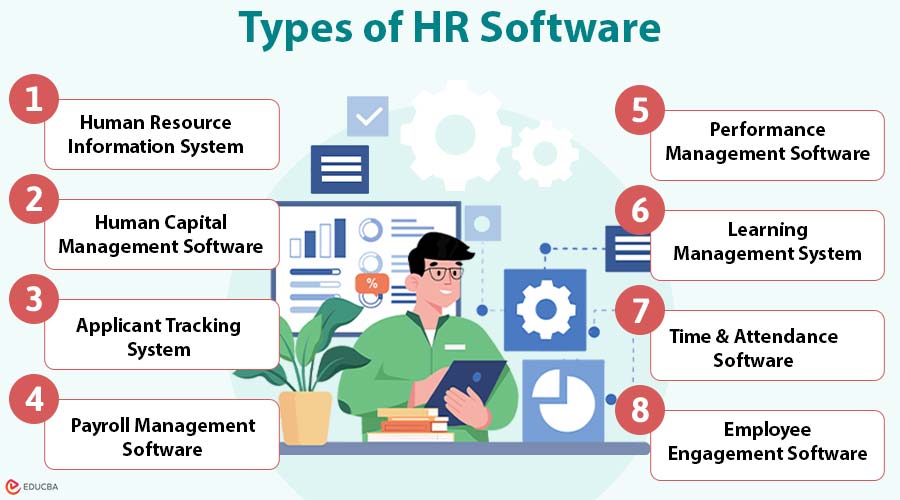
Introduction to Types of HR Software
Types of HR (Human Resource) Software refer to the different categories of digital tools designed to manage and optimize various human resource functions within an organization. These software solutions help automate recruitment, payroll, performance management, training, attendance, and employee engagement processes. By understanding the types of HR software available, businesses can choose the right tools to improve efficiency, compliance, and workforce productivity. Below are the 8 key types of HR software used in organizations today.
Key Takeaways:
- HR software automates core functions, improving efficiency, accuracy, compliance, and workforce productivity.
- Different types of HR software support specific stages of the employee lifecycle.
- Businesses should choose HR software based on size, goals, and operational complexity.
- Cloud-based HR solutions offer scalability, security, and integration for modern organizations.
Major Types of HR Software
Below are the 8 essential types of HR software that support different stages of the employee lifecycle, from hiring to engagement and development.
#1. Human Resource Information System
A human resource information system is a centralized digital platform that stores, manages, and processes core employee data, including personal records, payroll details, attendance, benefits, and compliance documentation. It streamlines daily HR administrative tasks, improves data accuracy, and enhances operational efficiency across organizations.
Key Features:
- Employee data management
- Attendance and leave tracking
- Payroll processing
- Compliance reporting
Use Case:
- Small to mid-sized companies use a human resource information system to manage day-to-day HR operations efficiently.
#2. Human Capital Management Software
Human capital management software is a comprehensive HR solution that manages entire employee lifecycle, from recruitment and onboarding to performance management, compensation, and succession planning. It helps organizations align workforce strategies with business objectives while optimizing talent development, productivity, and long-term workforce planning.
Key Features:
- Talent acquisition
- Workforce planning
- Performance management
- Compensation management
Use Case:
- Large enterprises use human capital management software platforms to align HR strategies with business goals.
#3. Applicant Tracking System
An applicant tracking system is recruitment software that automates job postings, resume screening, candidate tracking, interview coordination, and hiring workflows. It improves recruitment efficiency, reduces manual effort, enhances collaboration between hiring managers, and helps organizations manage high volumes of applications systematically.
Key Features:
- Job posting management
- Resume parsing
- Candidate tracking
- Interview scheduling
Use Case:
- Recruitment agencies and growing startups rely on applicant tracking system tools to handle large volumes of applications.
#4. Payroll Management Software
Payroll management software automates salary calculations, tax deductions, statutory compliance, bonuses, and employee payments. It ensures accurate and timely payroll processing while minimizing manual errors. The system generates payslips, tax reports, and compliance documentation, helping organizations maintain financial accuracy and legal compliance.
Key Features:
- Salary processing
- Tax calculations
- Direct deposit management
- Payslip generation
Use Case:
- Companies with complex tax structures or multiple branches benefit from automated payroll systems.
#5. Performance Management Software
Performance management software allows organizations to set goals, track key performance indicators (KPIs), conduct appraisals, and provide continuous feedback. It supports employee development through structured evaluations, 360-degree feedback, and performance analytics, helping businesses enhance productivity, accountability, and overall workforce effectiveness.
Key Features:
- Goal setting (OKRs)
- 360-degree feedback
- Performance reviews
- KPI tracking
Use Case:
- Organizations focused on growth and continuous improvement use performance tools to monitor productivity.
#6. Learning Management System
A digital platform designed to administer, oversee, and monitor staff training initiatives is called a learning management system. It facilitates the development of courses, certification administration, skill evaluations, compliance training, and performance analytics, allowing businesses to improve staff competencies, encourage lifelong learning, and spearhead professional development programs.
Key Features:
- Course creation and management
- Online learning modules
- Certification tracking
- Skill assessments
Use Case:
- Companies prioritizing employee upskilling and compliance training use LMS platforms.
#7. Time and Attendance Software
Time and attendance software tracks employee working hours, shifts, overtime, and leave balances through automated systems, including biometric or digital tracking tools. It ensures accurate workforce scheduling, payroll integration, and compliance with labor regulations, helping organizations effectively manage attendance and operational productivity.
Key Features:
- Biometric integration
- Shift scheduling
- Overtime calculation
- Leave management
Use Case:
- Manufacturing, retail, and service industries use attendance systems to manage shift-based employees.
#8. Employee Engagement Software
Employee engagement software measures workplace satisfaction, gathers employee feedback, and analyzes organizational sentiment through surveys and analytics. It helps businesses lower attrition, boost morale, increase communication, and create a happy, productive work environment by supporting recognition programs, performance insights, and culture-building efforts.
Key Features:
- Pulse surveys
- Anonymous feedback
- Engagement analytics
- Recognition programs
Use Case:
- Organizations aiming to reduce attrition and improve morale use engagement tools.
Final Thoughts
HR software plays an important role in modern organizations by automating core HR functions and improving workforce management. From human resource information system and human capital management platforms to ATS, payroll, performance, and engagement tools, each solution supports different stages of the employee lifecycle. Choosing the right system based on business size, budget, and long-term goals ensures operational efficiency, compliance, improved employee experience, and sustainable organizational growth.
Frequently Asked Questions (FAQs)
Q1. What is the most common type of HR software?
Answer: A human resource information system is the most widely used HR software for managing employee records and payroll.
Q2. Is an applicant tracking system part of HR software?
Answer: Yes, an Applicant Tracking System is specialized HR software focused on recruitment.
Q3. Can small businesses use HR software?
Answer: Yes, many cloud-based HR software solutions are designed specifically for startups and SMEs.
Q4. Is cloud-based HR software secure?
Answer: Yes, modern cloud HR software uses encryption and multi-factor authentication to protect employee data. Organizations should still verify security certifications before choosing a vendor.
Recommended Articles
We hope that this EDUCBA information on “Types of HR Software” was beneficial to you. You can view EDUCBA’s recommended articles for more information.


