
What is Trade Finance?
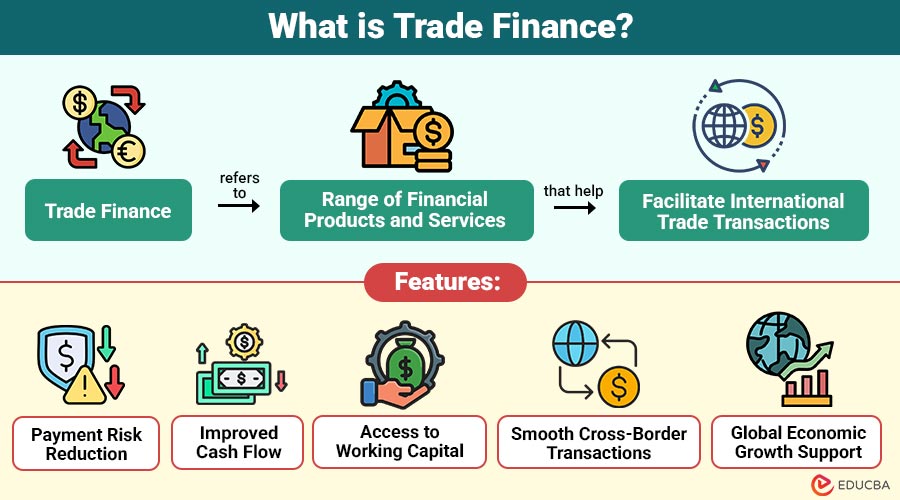
Trade finance refers to range of financial products and services that help facilitate international trade transactions. It acts as an intermediary mechanism between exporters and importers, ensuring that sellers receive payment while buyers receive goods as agreed.
Table of Contents:
- Meaning
- Importance
- Key Participants
- Working
- Types
- Features
- Challenges
- Real-World Example
- Use Cases
- Limitations
Key Takeaways:
- Trade finance facilitates international trade by ensuring secure payments between exporters and importers globally efficiently.
- Trade finance improves cash flow and reduces risks through bank-backed guarantees and financial instruments effectively.
- Letters of credit, guarantees, and factoring are key instruments used in trade finance systems globally.
- Supports global business growth but involves costs, documentation, and regulatory challenges, and complexity issues.
Importance of Trade Finance
Here are the points highlighting the importance of trade finance in global business operations:
- Risk Mitigation: Reduces risks related to non-payment, fraud, and political instability, ensuring safer and more reliable international transactions.
- Improved Cash Flow: It helps businesses maintain liquidity by offering short-term financing solutions, enabling smoother operations and the timely fulfillment of obligations.
- Increased Trade Opportunities: Companies can confidently expand into international markets with financial backing, thereby reducing uncertainty and supporting global business growth.
- Stronger Buyer-Seller Relationships: Trust is enhanced when secure payment mechanisms are in place, fostering long-term relationships between buyers and sellers in global trade.
Key Participants in Trade Finance
Trade finance involves multiple stakeholders, each playing a critical role:
- Exporter (Seller): The exporter (seller) supplies goods or services to international buyers, ensuring quality, documentation, compliance, and timely shipment as agreed.
- Importer (Buyer): The importer (buyer) purchases goods or services from sellers, arranges payment, handles customs clearance, and ensures compliance with domestic regulations.
- Banks and Financial Institutions: Banks and institutions facilitate trade by providing letters of credit, loans, guarantees, and payment processing services.
- Export Credit Agencies (ECAs): Export credit agencies provide insurance, guarantees, and support to exporters, reducing the risks of buyer default and political uncertainty.
- Insurers: Insurers offer protection against non-payment, credit risk, and political instability, thereby protecting exporters and lenders from trade-related losses.
How Does Trade Finance Work?
Trade finance operates through structured financial instruments that ensure both parties fulfill their obligations.
- Agreement on Trade Terms: The importer and exporter agree on trade terms, including pricing, delivery conditions, payment methods, and responsibilities clearly defined.
- Importer Requests Financing: The importer requests financing from their bank to support the purchase, ensuring funds and risk mitigation for the international transaction.
- Bank Issues Financial Instrument: The bank guarantees payment to the exporter upon fulfilling certain requirements by issuing a financial instrument, such as a letter of credit.
- Exporter Ships Goods and Submits Documents: The exporter ships goods on agreed terms and submits the required shipping documents to the bank for verification.
- Bank Verifies and Releases Payment: The bank verifies the documents to ensure all conditions are met, then releases payment to the exporter in accordance with the agreement.
Types of Trade Finance Instruments
Here are the major types of trade finance instruments used to facilitate secure and efficient international trade:
- Letter of Credit: Letter of credit, provided by a bank, ensures that the seller will be compensated once all conditions of the contract have been fulfilled.
- Bank Guarantee: A bank guarantee ensures the seller is compensated by the bank if the buyer defaults on payment or fails to fulfill all contractual obligations.
- Trade Credit: Trade credit allows buyers to purchase goods now and pay later, effectively improving short-term cash flow management.
- Invoice Financing: Invoice financing enables businesses to borrow against unpaid invoices, ensuring steady cash flow and improved working capital.
- Factoring: Factoring involves selling receivables to a third party at discount, providing cash while transferring collection responsibility to factor.
- Export Financing: Export financing provides exporters with funds for production, shipment, and operations, ensuring the timely completion of international trade orders.
Features of Trade Finance
Here are the features that make trade finance essential for facilitating global trade efficiently:
- Payment Risk Reduction: Minimizes payment risk by involving banks that guarantee transactions, ensuring exporters receive payments and importers get goods.
- Improved Cash Flow: It improves cash flow by allowing businesses to access funds quickly, reducing delays between shipment, invoicing, and payment cycles.
- Access to Working Capital: Businesses gain access to short-term working capital, enabling them to manage operations, production, and inventory without financial constraints.
- Smooth Cross-Border Transactions: It simplifies international trade by addressing currency, legal, and trust issues, ensuring smooth, secure cross-border business transactions.
- Global Economic Growth Support: Promotes global trade activities, strengthens international relationships, and contributes significantly to economic growth and market expansion worldwide.
Challenges in Trade Finance
Despite its benefits, it comes with challenges:
- Complex Documentation: Trade transactions require extensive documentation, increasing administrative workload, processing time, and the risk of errors during verification and approval.
- Regulatory Compliance: Different countries have varying regulations, making compliance complex, requiring businesses to understand legal frameworks, policies, and international trade laws.
- High Costs: Letters of credit and other similar instruments can have high fees, particularly for small enterprises with tight budgets and profit margins.
- Limited Access for SMEs: Small and medium enterprises often struggle to access trade finance due to limited credit history, collateral, and perceived higher risk.
Real-World Example
Imagine an Indian textile company sending products to a European buyer. The buyer’s bank issues letter of credit guaranteeing payment upon the exporter’s submission of shipping documents. This ensures:
- The exporter receives payment securely
- The importer receives goods as agreed
- The bank acts as a trusted intermediary
This is a classic example of how trade finance facilitates international trade.
Use Cases of Trade Finance
Here are some common use cases where trade finance plays a crucial role across industries:
- Manufacturing Industry: Helps manufacturers finance raw material imports, ensuring uninterrupted production and efficient supply chain management across international markets.
- Retail Sector: Retail businesses use trade finance to support global supply chains, manage inventory purchases, and ensure timely product availability across markets.
- Agriculture: Enables agricultural businesses to export commodities, ensuring farmers receive timely payments and maintain consistent production and supply cycles.
- E-Commerce: E-commerce companies use trade finance to facilitate cross-border transactions, ensuring smooth payments, logistics support, and global expansion of customer reach.
Limitations of Trade Finance
Here are some key limitations associated with trade finance that businesses should consider:
- Complex Procedures: Involves complex procedures requiring extensive documentation, approvals, and coordination, leading to delays and operational inefficiencies.
- High Transaction Costs: High transaction costs, including fees, interest, and charges, significantly reduce profitability, especially for small and medium-sized businesses.
- Dependency on Financial Institutions: Businesses depend heavily on financial institutions for approvals and funding, limiting flexibility and slowing down overall transaction processes.
- Regulatory Challenges: Regulatory challenges arise from varying international laws and compliance requirements, complicating cross-border trade and increasing global operational complexity.
Final Thoughts
Trade finance is essential for global commerce, enabling secure international transactions, improving cash flow, and reducing risks for businesses worldwide. It supports economic growth and market expansion. Despite challenges like high costs and complexity, technological advancements are enhancing accessibility, efficiency, and reliability, making trade finance increasingly important in today’s evolving global marketplace.
Frequently Asked Questions (FAQs)
Q1. Who uses trade finance?
Answer: Importers, exporters, banks, financial institutions, and government agencies use trade finance.
Q2. Is trade finance only for large companies?
Answer: No, small and medium enterprises can also benefit, although access may be limited.
Q3. What is the most common trade finance instrument?
Answer: The Letter of Credit is one of the most widely used instruments.
Q4. How does trade finance reduce risk?
Answer: It uses guarantees, insurance, and structured payments to ensure both parties fulfill obligations.
Recommended Articles
We hope that this EDUCBA information on “Trade Finance” was beneficial to you. You can view EDUCBA’s recommended articles for more information –

