
Updated March 15, 2023

Introduction to tensorflow placeholder
Tensorflow provides the different types of functionality to the user, in which that placeholder is one of the functionalities that the Tensorflow provides. Basically, the TensorFlow placeholder is a simple variable that stores the assigned data for later users or says later date. With the help of this stored data, we can perform the different operations we want, such as building a computation graph without any data because Tensorflow placeholder provides the required data to the system to perform the operation. So in simple words, we can say Tensorflow placeholder is used to manage all our data, but we need to maintain some basic structure for further use.
What is a TensorFlow placeholder?
Tensorflow is an open-source AI structure created by Google that can assemble neural organizations and play out an assortment of all AI errands. Tensorflow chips away at information stream diagrams where hubs are the numerical activities and the edges are the information in the tensors, thus the name Tensorflow. At the point when we train the model, we need to dole out certain loads and predispositions all through the meeting. TensorFlow factors can hold the upsides of predispositions and loads all through the meeting. We need to remember that TensorFlow factors should be introduced. In TensorFlow, factors are of incredible use when we are preparing models. As constants, we need to call a constructor to introduce a variable; the underlying worth can be passed in as a contention.
Tensorflow placeholders are at first vacant and are utilized to take care of in the real preparing models. Assuming we need to infuse the information into a calculation chart, we need to utilize the instrument named as a placeholder. Placeholders are bound inside certain articulations. Factors can, without much of a stretch, be added to the computational chart by calling a constructor.
Create A TensorFlow Placeholder Tensor
Now let’s see how we can create a tensorflow placeholder as follows.
Syntax
variable name = tensorflow.placeholder(specified data type, None)
Explanation
In the above syntax, we use TensorFlow with a placeholder as shown in the above syntax; also, we need to specify the data type.
Now let’s see how we can create placeholders with examples as follows.
import tensorflow as tflow

y = tflow.placeholder("float", None)

z = y * 3

with tflow.Session() as sess:

r = sess.run(z, feed_dict={y: [2, 3, 4]})

print(r)
Explanation
In the above example, we try to implement a placeholder; first, we need the TensorFlow and NumPy libraries as shown. After that, we created a placeholder for future use. Finally, in this example, we perform a multiplication operation as shown in the above program. The final output of the above program we illustrated by using the following screenshot as follows.

Graph tensorflow placeholder
Now let’s see how we can create a TensorFlow graph for placeholders as follows.
A Graph is an outline of the calculations and tasks in a meeting. For example, Tensorflow first makes a computational chart where the hubs are tasks and edges are tensors and afterward executes in a meeting.
Now let’s see an actual example of graph TensorFlow for better understanding as follows.
Example
import tensorflow as tflow

# 2X2 matrices with placeholder

x = tflow.placeholder(tflow.float32, shape=(2,2))

y = tflow.placeholder(tflow.float32, shape=(2,2))

# Addition operation of two by two matrices

z = x + y

a = [[3,4],[4,8]]
b = [[2,5],[4,2]]
with tflow.Session() as sess:

# Here we need to pass the memory location that we want.

path='D:/Work From Home'

# Here we generate the computational graph.

tensor_graph=tflow.summary.FileWriter(path, sess.graph)

#In this step we need to dump the value of a and b to generate the result.

print(sess.run(z, feed_dict = {x:a, y:b}))
Explanation
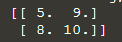
In the above example, we try to implement the graph TensorFlow with a placeholder as shown. First, we need to import the TensorFlow library; after that, we need to create the two by two matrices for placeholders as shown. After the creation of the placeholder, we need to write the code to perform any operation that we want; in this example, we perform the addition operation of two matrices. Finally, we write the code to create the computational graph and generate the result at the end of the code. The final output of the above program we illustrated by using the following screenshot as follows.
Arguments tensorflow placeholder
Now let’s see what argument TensorFlow placeholder is as follows.
A placeholder is a variable that gets allocated with information. It permits us to make our activities and assemble our calculation chart and afterward feed information into the diagram through these placeholders. Finally, it takes care of the tensor to introduce the information to the stream.
Variable = tf.placeholder(specified data type, specified shape=None, specified name=None )
Arguments
specified data type: it is used to specify the data type, and it depends on the user requirement that means we can use any data type.
specified shape: Specified shape is an optional part of a placeholder; we can define the shape of data as per the user requirement; otherwise, it has by default shape.
specified name: it is also an optional part of the placeholder; it is used to specify the name of the placeholder.
Example
Now let’s see the different examples of placeholder for better understanding as follows.
import tensorflow as tflow

x = tflow .placeholder(tflow .float32, shape=(2,2))

y = tflow .placeholder(tflow .float32, shape=(2,2))

z = x + y

a = [[5,7],[2,1]]
b = [[9,5],[4,2]]
with tflow.Session() as sess:

print(sess.run(z, feed_dict = {x:a, y:b}))
Explanation
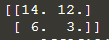
In the above example, we simply implement a placeholder program with the argument as shown. Here first, we import the TensorFlow. After that, we need to write the code for placeholders with all arguments as shown. In this example, we perform the addition operation of matrices, as finally, we print the result of the addition operation with the help of the session. The final output of the above program we illustrated by using the following screenshot as follows.
So in this way, we can implement placeholders for different purposes.
Conclusion
We hope from this article you learn more about the placeholder. From the above article, we have taken in the essential idea of the placeholder, and we also see the representation and example of the TensorFlow placeholder. From this article, we learned how and when we use the TensorFlow placeholder.
Recommended Articles
This is a guide to tensorflow placeholder. Here we discuss the essential idea of the TensorFlow placeholder, and we also see the representation and example of the TensorFlow placeholder. You may also have a look at the following articles to learn more –

