


Updated June 8, 2026
What is Retrieval Augmented Generation (RAG)?
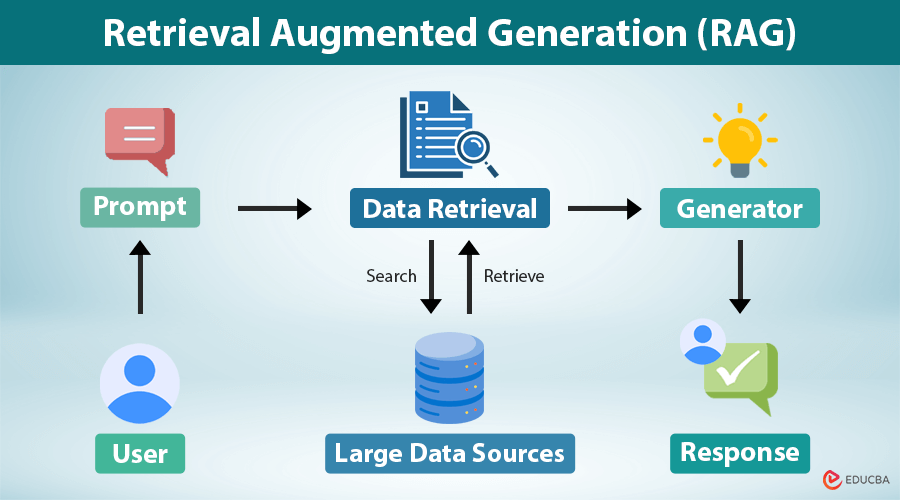
Retrieval Augmented Generation (RAG) is an AI method in which a system first searches for relevant information and then uses it to generate a response. This makes answers more accurate than those from traditional AI models that rely solely on trained data.
In the fast-changing field of enterprise data management, retrieval augmented generation (RAG) has emerged as a transformative technology that improves information retrieval and generation processes. Using advanced algorithms and large datasets, RAG enables organizations to efficiently and accurately derive valuable insights from extensive data sets. This transformative approach to data access is reshaping how enterprises across industries manage and leverage their information assets, unlocking new opportunities for innovation and growth.
The Fundamentals of RAG Architecture
At the heart of RAG are several key components that work together to provide exceptional results:
- Vector Database Integration: RAG systems integrate with vector databases, which store data in a high-dimensional format. This integration enables efficient searches for relevant information by recognizing semantic relationships between data points.
- Query Processing System: Acting as the brain of the RAG architecture, the query processing system interprets user queries and turns them into actionable commands. Using NLP (natural language processing) and ML (machine learning), it understands the intent behind queries and generates highly relevant responses.
- Context Enhancement Layer: This layer enriches the retrieved information by adding context. It analyzes relationships among data points and integrates external sources to provide users with a deeper, more nuanced understanding of the content.
How Does Retrieval Augmented Generation (RAG) Work?
RAG works in three main steps:
- User Query Input: The user submits a question or prompt to the system.
- Information Retrieval: The system searches external data sources, such as vector databases, documents, and APIs, to find relevant information.
- Response Generation: The retrieved information is then fed into a language model, which produces a final output based on both the user’s query and the relevant context.
This process ensures responses are more accurate, up-to-date, and contextually relevant.
Benefits of Implementing RAG in Business
Implementing RAG technology within an enterprise setting offers a multitude of benefits that directly impact business performance and outcomes:
- Enhanced Data Accuracy: RAG systems significantly improve data retrieval accuracy by leveraging advanced algorithms and machine learning techniques. By considering the semantic relationships between data points and incorporating contextual information, RAG ensures that the most relevant and precise information is retrieved, reducing the risk of errors and inconsistencies.
- Improved Response Time: RAG technology can quickly process large amounts of data and generate highly relevant responses, dramatically reducing the time required to access critical information. This improved response time enables organizations to make faster, more informed decisions, ultimately increasing agility and competitiveness in the market.
- Better Context Retention: RAG’s context enhancement layer plays a vital role in preserving the context of retrieved information. By analyzing relationships among data points and incorporating external sources, RAG systems offer a more comprehensive understanding of the retrieved content while preserving the original context throughout the retrieval and generation process.
Real-World Use Cases
Here are some of the most impactful real-world applications:
- Customer Support Chatbots: Give accurate answers from company FAQs and knowledge bases in real time.
- Enterprise Search: Helps employees quickly find relevant documents across large internal databases.
- Healthcare Assistance: Retrieves medical research and guidelines to support better clinical decisions.
- Financial Analysis: Extracts insights from reports, filings, and market data for faster decision-making.
- Legal Research: Finds relevant case laws and legal documents efficiently.
- E-commerce Recommendations: Use product data and reviews to improve search and personalization.
Best Practices and Considerations
To successfully implement RAG technology within an enterprise environment, organizations must follow best practices and consider several key factors:
- Data Preparation Pipeline: Ensuring data quality and consistency is crucial for RAG systems’ effectiveness. Establishing a robust data preparation pipeline that includes data cleaning, normalization, and enrichment is essential for optimizing RAG performance.
- Retrieval Mechanism: Selecting the appropriate retrieval mechanism based on the enterprise’s specific needs and characteristics is critical. When choosing between retrieval techniques such as vector similarity search and semantic indexing, it is essential to carefully consider factors such as data volume, complexity, and desired response time.
- Response Generation: Fine-tuning the RAG system’s response-generation component is essential for delivering accurate, contextually relevant information to users. This process includes training the system with domain-specific data and integrating user feedback. It also involves continuously refining generation algorithms to enhance response quality and relevance.
The Future of RAG in the Enterprise Landscape
As retrieval augmented generation technology continues to evolve, its impact on the enterprise landscape will likely grow. Organizations will increasingly rely on RAG for faster and more accurate data retrieval, leading to improved decision-making and innovation.
RAG technology will likely be applied across diverse industries such as healthcare, finance, e-commerce, and customer service in the coming years. By integrating other emerging technologies, such as AI and blockchain, RAG will continue to evolve. It will enable businesses to develop smarter, more secure, and scalable data management solutions.
Final Thoughts
Retrieval Augmented Generation (RAG) is transforming the way enterprises access and utilize data. By improving data accuracy, speed, and context retention, RAG is helping businesses unlock new opportunities for growth and innovation. As this technology advances, its potential will grow, providing organizations with the tools they need to stay competitive in a data-driven world.
Recommended Articles
We hope this comprehensive guide on Retrieval Augmented Generation (RAG) helps you understand how AI systems combine retrieval and generation for better results. Explore these related articles to deepen your knowledge of artificial intelligence.


