


Residential and Commercial Projects: Overview
Human society around the world operates to make the lives of its inhabitants easier. Leaders achieve this through smart decisions and effective management. One such decision includes implementing an optimum blend of residential & commercial projects. With proper decisions and management, including the use of construction takeoff services, these projects can improve the overall living experience. The right balance of residential and commercial projects is crucial to creating thriving, functional communities.
What Makes a Human Society Balanced?
Human beings settle in different locations for various reasons, and as they do, they make certain arrangements for their survival. All these facilities combine to make up a human society. These facilities include roads, public transport, schools, healthcare facilities, markets, labor market, and others.
To answer the question of what makes a society balanced, the answer can be highly subjective. A simple understanding of this includes a society where all the necessary facilities are available. One way to achieve this is through an optimum blend of residential & commercial projects.
Blending Residential and Commercial Projects in Human Settlements
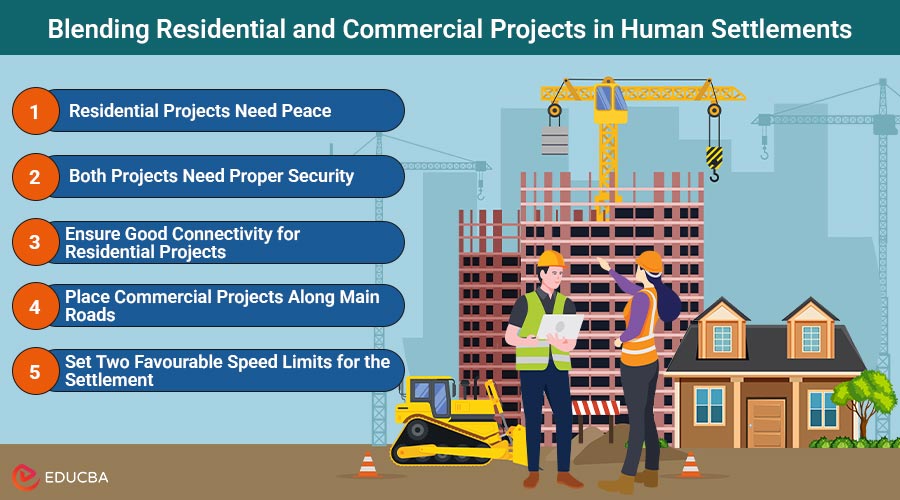
Among the primary types of construction projects stand residential and commercial projects. These projects provide residential facilities and locations for commercial activities. However, they clash with each other in many ways, and thus the blend requires some careful planning. Key Factors to consider are:
1. Residential Projects Need Peace
Commercial projects generate noise due to their concerning activities. This noise is highly detrimental to residential projects and their intended purposes, as it disrupts the peace. The right way to ensure that residential projects receive their required peace of mind. Builders achieve this by constructing commercial projects in areas separate from residential areas.
2. Both Projects Need Proper Security
Although both construction projects include their own security systems, project teams install them based on the estimated needs for each project, with the right support from services like residential estimating. However, the projects need security as part of the overall community. Project teams handle this differently for each project and manage it accordingly.
3. Ensure Good Connectivity for Residential Projects
Inhabitants of any area should be able to move around and reach other settlements. Planners achieve this through a well-structured road network. Moreover, it should include the right set of public transportation facilities close by. This network requires proper planning to ensure that residential projects and their inhabitants have easy access to main roads, while also being protected from the noise and traffic of those busy roads.
4. Place Commercial Projects Along Main Roads
While residential projects move away from main roads, commercial projects tend to cluster around them. This location facilitates commercial activities through both accessibility and visibility. It offers great prospects for growth. Moreover, the availability of a market close to the residence and their livelihood.
5. Set Two Favourable Speed Limits for the Settlement
Managing a good blend of residential and commercial projects includes managing traffic effectively. One important factor is having proper speed limits. However, it requires different speed limits, i.e., one for residential areas and another for commercial areas. It is essential to maintain both the traffic and local activities in good condition.
6. Have Regulations Related to Pollution Management
To achieve the right condition, you also need to consider pollution management, among other things. Both residential and commercial projects generate waste materials, which can harm the environment. Therefore, you need proper regulation for both types differently to achieve effective results.
7. Regulate Construction Practices
Construction practices, like other activities, have both positive and negative impacts on the neighborhood. While the benefits may justify constructing projects, project teams should also manage their disadvantages. This should include implementing the right practices, such as acquiring the required materials through commercial estimating services.
Final Thoughts
For human societies to function smoothly and provide a high quality of life, proper planning and management are essential. Achieving the optimum blend of residential and commercial projects plays a pivotal role in this. By making informed decisions and employing effective management strategies, communities can be designed to be both livable and economically vibrant, ultimately enhancing the overall experience for all inhabitants.
Recommended Articles
We hope this guide on Residential and Commercial Projects helped you balance urban planning. For more community design tips, explore these related articles:

