
What is Remote Workforce Management?
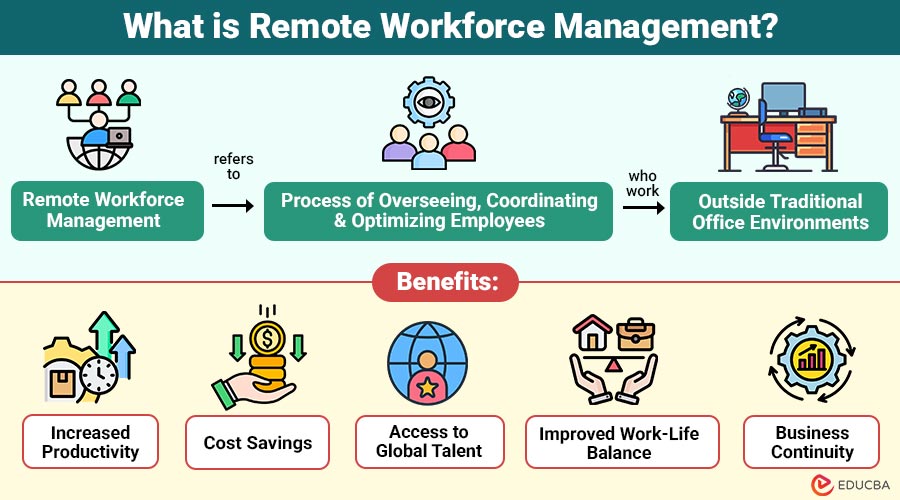
Remote workforce management refers to the process of overseeing, coordinating, and optimizing employees who work outside traditional office environments. These employees may operate from home, co-working spaces, or different geographic locations.
In simple terms, it involves ensuring that remote employees remain productive, engaged, and aligned with organizational goals, even when they are not physically present in the workplace.
Table of Contents:
- Meaning
- Importance
- Key Components
- Key Objectives
- Tools
- Benefits
- Challenges
- Best Practices
- Real-World Example
- Future Trends
Key Takeaways:
- Remote workforce management enhances productivity through structured communication, clear goals, and effective digital collaboration tools.
- Organizations benefit significantly from cost savings, access to global talent, flexibility, and improved overall employee satisfaction.
- Clear expectations and result-based performance evaluation are essential for successful remote workforce management practices.
- Strong leadership and regular feedback help maintain engagement, trust, and accountability in remote environments.
Importance of Remote Workforce Management
The shift toward remote work has transformed how businesses operate. Effective remote workforce management is important for several reasons:
1. Ensures Productivity
Effective remote workforce management ensures employees stay focused, meet deadlines, and maintain consistent productivity levels despite working from different locations.
2. Enhances Communication
Structured communication systems help teams collaborate effectively, reduce misunderstandings, and ensure timely sharing of information across distributed remote work environments.
3. Supports Flexibility
Employees can work remotely while preserving productivity, encouraging flexibility, and better accommodating individual schedules thanks to remote workforce management.
4. Improves Employee Satisfaction
Providing flexibility and autonomy improves work-life balance, leading to higher employee satisfaction, engagement, motivation, and long-term retention within the organization.
5. Reduces Operational Costs
Organizations save significantly on office space, utilities, maintenance, and infrastructure expenses by effectively managing a distributed, remote workforce.
Key Components of Remote Workforce Management
Here are the key components that ensure effective management of a remote workforce and smooth day-to-day operations.
1. Communication and Collaboration
Clear, consistent communication using digital tools ensures teamwork, reduces confusion, and keeps remote employees aligned.
2. Task and Project Management
Assigning tasks, setting deadlines, and tracking progress consistently ensure work completion, accountability, and efficient project delivery.
3. Performance Monitoring
Measuring employee output using KPIs and goals helps evaluate productivity, ensuring performance without relying on physical presence.
4. Time Management
Tracking work hours and productivity ensures accountability, while flexible schedules help employees maintain efficiency and work-life balance.
5. Technology and Tools
Reliable tools for communication, file sharing, cybersecurity, and automation support smooth operations and effective remote workforce management.
6. Employee Engagement
Virtual activities, recognition programs, and feedback keep employees motivated, connected, and engaged within the remote work environment.
Key Objectives of Remote Workforce Management
Here are the key objectives that guide effective remote workforce management and help organizations achieve productivity, collaboration, and efficiency in distributed teams.
1. Maintain High Levels of Productivity
Ensure employees stay focused, meet deadlines, and consistently deliver quality work while working remotely.
2. Ensure Effective Communication Across Teams
Promote clear, timely communication using digital tools to avoid misunderstandings and improve coordination among remote teams.
3. Improve Employee Engagement and Satisfaction
Foster motivation, recognition, and work-life balance to keep employees satisfied, committed, and actively involved in tasks.
4. Enable Flexibility Without Compromising Performance
Allow flexible schedules while ensuring employees meet their goals, maintain productivity, and deliver consistent performance.
5. Strengthen Collaboration Across Locations
Encourage teamwork across different locations using collaborative tools, ensuring seamless coordination and shared understanding of objectives.
6. Reduce Operational Inefficiencies
Streamline processes, eliminate delays, and optimize resources to improve overall efficiency and reduce unnecessary operational costs.
Tools Used in Remote Workforce Management
Organizations use various tools to manage remote teams effectively:
1. Communication Tools
Video conferencing and messaging platforms enable real-time interaction, improving team coordination, clarity, and the efficiency of remote collaboration.
2. Project Management Tools
These tools help organize tasks, track deadlines, monitor workflows, and ensure projects are completed efficiently.
3. Time Tracking Software
Tracks employee work hours, monitors productivity levels, and ensures accountability while supporting flexible remote work schedules.
4. Cloud Storage Solutions
Enables secure file storage, easy access, and seamless sharing, allowing teams to collaborate efficiently from anywhere.
5. Cybersecurity Tools
Protect sensitive company data, prevent cyber threats, and ensure safe remote access to organizational systems and information.
Benefits of Remote Workforce Management
Here are the key benefits that highlight how remote workforce management supports efficiency, flexibility, and overall business growth:
1. Increased Productivity
Remote employees face fewer distractions, work comfortably, and often achieve higher efficiency, resulting in improved overall productivity levels.
2. Cost Savings
Companies reduce expenses on office space, travel, and utilities, while employees save money on daily commuting costs.
3. Access to Global Talent
Organizations can hire skilled professionals worldwide, expanding talent pools and bringing diverse perspectives and expertise to teams.
4. Improved Work-Life Balance
Flexible schedules help employees manage personal responsibilities effectively, reducing stress and improving overall well-being.
5. Business Continuity
Remote work enables uninterrupted operations during disruptions like natural disasters, ensuring stability and consistent business performance.
Challenges of Remote Workforce Management
Here are the key challenges that organizations face while managing a remote workforce:
1. Communication Barriers
Inability to face-to-face interaction can lead to misunderstandings, delays, and unclear distant team communications.
2. Employee Isolation
Remote employees may feel disconnected, leading to lower morale, reduced engagement, and a decreased sense of belonging within teams.
3. Performance Tracking
Monitoring productivity without direct supervision is challenging and requires clear goals, KPIs, and reliable performance evaluation methods.
4. Time Zone Differences
Working across multiple time zones can create scheduling conflicts, communication delays, and difficulties in real-time collaboration.
5. Security Risks
Remote work increases vulnerability to data breaches, requiring strong cybersecurity measures, secure networks, and employee awareness practices.
Best Practices for Managing a Remote Workforce
Here are the best practices that help organizations effectively manage remote teams while improving productivity, communication, and employee satisfaction:
1. Set Clear Expectations
Clearly define roles, responsibilities, and goals so employees understand expectations and can perform tasks efficiently.
2. Use the Right Tools
Invest in dependable project management and communication solutions to improve teamwork, processes, and the general effectiveness of remote work.
3. Foster Open Communication
Encourage regular check-ins, honest feedback, and transparency to build trust and ensure smooth communication across teams.
4. Focus on Results, Not Hours
Evaluate employees based on outcomes and performance rather than tracking hours, promoting productivity and accountability.
5. Encourage Work-Life Balance
Promote flexible schedules and regular breaks to prevent burnout and support employees’ mental health and well-being.
6. Build a Strong Team Culture
Organize virtual activities and celebrate achievements to strengthen relationships and maintain team spirit in remote settings.
7. Provide Training and Support
To assist staff in utilizing tools efficiently and adjusting to remote work procedures, provide ongoing training and assistance.
Real-World Example
Here is a real-world example showing how remote workforce management works in practice and the benefits it delivers for organizations operating in a digital environment:
A software development company adopts a remote workforce model. Employees work from different cities and collaborate using digital tools. Managers assign tasks through project management software, conduct weekly virtual meetings, and track progress using performance metrics. This approach improves productivity, reduces costs, and allows the company to hire talent globally.
Future Trends in Remote Workforce Management
Here are the emerging future trends that are shaping how organizations will manage and optimize remote workforces in the coming years, driven by technology, flexibility, and employee well-being:
1. Increased Use of Automation
Repetitive operations will be handled by automation tools, increasing productivity, lowering manual labor, and freeing up staff members to concentrate on strategic work.
2. Integration of Artificial Intelligence
AI will analyze performance, predict trends, and optimize workflows, enabling smarter decisions and improved remote workforce management.
3. Hybrid Work Models
Organizations will combine remote and in-office work, offering flexibility while maintaining collaboration, productivity, and a balanced work environment.
4. Enhanced Cybersecurity
Businesses will invest in advanced security systems to protect data, prevent breaches, and ensure safe remote work operations.
5. Focus on Employee Well-being
Companies will emphasize mental health, flexibility, and work-life balance to improve satisfaction, engagement, and overall employee performance.
Final Thoughts
Remote workforce management is no longer a temporary solution but a long-term strategy for modern businesses. By implementing the right tools, practices, and leadership approaches, organizations can successfully manage distributed teams and achieve their goals. While challenges exist, the benefits of flexibility, cost savings, and access to global talent make remote workforce management a valuable approach in today’s digital world.
Frequently Asked Questions (FAQs)
Q1. What industries benefit most from remote workforce management?
Answer: Industries like IT, digital marketing, finance, customer support, education, and consulting benefit the most due to their reliance on digital tools and knowledge-based work.
Q2. How can companies improve remote workforce management?
Answer: By setting clear expectations, using the right tools, encouraging communication, and focusing on results.
Q3. How can companies ensure data security for remote workers?
Answer: By using VPNs, secure networks, strong passwords, and cybersecurity training.
Q4. How can remote employees stay motivated?
Answer: Through recognition, feedback, career growth opportunities, and maintaining a healthy work-life balance.
Recommended Articles
We hope that this EDUCBA information on “Remote Workforce Management” was beneficial to you. You can view EDUCBA’s recommended articles for more information.


