
What is Pro Forma Invoice?
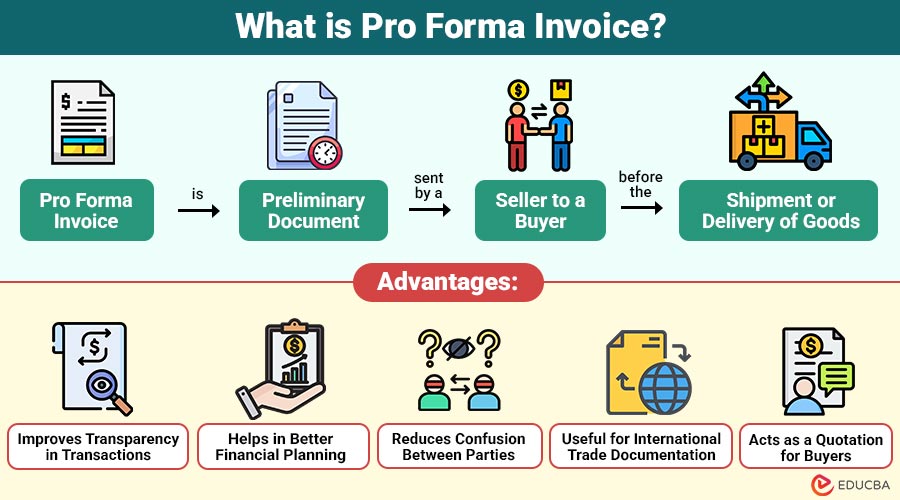
Pro forma invoice is preliminary document sent by a seller to a buyer before the shipment or delivery of goods. It provides an estimated cost of products or services along with terms of sale such as quantity, description, shipping charges, taxes, and delivery timeline.
Unlike a regular invoice, it does not demand immediate payment. Instead, it is used to inform the buyer about the expected costs and to confirm the order details before finalizing the transaction.
Table of Contents:
- Meaning
- Purpose
- Importance
- Key Features
- When is a Pro Forma Invoice Used?
- Components
- Sample Format
- Difference
- Advantages
- Limitations
- Real-World Example
Key Takeaways:
- A pro forma invoice provides estimated costs and terms before finalizing a sale agreement between parties.
- It is a non-binding document used for quotation, approval, and communication, not for demanding payment.
- Businesses use it widely in international trade for customs clearance, import permits, and financial planning purposes.
- It helps reduce misunderstandings by clearly outlining pricing, quantities, and delivery terms before the transaction is completed.
Purpose of a Pro Forma Invoice
Here are the key purposes of a pro forma invoice, explained below:
1. Price Estimate
A pro forma invoice provides a clear estimated price for goods or services before the final sale agreement is confirmed between the buyer and seller.
2. Customs Clearance
It assists customs authorities by showing shipment value and details, making the import-export clearance process faster, smoother, and more transparent overall.
3. Order Confirmation
It outlines product specifications, quantity, pricing, and terms, ensuring both buyer and seller agree completely before goods are shipped.
4. Import Permits
Importers use to obtain the necessary government approvals, permits, or licenses for legal international purchasing activities.
5. Avoid Misunderstandings
It serves as a preliminary agreement document that reduces confusion by clearly defining terms, pricing, and delivery expectations.
Importance of Pro Forma Invoice
Here are the points highlighting the importance of a pro forma invoice:
1. Builds Trust Between Buyer and Seller
It builds trust between buyer and seller by clearly outlining pricing, terms, conditions, and expectations before the agreement is final transparency in pricing and terms.
2. Helps in Financial Planning
Buyers can arrange funds based on estimated costs, helping plan budgets, manage cash flow, and avoid financial uncertainty.
3. Supports Customs Clearance
It assists customs authorities in accurately estimating duties and taxes, ensuring smooth clearance of goods across international borders.
4. Reduces Disputes
It reduces disputes by defining product details, pricing, and terms, preventing misunderstandings between buyer and seller before transactions.
5. Speeds Up Approval Process
It speeds up approval processes by providing cost information, enabling buyers to obtain internal approvals quickly and efficiently.
Key Features of a Pro Forma Invoice
It contains several important features that distinguish it from a final invoice:
1. Non-binding Document
It is non-binding document that does not establish a legally enforceable payment obligation and merely offers approximations.
2. Estimated Prices
It contains estimated prices for goods or services that may vary later when the final invoice is officially issued.
3. Pre-Delivery Issued
This invoice is issued before delivery of goods or services to confirm order details, pricing, and agreed transaction terms.
4. No Immediate Payment
It does not require immediate payment from buyer, as it is used only for quotation, approval, and reference purposes.
5. Approval Purpose
Businesses primarily use it for approval, documentation, and customs clearance, helping both parties clearly agree on transaction terms beforehand.
When is a Pro Forma Invoice Used?
It is commonly used in various business scenarios:
1. International Trade
Exporters issue pro forma invoices to importers for customs clearance and approval of goods in international trade transaction processes.
2. Custom Clearance
Custom authorities may require a pro forma invoice to accurately estimate duties and taxes for import clearance procedures.
3. Advance Payment Requests
Sellers may issue it to request partial or advance payment before the production or shipping process begins.
4. Business Negotiations
It helps businesses finalize pricing and terms before they make a formal agreement during the negotiation stage.
5. Order Confirmation
It confirms buyer intent before the seller proceeds with production or shipment of goods officially and the processing stage.
Components of a Pro Forma Invoice
A well-structured pro forma invoice includes the following components:
1. Seller Information
Seller information includes the company name, address, and contact details, clearly identifying the business issuing the pro forma invoice
2. Buyer Information
Buyer information contains the customer name, address, and contact details, ensuring correct identification of the purchasing party involved in the transaction.
3. Invoice Number and Date
The invoice number and date provide a unique reference and issuance date for tracking and documentation of transaction records.
4. Description of Goods/Services
To make the transaction clear, a description of goods or services comprises the quantity, product name, unit price, and total price.
5. Estimated Costs
Estimated costs include subtotal, shipping charges, taxes, and total amount, providing an overall approximate financial value of the transaction.
6. Terms and Conditions
Terms and conditions outline payment terms, delivery timeline, and validity period, defining rules and expectations for the transaction agreement.
7. Signature
A signature is an authorized approval from the seller or a company representative confirming the authenticity and acceptance of the pro forma invoice details.
Sample Format of Pro Forma Invoice
A typical structure looks like this:
Seller Details: Company Name, Address, Contact
Buyer Details: Name, Address, Contact
Pro Forma Invoice Number: 00123
Date: DD/MM/YYYY
| Item | Description | Quantity | Unit Price | Total |
| 1 | Product A | 10 | $50 | $500 |
Subtotal: $500
Shipping: $50
Total Estimated Cost: $550
Terms:
- Payment to be made before shipment
- Invoice valid for 15 days
Difference Between Pro Forma Invoice and Invoice
Here is a comparison highlighting the key differences:
| Feature | Pro Forma Invoice | Invoice |
| Purpose | Estimate before sale | Request for payment after sale |
| Nature | Non-binding | Legally binding |
| Timing | Before delivery | After delivery |
| Payment | Not required | Payment required |
| Accuracy | Estimated | Final and exact |
Advantages of Pro Forma Invoice
Here are the key advantages mentioned below:
1. Improves Transparency in Transactions
By outlining pricing, terms, and conditions in detail and making sure that all parties are aware of the agreement beforehand, it increases transaction transparency.
2. Helps in Better Financial Planning
It helps in better financial planning by providing estimated costs, allowing buyers to budget funds and manage expenses efficiently.
3. Reduces Confusion between Parties
It reduces confusion between parties by clearly outlining product details, quantities, and prices, minimizing chances of misunderstandings before final agreement.
4. Useful for International Trade Documentation
It is useful for international trade documentation, assisting in customs procedures, import approvals, and smooth movement of goods across borders.
5. Acts as a Quotation for Buyers
Before sending out the final invoice, it acts as a quote for purchasers, giving a thorough assessment of the goods or services.
Limitations of Pro Forma Invoice
Here are the key limitations mentioned below:
1. Not Legally Binding
This document is not legally binding, so neither party must complete the transaction based on it.
2. Prices may Change before Final Invoice
Prices may change before the final invoice due to market fluctuations, exchange rates, or additional costs arising later.
3. Does not Guarantee Sale Completion
It does not guarantee the sale’s completion, as the buyer or seller may cancel or modify the deal before a final agreement.
4. Cannot be Used for Accounting Records
Businesses cannot use it for accounting records because it is only an estimate and not an official financial transaction document.
Real-World Example
Here is a practical example to understand how a pro forma invoice works in real business scenarios:
Imagine a company in India exporting electronic goods to the USA. Before shipping, the exporter sends a pro forma invoice showing:
- Product details
- Quantity of goods
- Estimated shipping cost
- Delivery timeline
The buyer uses this document to:
- Apply for import permission
- Arrange payment
- Get approval from the internal finance department
Once approved, the seller ships and later issues a commercial invoice.
Final Thoughts
A pro forma invoice is a key business document outlining estimated costs and terms before a sale. Though not legally binding, it improves transparency, communication, and planning. Widely used in international trade, it helps businesses avoid confusion, streamline processes, and build strong professional relationships between buyers, sellers, exporters, importers, and service providers.
Frequently Asked Questions (FAQs)
Q1. Is a pro forma invoice legally binding?
Answer: No, it is not legally binding. It is only an estimate.
Q2. Can payment be made based on a pro forma invoice?
Answer: Yes, in some cases, an advance payment is made based on it, but it is not mandatory.
Q3. Who issues a pro forma invoice?
Answer: It is issued by the seller or service provider to the buyer.
Q4. Is a pro forma invoice used for accounting?
Answer: No, it is not used for official accounting records.
Recommended Articles
We hope that this EDUCBA information on “Pro Forma Invoice” was beneficial to you. You can view EDUCBA’s recommended articles for more information.


