

What is Pay Compression?
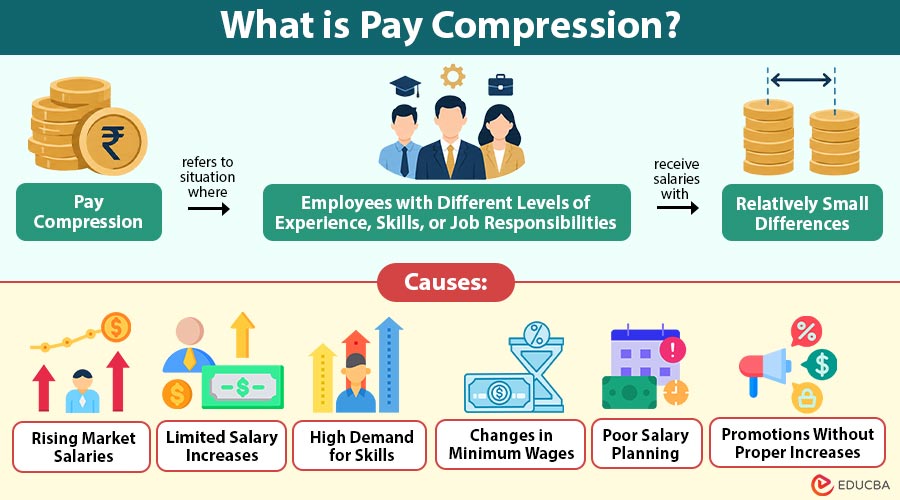
Pay compression refers to a situation where employees with different levels of experience, skills, or job responsibilities receive salaries with relatively small differences.
Imagine working for a company for five years and earning ₹50,000 per month. One day, the company hires a new employee for a similar position at ₹48,000 per month. Although you have more experience and have spent several years with the company, the difference between your salaries is only ₹2,000. This situation is an example of pay compression.
Pay compression is common in workplaces where salaries for new employees increase faster than those of existing employees. It can also happen when employees in junior positions earn almost as much as their managers. Not every small salary difference is unfair. However, when companies fail to maintain reasonable pay differences based on experience, responsibilities, and skills, employees may begin questioning their compensation.
Table of Contents:
- Meaning
- Importance
- Causes
- Types
- Example
- How to Identify Pay Compression?
- Effects of Pay Compression on Employees and Companies
- How to Reduce Pay Compression?
- Challenges
- Difference
- Best Practices
Key Takeaways:
- Pay compression occurs when employees with different experience levels or responsibilities receive unusually similar salaries.
- Rising market salaries, limited annual raises, and inconsistent compensation policies commonly contribute to pay compression.
- Pay compression can reduce employee motivation, increase turnover, and create concerns about fairness within organizations.
- Regular salary reviews, competitive compensation structures, and transparent policies help companies manage pay compression effectively.
Why is Pay Compression Important?
Salary plays an important role in employee satisfaction. People want to feel that their experience, responsibilities, and contributions are valued. When experienced employees earn almost the same amount as new hires, they may feel that their years of service are not being recognized.
Understanding pay compression helps companies review salary structures and maintain fair compensation practices. It also helps HR teams identify situations where salary adjustments may be necessary to retain experienced employees.
What Causes Pay Compression?
Pay compression can happen for several reasons. Some are related to market conditions, while others result from company salary policies.
1. Rising Market Salaries
Companies sometimes offer higher salaries to attract new employees because market pay rates have increased faster than existing employee salaries.
2. Limited Salary Increases
Existing employees may receive small annual salary increases, while newly hired employees receive higher starting salaries based on current market conditions.
3. High Demand for Skills
When certain skills become difficult to find, companies may offer attractive salaries to new employees without adjusting existing employees’ compensation.
4. Changes in Minimum Wages
An increase in minimum wages may bring lower-paid employees closer to the salaries of experienced workers if other salaries remain unchanged.
5. Poor Salary Planning
Companies without clear salary structures may offer inconsistent compensation, creating smaller salary differences between employees with different experience levels.
6. Promotions Without Proper Increases
Employees who receive promotions without meaningful salary adjustments may earn nearly the same amount as colleagues working in lower-level positions.
Types of Pay Compression
Pay compression can appear in different ways depending on employee roles, experience, and company salary practices.
1. Salary Compression Between Employees
This happens when experienced employees and newly hired employees performing similar work receive salaries that are almost equal despite meaningful experience differences.
2. Salary Compression Between Managers and Employees
This occurs when employees earn salaries close to those of their managers, even though managers have additional responsibilities.
3. Market-Based Pay Compression
Companies may offer higher salaries to new employees because market rates have increased, while existing employee salaries remain relatively unchanged.
Example of Pay Compression
Consider a company that employs three marketing professionals.
| Employee | Experience | Monthly Salary |
| Employee A | 1 year | ₹40,000 |
| Employee B | 4 years | ₹43,000 |
| Employee C | 8 years | ₹46,000 |
Employee C has eight years of experience but earns only ₹6,000 more than Employee A. The salary difference may appear small compared with the difference in their experience. However, experience alone does not determine fair compensation. The company must also consider job responsibilities, performance, skills, and market salaries. If employees perform similar work but their experience and contributions are not properly reflected in their salaries, the company may be experiencing pay compression.
How to Identify Pay Compression?
Companies can identify pay compression by reviewing employee salaries and comparing compensation across different roles and experience levels.
1. Compare Employee Salaries
Examine the pay of workers in comparable roles to find any atypically tiny disparities between new hires and seasoned employees.
2. Review Salary Ranges
Check whether employee salaries match established pay ranges and whether reasonable differences exist between junior and senior positions.
3. Examine Hiring Salaries
Compare salaries offered to new employees with those received by existing employees performing similar work within the organization.
4. Analyze Promotion Increases
Review salary changes after promotions to determine whether employees receive compensation that reflects their additional responsibilities.
5. Study Market Salary Trends
Compare company salaries with current market rates to understand whether external hiring trends are affecting internal compensation structures.
Effects of Pay Compression on Employees and Companies
Pay compression can affect employee satisfaction, workplace relationships, and overall business performance.
1. Lower Employee Motivation
Experienced employees may lose motivation when they believe their knowledge, responsibilities, and years of service are not reflected in their salaries.
2. Higher Employee Turnover
Employees who feel underpaid may start looking for opportunities elsewhere, especially when competing companies offer better compensation for similar positions.
3. Reduced Job Satisfaction
Small salary differences between experienced and newly hired employees may create frustration and reduce overall satisfaction with the organization.
4. Difficulty Retaining Talent
Companies may struggle to retain skilled employees when their compensation does not remain competitive with current market salary levels.
5. Workplace Tension
Employees may question salary decisions when colleagues with different experience levels receive similar compensation without clear or reasonable explanations.
6. Increased Hiring Costs
Replacing experienced employees can increase recruitment and training expenses, particularly when companies must offer higher salaries to attract suitable candidates.
How to Reduce Pay Compression?
Companies can manage pay compression by regularly reviewing compensation practices and making necessary improvements.
1. Conduct Regular Salary Reviews
Review employee salaries periodically to identify compression issues and determine whether compensation adjustments are needed across different roles and experience levels.
2. Establish Clear Salary Ranges
Determine compensation ranges for each role based on the job’s responsibilities, the experience and skills required, and market rates.
3. Adjust Existing Employee Salaries
When hiring salaries increase significantly, review existing employee compensation to ensure experienced workers are not unintentionally left behind.
4. Improve Promotion Policies
Provide appropriate salary increases when employees move into higher positions or take on additional responsibilities within the organization.
5. Monitor Market Salary Changes
Track industry salary trends regularly to understand how changing market conditions may affect compensation differences within the company.
6. Maintain Transparent Compensation Practices
Explain how salary decisions are made so employees understand the importance of experience, performance, skills, and job responsibilities.
Challenges in Managing Pay Compression
Managing pay compression is not always easy, especially for companies with limited budgets or rapidly changing hiring requirements.
1. Budget Limitations
Companies may struggle to increase existing employee salaries while also offering competitive compensation to attract new talent.
2. Changing Market Conditions
Rapid changes in industry salary levels can make it difficult for businesses to maintain consistent compensation structures.
3. Different Employee Skills
Employees may have different skills, qualifications, and responsibilities, making direct salary comparisons difficult without careful evaluation.
4. Employee Expectations
Some employees may expect higher salaries based mainly on experience, even when other compensation factors also influence pay decisions.
5. Maintaining Internal Fairness
Companies must balance competitive hiring salaries with fair compensation for existing employees across different positions and departments.
Difference Between Pay Compression and Pay Inversion
The table below highlights the differences between the two:
| Basis | Pay Compression | Pay Inversion |
| Meaning | Salaries become unusually close. | Less-experienced employees earn more. |
| Salary Difference | Small differences between pay levels. | Expected salary differences are reversed. |
| Common Cause | Rising hiring salaries or limited raises. | Higher market offers for new hires |
| Example | Senior earns ₹55,000; junior earns ₹53,000. | Senior earns ₹55,000; junior earns ₹60,000. |
| Main Concern | Reduced salary differences. | Reversed salary relationships. |
Best Practices for Managing Pay Compression
Organizations can follow these practices to maintain balanced compensation structures and reduce unnecessary salary differences.
1. Review Salaries Regularly
Compare employee compensation periodically to identify unusual salary differences before they become serious workplace concerns.
2. Use Reliable Market Data
Refer to relevant industry salary information when deciding compensation for new hires and existing employees.
3. Recognize Employee Contributions
Consider responsibilities, performance, experience, and specialized skills when making salary decisions or reviewing existing compensation.
4. Plan Salary Budgets Carefully
Reserve funds for necessary salary adjustments instead of focusing only on compensation offered during recruitment.
5. Maintain Consistent Pay Policies
Establish clear compensation guidelines and apply them fairly across departments, job levels, and employee groups.
Final Thoughts
Pay compression occurs when salary differences between employees become unusually small despite differences in experience, skills, or responsibilities. It often happens when new hires receive higher salaries than existing employees. Regular salary reviews, transparent compensation policies, and timely adjustments help businesses maintain fairness, improve satisfaction, and retain employees.
Frequently Asked Questions (FAQs)
Q1. Does pay compression affect employee bonuses?
Answer: Yes, pay compression may influence bonus discussions, especially when employees feel their overall compensation does not reflect their experience, performance, or contributions.
Q2. Can remote working contribute to pay compression?
Answer: Yes, remote hiring can influence salary structures when companies recruit employees from different locations and offer compensation based on varying market rates.
Q3. How can employees discuss pay compression with HR?
Answer: Employees can request a salary review by presenting their achievements, responsibilities, relevant market salary information, and reasons for seeking compensation adjustments.
Q4. Can pay compression occur between different departments?
Answer: Yes, employees working in different departments may experience pay compression when salary structures do not adequately reflect differences in responsibilities or specialized skills.
Recommended Articles
We hope that this EDUCBA information on “Pay Compression” was beneficial to you. You can view EDUCBA’s recommended articles for more information