


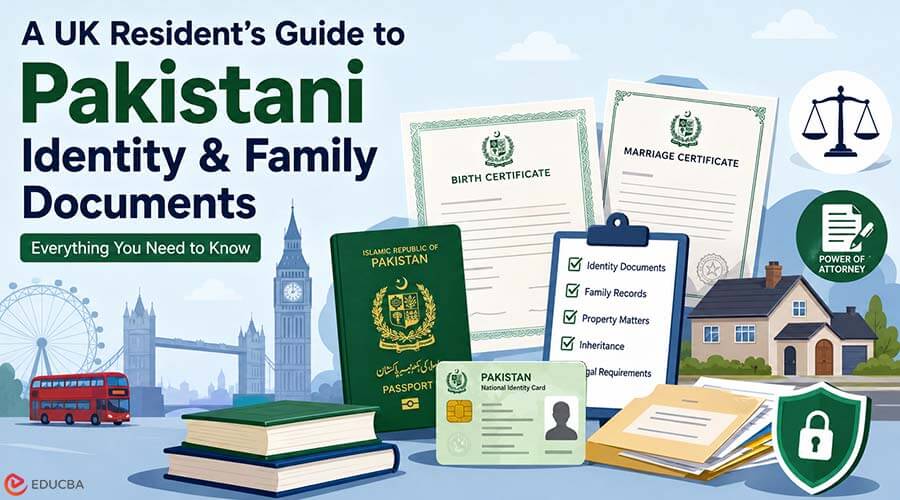
For Pakistanis living in the United Kingdom, keeping Pakistani identity documents accurate in the UK can be an important part of managing personal and administrative affairs in both countries. A person may live in the UK for many years while still needing Pakistani documents for family matters, property, inheritance, travel, or other official purposes.
Managing documents from overseas can sometimes feel complicated. Names may appear differently across records, documents may expire, and family circumstances can change over time. In addition, some applications may require supporting documents that applicants do not regularly use in the UK.
For British-Pakistanis and Pakistani nationals living in the UK, the best approach is to understand each document’s purpose, keep personal information consistent, and check current requirements before applying.
This guide explores the main considerations for managing Pakistani Identity Documents in the UK, including identity cards, passports, family records, and documents you may need for property or inheritance matters.
Understanding Pakistani Identity Documents in the UK
Identity documents are the foundation of many official processes. They help establish a person’s identity and may be requested when dealing with government authorities, legal professionals, financial institutions, property matters, or family-related procedures.
For Pakistanis living in the UK, relevant documentation may include Pakistani identity cards, passports, and family-related records. The exact document required depends on the person’s circumstances and the purpose of the request.
Before applying for or updating an identity document, applicants should review their existing records carefully.
Important details can include:
- Full name
- Date of birth
- Place of birth
- Parents’ names
- Marital status
- Pakistani address
- UK address
- Identity-document number
- Passport information
Consistency is particularly important. If a name is spelled differently across documents, or other personal details don’t match, an applicant may need to provide additional information or clarification.
People should therefore avoid completing applications from memory. Instead, they should refer to existing official records when entering personal information.
It is also sensible to maintain copies of current and previous identity documents. A secure digital record can help if you need an old document to support a future application.
Applying for Pakistani Identity Documents From the UK
Living in the UK does not necessarily mean that Pakistani identity matters must be handled entirely in Pakistan. Depending on the document and the applicant’s circumstances, overseas applicants may have access to relevant services through appropriate channels.
Someone searching for Pakistani Identity Documents in the UK may be looking for information about obtaining, renewing, or managing Pakistani identity documentation while living overseas.
Before beginning an online application, however, applicants should establish exactly which document they need. Different circumstances can require different applications, and the online process may still require supporting documents or verification.
A useful preparation checklist can include:
- Identify the required document.
- Review the current application requirements.
- Gather existing identity documents.
- Check personal details for consistency.
- Prepare supporting documentation.
- Complete the application carefully.
- Keep copies of submitted information.
- Retain any confirmation or reference details.
Applicants should also be cautious when searching online. Not every website offering information about Pakistani identity documentation is an official source. Before entering sensitive information such as passport or identity-card details, verify that you are using an appropriate and trustworthy service.
Someone looking for local assistance may also search for location-specific services such as Nadra Card Bradford. Location-specific searches can help people find relevant assistance, but applicants should still confirm exactly what the service offers.
Identity-document assistance should also be distinguished from legal advice. A service that helps with an application may not necessarily provide advice about property, inheritance, family disputes, or other legal matters.
Family Documents and Why They Matter
Identity documents are only one part of maintaining Pakistani records. Family documentation can also be important for people living in the UK.
Family documents may be relevant when establishing relationships between parents, children, spouses, or other relatives. They can be especially important for inheritance, property, immigration, or administrative matters.
Depending on the circumstances, family records may include:
- Birth certificates
- Marriage certificates
- Family-registration records
- Identity documents
- Death certificates
- Other official family documentation
Keep family information accurate. Names, dates of birth, and relationships should be consistent across relevant records whenever possible.
For example, if a person’s name appears one way on an identity document and differently on a family record, the discrepancy could create questions when the documents are presented together.
Family circumstances can also change over time. Marriages, births, deaths, and other events may affect the information contained in official records.
UK residents with family connections in Pakistan should therefore review their important family documentation periodically.
A useful practice is to create a family-document folder containing copies of relevant certificates and identity records. You can maintain this folder securely in digital form and with physical copies.
Keeping these documents organized can save considerable time when an official organization requests evidence of a family relationship.
Keeping Names and Personal Information Consistent
One of the most common documentation challenges for people with records in more than one country is inconsistency in personal information.
A person’s name may appear differently across official records. For example, differences may occur in spelling, the order of names, initials, or the use of a middle name.
Other discrepancies may involve:
- Date of birth
- Place of birth
- Parents’ names
- Marital status
- Address
- Identification numbers
These differences should not automatically be assumed to be serious, but you should identify and understand them before submitting important documentation.
When completing an application, use the information required by the relevant authority rather than casually changing details to match another document.
If an existing official record contains an error, determine whether a correction or update procedure is available before relying on that record for an important transaction.
This is particularly relevant when managing Pakistani Identity Documents in the UK for property or inheritance matters. You may need to establish a person’s identity before they can deal with assets or legal affairs.
A personal information checklist can help. Record the exact spelling and details appearing on your key documents and keep copies for reference.
For British-Pakistanis who have accumulated records over many years, this simple step can make future applications much easier.
Documents for Property and Inheritance Matters
Pakistani identity and family documents can become particularly important when dealing with property or inheritance.
A UK resident may own a house, apartment, land, or commercial property in Pakistan. Alternatively, they may be involved in an inheritance after the death of a parent or other relative.
Such matters can require several types of documentation. Identity records may be needed to establish who a person is, while family records may help demonstrate relationships between the deceased and potential heirs.
Property matters may require additional documents relating to ownership, transactions, or the property itself.
Do not assume that a single family or identity document proves ownership or inheritance rights. Each document has its own purpose.
If a UK resident cannot travel to Pakistan, a Power of Attorney may sometimes be relevant where another person needs to act locally on their behalf. Carefully consider the scope and wording of such a document.
For significant property or inheritance matters, obtaining advice from an appropriately qualified legal professional can help clarify what documentation is required and what procedures apply.
UK residents should also keep their own copies of documents, even when relatives or representatives in Pakistan hold the originals.
Avoid Common Mistakes With Pakistani Documents
Many documentation problems stem from simple errors that could have been caught before submission.
One common mistake is failing to check the information entered into an application. Applicants may accidentally enter an incorrect date of birth, misspell a name, or provide an outdated address.
Another mistake is not providing supporting documentation. An application may appear complete but still require additional evidence.
Other problems can include:
- Using an expired identity document
- Submitting unclear copies
- Forgetting required supporting documents
- Using outdated application information
- Providing inconsistent personal details
- Failing to keep copies of applications
- Losing application reference information
- Sending documents through an unsuitable channel
- Relying on unofficial websites
- Waiting until an urgent transaction before updating documents
Applicants should also avoid assuming that information found on social media or an old online article represents the current procedure.
Processes and requirements can change. Before submitting an application, verify the current requirements through an appropriate official or trusted source.
If you use professional assistance, understand what the service includes. Administrative help with an identity application is not necessarily the same as legal advice.
For complex family, inheritance, or property matters, choose the right professional based on the nature of the issue.
Managing Pakistani Identity Documents in the UK Long-Term
The best way to avoid documentation problems is to stay organized before you need a document urgently.
UK-based Pakistanis can create a secure document-management system containing their important Pakistani records, including Pakistani Identity Documents in the UK and related family documentation.
Consider organizing documents into categories such as:
- Identity documents: Pakistani identity cards, passports, and other identification records.
- Family documents: Birth, marriage, death, and family-registration documents.
- Property records: Ownership documents, agreements, receipts, and related correspondence.
- Legal documents: Powers of Attorney, affidavits, declarations, and legal correspondence.
- Application records: Copies of forms, supporting documents, confirmations, receipts, and reference numbers.
Digital copies can be particularly useful when managing Pakistani affairs from the UK. However, store sensitive information securely and share it only through appropriate channels.
It is also worth maintaining a list of document expiry dates. Set reminders well in advance so renewals do not become an emergency.
If personal circumstances change, review the relevant records. A marriage, change of address, birth, death, or other family event may mean certain information needs updating.
People who regularly manage matters in Pakistan may also benefit from keeping contact information for trusted relatives and appropriately qualified professionals.
Good organization does not eliminate every administrative challenge, but it can make future applications and legal matters much easier to handle.
Final Thoughts
Managing Pakistani Identity Documents in the UK requires careful planning, accurate information, and proper organization. For British-Pakistanis and Pakistani nationals living in the UK, keeping identity, family, property, and legal documents updated can make it easier to handle important matters in Pakistan from overseas.
Before applying for or updating any document, confirm the exact requirement and check the latest information from the relevant authority. Pay close attention to names, dates of birth, addresses, and other personal details to avoid inconsistencies between records.
It also helps to keep secure copies of important documents and track expiry dates so renewals do not become urgent. For property, inheritance, or other complex matters, you may need additional legal or supporting paperwork, and consulting a qualified professional can help ensure everything is handled correctly.
Ultimately, good document management can reduce delays, prevent avoidable complications, and provide peace of mind when dealing with personal and family affairs across the UK and Pakistan.
Recommended Articles
We hope this guide helps you understand Pakistani Identity Documents in the UK, from managing identity cards and family records to keeping personal information consistent and preparing documents for property or inheritance matters. Discover these recommended articles for more insights on Pakistani documentation, identity verification, family records, Power of Attorney, and managing official documents from overseas.

