


A 50-person team does not require 50 permanently occupied desks, but it is an easy mistake to make when searching for an office. The result is a company paying rent for space used only part-time. The 2026 CBRE survey reveals a gap between expected and actual office attendance, with employers expecting 3.2 days weekly versus 2.9 days of actual use. This discrepancy matters when comparing office rental costs because the stated price only reflects the square footage.
Once you consider fit-out, operating expenses, furnishings, incentives, and lease requirements, the cheaper square footage may not be the cheapest overall option. The best approach to comparing office space proposals is to consider the square footage you need and review each offer against that requirement. In this guide, we will explain how to evaluate office space based on actual attendance, upfront costs, incentives, and lease flexibility to compare total expenses accurately.
Start With the Cost of the Office Space You Actually Need
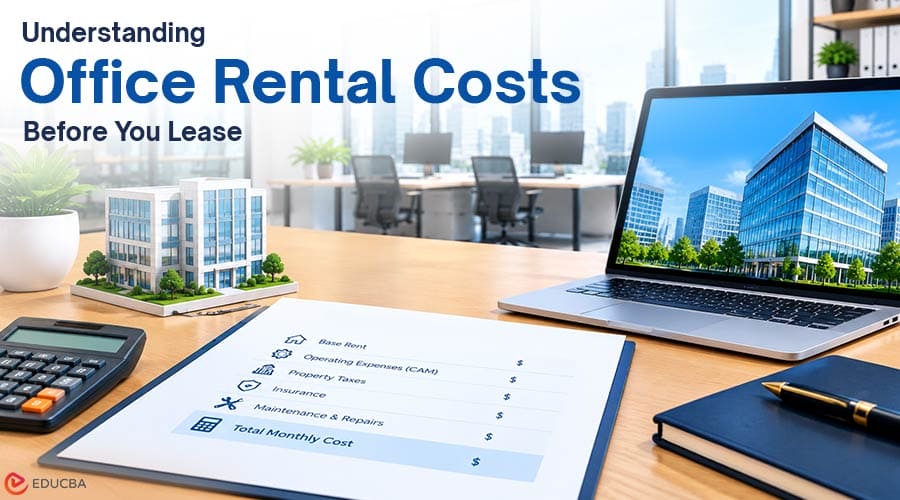
Rather than asking for rent per square foot, ask for the total occupancy cost for the expected lease term. Beware that the quoted figure is often significantly undercut by the various service charges added to it. Fit-out, furniture fitting, utilities, and deposits are also high costs. To find total occupancy cost, include headline rent, rent-free periods, service charges, insurance, deposits, repairs, fit-out, and alteration rights.
Separate the Rent From the Cost of Occupancy
Build the first comparison around four numbers rather than one:
- Quoted rent: the headline amount to be paid for the space regularly.
- Recurring occupancy costs: service charges, insurance contributions, utilities or other charges payable by the occupier in respect of the space in addition to rent.
- Move-in costs: fit-out, furniture, IT, deposits and other costs incurred on occupation of the space.
- Lease incentives: rent-free periods, landlord contributions, and other concessions provided to reduce an occupier’s initial or effective cost.
This avoids the trap of saying no to a more expensive office space without looking at what is included, or saying yes to a cheaper office without factoring in extra tenant costs. To compare like for like, evaluate the properties over the same time period, either by converting the figures to an annual amount or allowing for a rent-free period.
Size the Office Around Actual Use
The next cost consideration is square footage. A business does not benefit from a reduced rate if it rents a bigger space than its work style requires. This becomes especially relevant as the division between allocated seats and employees changes. According to the CBRE 2025 Americas Occupier Sentiment Survey, 73% of respondents expect employee-to-seat ratios to exceed 1.5:1 by 2027. Additionally, 46% of organizations with more than 10,000 employees plan to reduce their underutilized footprints, according to the 2026 edition.
For a growing team, that does not necessarily mean finding a smaller space. It requires decoupling the increase in personnel from the need for space. Before evaluating the difference between spaces, set out criteria for:
- How many people need permanent desks?
- How many work remotely or attend on different days?
- How many meeting rooms do you actually need?
- How much space is needed for collaboration rather than individual desks?
- How much near-term growth needs to be accommodated?
- Which facilities can be shared rather than duplicated inside the leased footprint?
A 40-person company does not need 40 desks. But if you shrink the footprint too much, you can end up with too few meeting rooms and not enough collaborative space, forcing you to rent a larger space elsewhere. The goal is not the smallest office, but the smallest footprint that can support how the team will use it.
Price the Costs That Appear After the Lease Is Agreed
After identifying the required footprint, the next task is to price what it will take to make that footprint a functional workplace. This is where an apparently inexpensive office can climb the comparison ladder.
Treat Fit-Out as Part of the Rental Decision
Consider fit-out costs before comparing leases, not after choosing a space. According to JLL’s 2026 Global Office Fit-Out Costs Guide, global fit-out costs increased by about 2% to 6% over the past year. The guide puts the global average cost for a moderate corporate office at $2,150 per square meter, although costs vary considerably by city and region.
This shows why fit-out costs matter when comparing offices. A space with extensive partitions, meeting rooms, electrical work, and furniture and technology will likely have a much higher first-year cost than a fitted office with a higher headline rent.
Check What the Office Already Includes
When looking for offices to lease, identify what each location takes away from your budget. One location may require tenant improvements in exchange for lower base rent, another may offer a turn-key furnished space at a higher rent, and yet another may include services such as meeting rooms, utilities, and cleaning.
Assessing these options based solely on rental price can be misleading, as some offer a lower base rent but include additional costs such as operating expenses or tenant improvements. For instance, flexible office rates may look higher because they include rent, operating costs, and build-out.
A consistent way to compare the value of all shortlisted offices is to identify what expenses are included in the price and what you will be billed for separately. By standardizing this review, you avoid skewed figures that lead to poor decisions.
Compare the Deal Behind the Rent
After determining the costs, evaluate the landlord’s offer beyond just rent reductions.
Convert Incentives Into the Real Deal Value
A rent-free period, fit-out contribution, or other concession changes an office lease’s economics. CBRE’s analysis of 4,350 new office leases across 12 U.S. markets found that average free rent declined from 9.6 months in 2023 to 8.9 months in 2024, while average tenant-improvement allowances fell from $97.55 to $87.51 per square foot. The REIS also reported that concessions remained 30% above pre-pandemic levels. These figures are U.S.-specific and should not be taken as a universal market benchmark. What matters for this discussion is why headline rent does not capture the full economic value of a lease.
For each proposal, make sure to record:
- Headline rent
- Rent-free period
- Landlord fit-out contribution
- Tenant improvement allowance
- Other financial incentives
- Any conditions attached to receiving those incentives
Then calculate what the business is actually paying over the comparison period. A property with a slightly higher quoted rent could be more competitive if the landlord was willing to contribute a significant sum towards the initial works. Similarly, a seemingly attractive discount could be much less attractive if the tenant faces significant fit-out expenditure.
Negotiate the Terms That Protect the Business Later
The cheapest first year can easily become an expensive long-term commitment, with no flexibility in the office lease to reflect changing requirements. Terms such as expansion or contraction rights and lease-break clauses allow occupiers to adjust their space commitments rather than being tied to a one-size-fits-all arrangement. Before signing any lease, understand the implications of key terms such as break options, rent reviews, and deposits. You should also evaluate permitted use, subletting, alterations, service charges, and repair obligations.
A more important consideration is the financial impact of changing business requirements, not just the potential for flexibility. The key question is not simply whether the lease offers general flexibility, but what happens financially if your space requirements change. Consider business growth, subletting, fit-out liabilities, and break options. These questions will give a true picture of the overall value for money and the risk to the business if the initial parameters change.
Consider Location as Part of Office Rental Costs
Do not view location as a lifestyle choice in an office rental calculation. It can add costs that repeat every working week. A building that is hard to reach may lengthen employee travel time, increase parking needs, or increase reliance on personal cars. A location remote from clients may add travel expenses for sales and service teams. A cheaper peripheral office may therefore save on rent while adding costs elsewhere.
Recent CBRE research provides a solid foundation for this issue. The 2025 Americas survey found that 53% of respondents would reject a building without access to public transportation, and 52% would give up a building without parking. Roughly 40% said the availability of food and beverage options would also factor into their choice. These figures are not a reason to select an office because it has a train station or parking. They show why you should identify location requirements before reducing the shortlist by rent.
Put the Commute and Client Pattern Into the Calculation
For a face-to-face team, map the flexible office to the journeys it will create; for an employee-dominated workplace, work out how the location will function on actual attendance days. For a hybrid team, consider whether paying for a larger central footprint every day is justified by lower peak attendance. Instead of choosing Office A because its rent is lower than Office B’s, work out what other travel, space, or running costs that decision could create. That is the best way to identify and avoid hidden trade-offs.
Stress-Test the Lease Against the Next Few Years
An office lease creates a requirement the business cannot know with complete certainty when it signs. Flexibility becomes a necessary financial consideration.
Ask What Happens if the Team Grows
If a business anticipates needing to add employees, it should check whether space is available in the same building and whether the lease provides a mechanism to expand. Otherwise, a business may secure an apparently efficient office today and face another relocation when it outgrows it.
Ask What Happens if the Team Shrinks
Planning for team growth matters, too. Paying for additional space you expect to need later can be a waste if hiring slows down. Break rights, contraction options, assignment, and subletting can help avoid financial losses if needs change during the lease period.
Firms tend to negotiate expansion, contraction, and break clauses to keep their obligations flexible throughout the lease term. Instead of focusing on whether a lease is generally flexible, focus on what future changes would cause financial losses and ensure the contract covers those specific situations.
The Five-Minute Office Rental Costs Check Before You Commit
Before selecting an office space, reduce the comparison to five checks:
1. What is the Real Occupancy Cost?
Include rent, recurring building costs, and other mandatory charges rather than relying on the advertised rate.
2. What Must Be Spent Before Move-In?
Price the fit-out, furniture, IT, and any alterations required to make the office operational.
3. What Does the Landlord Actually Contribute?
Record rent-free periods, improvement allowances, and other incentives, then compare them across proposals.
4. What Happens if the Business Changes?
Check break rights, expansion or contraction options, assignment, subletting, and other provisions that affect the commitment.
5. Are All Proposals Being Compared on the Same Basis?
If one price includes services, another includes a fit-out contribution, and another does neither, the figures are not yet comparable. This five-minute check does not replace legal or financial review. It simply prevents you from deciding the shortlist based on a number that leaves out the costs that matter.
Do Not Let a Lower Rent Hide a Higher Office Cost
Overpaying rarely begins with an eye-catching rent figure. It usually begins with businesses comparing headline figures rather than assessing a range of factors such as fit-out, operating costs, incentives, space utilization and exit terms on a like-for-like basis. A smarter office rental decision starts with understanding the total office rental costs and how those costs may change as the business grows or its working patterns evolve.
That smarter decision is much easier when you can compare multiple suitable offices against one another, rather than negotiate in isolation. Office Hub helps businesses benchmark proposals, review costs, and negotiate specifics before committing to an office, so they do not rely on advertised rates.
Recommended Articles
We hope this comprehensive guide to office rental costs helps you make informed workspace decisions and manage your business expenses effectively. Check out these recommended articles for more insights and strategies to optimize your office space and business operations.

