


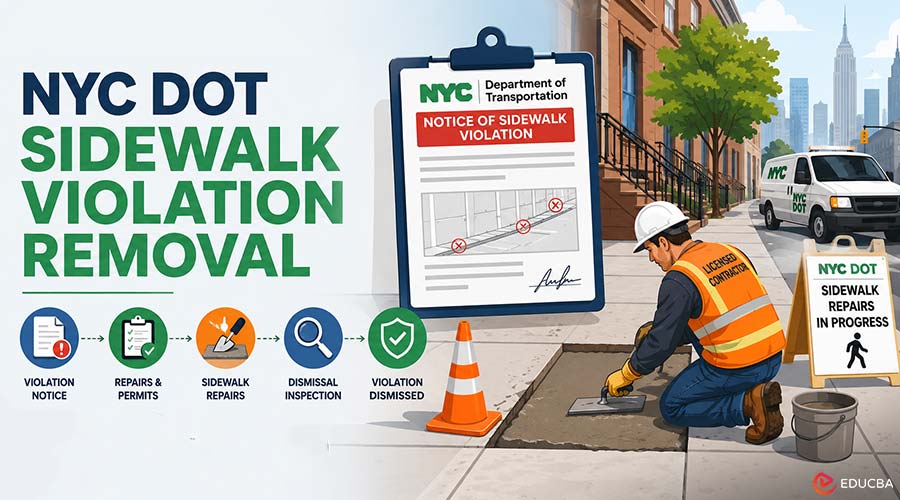
Getting an NYC DOT sidewalk violation can worry any property owner. Knowing how the NYC DOT sidewalk violation removal process works can help you address the issue efficiently and prevent unnecessary delays. Many people think they have received a fine or that they have only a few days to fix the problem. In reality, a sidewalk violation is a notice indicating that your sidewalk has defects that must be repaired per NYC DOT rules.
The good news is that most sidewalk violations can be removed without major problems if you understand the process and hire the right contractor.
This guide walks you through the NYC DOT sidewalk violation removal process, from receiving the notice to passing the final dismissal inspection.
What Is a NYC DOT Sidewalk Violation?
The New York City Department of Transportation regularly inspects sidewalks across the city. If an inspector finds dangerous conditions such as broken concrete, uneven slabs, trip hazards, or other defects, the property owner receives a Notice of Sidewalk Violation. The purpose is to improve pedestrian safety and make sure sidewalks meet city standards.
A sidewalk violation is different from a fine. However, it should never be ignored. An open violation can create problems when selling or refinancing your property because it remains on record until the NYC DOT approves the repairs.
Step 1: Review the Violation Carefully
After receiving the notice, read every page carefully.
The violation package usually includes a Preliminary Inspection Report. This report shows which sidewalk flags have failed inspection and identifies the defects that need correction.
Look at the sketch and compare it with your sidewalk. Make sure the location and property details are correct.
If you believe the violation was issued in error or the defects do not apply to your property, you can request a re-inspection through NYC311 within the allowed time.
Step 2: Understand the 75-Day Deadline
Property owners generally have 75 days from the date of receipt of the violation to begin correcting the sidewalk defects. The countdown starts when the notice is received or, if it cannot be delivered, from the date it is posted on the property.
Waiting until the last week is risky.
Finding a contractor, obtaining permits, scheduling work, and dealing with weather delays all take time. Starting early gives you a much better chance of completing everything without unnecessary stress and ensures a smoother NYC DOT sidewalk violation removal process.
Step 3: Hire a Contractor Who Knows NYC DOT Standards
Not every concrete contractor understands NYC DOT sidewalk requirements.
Sidewalk repairs must follow city specifications for concrete thickness, slopes, expansion joints, finish, and other construction details. Even a sidewalk that looks good may fail inspection if it does not meet these standards.
This is why experience matters. Selecting a qualified contractor familiar with NYC DOT standards is essential for efficient removal of NYC DOT sidewalk violations.
For more than 30 years, QuickFix Sidewalk NYC has worked with property owners across New York City on DOT-compliant sidewalk projects. Their team shares practical guidance on Sidewalk repair or replacement with free estimates, including permit requirements, construction standards, inspections, and the steps involved in clearing sidewalk violations.
Step 4: Obtain the Required Permit
Most sidewalk replacement work requires a NYC DOT sidewalk construction permit before work begins.
A qualified contractor typically handles the permit process, helping to ensure the project complies with current city regulations. Starting work without the required permit can create additional problems and may delay the violation removal process.
Before construction starts, always confirm that the permit has been approved.
Step 5: Complete the Sidewalk Repairs
During construction, every defective sidewalk flag identified in the violation must be corrected.
Depending on the condition, this may include:
- Replacing damaged concrete slabs
- Removing trip hazards
- Correcting sidewalk slope
- Installing proper expansion joints
- Repairing pedestrian ramps where required
- Restoring a safe walking surface
Contractors should also make sure the finished sidewalk meets all current DOT specifications instead of simply making cosmetic improvements.
A properly completed repair is the key to passing inspection the first time.
Step 6: Request a Dismissal Inspection
Completing the construction does not automatically remove the violation. Requesting the inspection is a critical step in the NYC DOT sidewalk violation removal process because the NYC DOT keeps the violation active until it approves the repairs.
After completing the repairs, the property owner or contractor must request a Sidewalk Violation Dismissal Inspection through NYC311.
When requesting the inspection, you should have:
- Property address
- Permit number
- Block and lot number
- Sidewalk violation number
- Property owner’s contact information
The NYC DOT inspector will inspect the property to verify that the contractor completed all required repairs correctly.
Step 7: Prepare for the Inspection
One simple mistake causes unnecessary delays for many property owners.
The inspector must be able to see the entire sidewalk clearly.
Do not leave construction materials, parked equipment, dumpsters, soil piles, fencing, or debris covering the repaired area.
A clean, fully visible sidewalk allows the inspector to complete the review without requiring another visit.
Step 8: Wait for the Official Dismissal
If the inspector confirms that the repairs meet NYC DOT standards, the NYC DOT will dismiss the violation.
The city then updates its records and notifies the County Clerk that you have satisfied the sidewalk violation. Once this process is complete, the violation is no longer an issue for future property sales or refinancing.
Keep copies of your permits, inspection requests, invoices, and project photographs for your records.
Common Mistakes That Delay NYC DOT Sidewalk Violation Removal
Many dismissal inspections fail because of avoidable errors.
Some of the most common include:
- Hiring contractors unfamiliar with DOT specifications.
- Beginning work without the proper permit.
- Replacing only part of the required sidewalk flags.
- Incorrect sidewalk slopes.
- Missing or improperly installed expansion joints.
- Requesting inspection before all work is complete.
- Leaving the sidewalk blocked during inspection.
Most of these problems can be prevented with proper planning and an experienced contractor.
Final Thoughts
Receiving a NYC DOT sidewalk violation is not the end of the world. With the right approach, NYC DOT sidewalk violation removal is a straightforward process that helps keep your property compliant and safe. It is simply a process that requires careful attention and timely action.
Review the notice, identify the required repairs, obtain the necessary permits, complete the work according to NYC DOT standards, and schedule the dismissal inspection as soon as you finish construction.
Property owners who take the right steps early usually experience a much smoother process and avoid unnecessary delays.
Most importantly, the objective goes beyond simply clearing the violation. It is to create a safe sidewalk that protects pedestrians and keeps your property fully compliant with New York City requirements.
Recommended Articles
We hope this guide on NYC DOT sidewalk violation removal helps you understand the process of resolving sidewalk violations and keeping your property compliant with city regulations. Explore these recommended articles for additional insights on sidewalk repairs, NYC DOT requirements, property maintenance, and construction compliance.

