
What are Micro Investments?
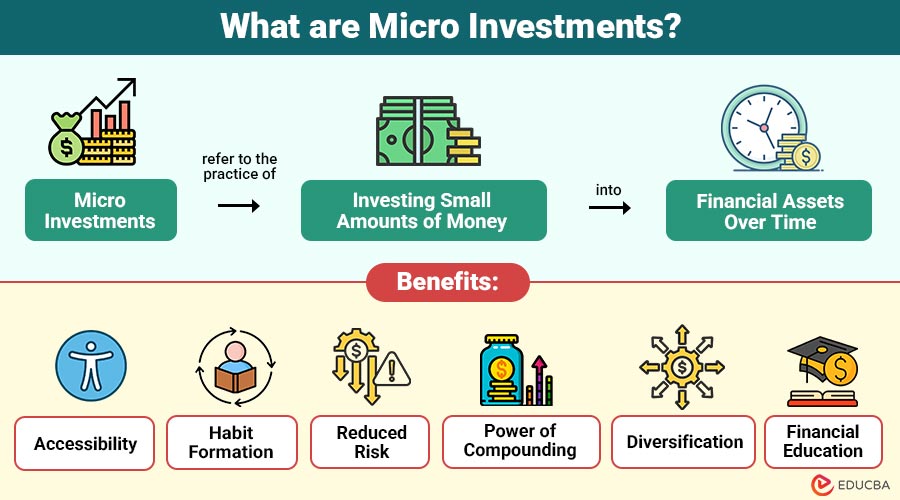
Micro investments refer to the practice of investing small amounts of money into financial assets over time. Unlike traditional investments, which often require significant initial capital, micro investments allow investors to:
-
- Start with very low amounts (sometimes just $1 or ₹100)
- Invest regularly through automated or recurring contributions
- Access diversified portfolios, even with limited funds
These investments are often facilitated by mobile apps or online platforms, making them convenient for both new and experienced investors. The core idea is that consistent small investments can grow into substantial wealth over time, leveraging the power of compounding.
Table of Contents:
- Meaning
- Key Features
- Types
- Benefits
- Challenges
- Real-World Examples
- How to Start Micro-Investing?
- Tips for Maximizing Micro Investments
Key Takeaways:
- Micro investments enable individuals to start investing with minimal capital, promoting financial inclusion and accessibility.
- Automated and recurring contributions help cultivate disciplined investing habits and leverage compounding returns effectively.
- Fractional ownership and diversification reduce risk exposure while allowing participation in stocks, ETFs, bonds, and cryptocurrencies.
- Choosing low-fee platforms and long-term strategies maximizes growth potential while mitigating market volatility and investment risks.
Key Features of Micro Investments
Here are the main features that make micro investing accessible, convenient, and effective for everyone:
1. Low Entry Barrier
Micro-investment platforms allow individuals to begin investing with very small amounts, making participation possible for nearly everyone.
2. Fractional Ownership
Investors can purchase fractions of stocks, ETFs, or assets, eliminating the need to buy entire units for diversification.
3. Automated Investments
Many platforms enable scheduled contributions and automatic investments, reducing manual effort while fostering consistent portfolio growth over time.
4. Diversification
Even with limited capital, investors can spread investments across multiple assets, reducing exposure to individual asset volatility and risk.
5. Digital Platforms
Mobile applications and online tools make investing intuitive, allowing easy monitoring, tracking, and managing of investment portfolios anytime, anywhere.
Types of Micro Investments
Micro investments are versatile, spanning several asset classes. Here is a detailed look at the most popular types:
1. Micro Stocks and ETFs
Platforms like Robinhood, Stash, and Acorns let investors buy fractional shares of expensive stocks or ETFs, enabling small-scale participation.
2. Micro Cryptocurrencies
Investors can purchase tiny fractions of digital currencies like Bitcoin, Ethereum, or altcoins, making high-value cryptocurrencies accessible even with minimal capital.
3. Micro Bonds
Investors can purchase tiny fractions of digital currencies like Bitcoin, Ethereum, or altcoins, making high-value cryptocurrencies accessible even with minimal capital.
4. Micro Real Estate
Real estate crowdfunding enables small investors to contribute to property projects, gaining exposure to the market without purchasing entire properties.
5. Micro Peer-to-Peer Lending
Peer-to-Peer platforms let investors lend small amounts to individuals or businesses, earning interest while spreading risk across multiple borrowers.
Benefits of Micro Investments
Here are the key benefits that make micro investing a practical and effective wealth-building strategy:
1. Accessibility
By allowing anybody to engage in financial markets, regardless of income or net worth, microinvestments democratize investing.
2. Habit Formation
Investing small amounts regularly encourages a disciplined savings habit, making long-term wealth accumulation easier.
3. Reduced Risk
Starting with small amounts allows investors to experiment and learn without risking substantial capital.
4. Power of Compounding
Compound interest or returns can cause even little investments to increase dramatically over time, highlighting the significance of consistency.
5. Diversification
Micro investments allow risk to be spread across multiple asset classes and sectors, even with limited capital.
6. Financial Education
By engaging with micro investing platforms, users gain insights into market trends, investment strategies, and personal finance management.
Challenges of Micro Investments
While micro investments are appealing, they come with certain challenges:
1. Lower Returns Per Investment
Small investments generate smaller absolute returns, which may be discouraging in the short term.
2. Platform Fees
Some micro-investing apps charge fees or commissions, which can erode returns, especially on tiny investments.
3. Market Volatility
All investments carry risk, and micro investments are no exception. Even small amounts are vulnerable to market downturns.
4. Over-Reliance on Technology
Dependence on apps and digital platforms can pose risks like technical glitches, cyber threats, or platform insolvency.
5. Limited Control
Fractional shares and automated investments may limit investors’ flexibility in portfolio adjustments.
Real-World Examples of Micro Investment Platforms
Several platforms have made micro investments accessible to the masses:
1. Acorns (USA)
Automatically invests spare change in diverse exchange-traded funds (ETFs) for simple growth, rounding up daily purchases to the closest dollar.
2. Stash (USA)
Enables users to invest as little as $5 in fractional shares, ETFs, and bonds, gradually simplifying wealth building.
3. Robinhood (USA)
Offers fractional stock trading, allowing investors to buy portions of expensive stocks and gain exposure with minimal capital.
4. Groww (India)
Supports micro investments in mutual funds and ETFs, letting users start with very small amounts and gradually build portfolios.
5. Kuvera (India)
Provides recurring micro-investment options in mutual funds with minimal initial capital, encouraging disciplined, consistent investment habits over time.
How to Start Micro Investing?
Here is a practical step-by-step approach for beginners:
1. Set Financial Goals
Define short-term and long-term objectives, such as emergency funds, education savings, or retirement planning, guiding investment decisions effectively.
2. Choose a Platform
Research and select a trustworthy micro-investing app or platform that aligns with personal goals, investment style, and location requirements.
3. Start Small
Begin investing with an amount you are comfortable with, sometimes as low as $1 or ₹100, to minimize financial risk.
4. Automate Investment
Set up recurring contributions to ensure consistent investing, building disciplined habits, and steadily growing your portfolio over time.
5. Diversify
Allocate investments across multiple assets, including stocks, bonds, ETFs, and cryptocurrencies, to mitigate risk and balance potential returns.
6. Monitor and Adjust
Regularly track portfolio performance, reviewing and modifying investments as needed to stay aligned with long-term financial objectives.
Tips for Maximizing Micro Investments
Here are effective tips to grow your micro investments and achieve long-term financial success:
1. Leverage Compounding
Consistently invest small amounts and reinvest any returns, allowing compounding to accelerate portfolio growth over long-term periods effectively.
2. Avoid High Fees
Select micro-investing platforms with low fees or subscription-based models to reduce unnecessary charges that can erode small investment returns.
3. Educate Yourself
Continuously learn investing fundamentals, risk management, and asset allocation to make informed decisions and optimize micro-investment strategies.
4. Be Patient
Treat micro-investments as long-term commitments; avoid overreacting to short-term market volatility and focus on steady growth over time.
5. Combine Strategies
Integrate micro-investments with traditional savings and larger investments to diversify, balance risk, and strengthen overall financial growth potential
Final Thoughts
Micro investments are transforming wealth creation by allowing individuals to invest small amounts consistently, democratizing access to financial markets. Despite modest initial returns and inherent risks, they foster disciplined habits, accessibility, and long-term growth potential. With careful planning and the right platform, even minimal investments can accumulate into significant financial assets, offering a practical route to financial independence for everyone.
Frequently Asked Questions (FAQs)
Q1. Are micro investments safe?
Answer: While safer than investing large sums blindly, micro investments still carry market risks. Diversification and research reduce potential losses.
Q2. Can I invest in stocks with micro investments?
Answer: Yes, fractional shares allow micro-investors to own portions of expensive stocks.
Q3. How long should I invest in micro investments?
Answer: Micro investments are best suited for long-term goals to fully benefit from compounding returns.
Recommended Articles
We hope that this EDUCBA information on “Micro Investments” was beneficial to you. You can view EDUCBA’s recommended articles for more information.

