
What is a Load Balancer?
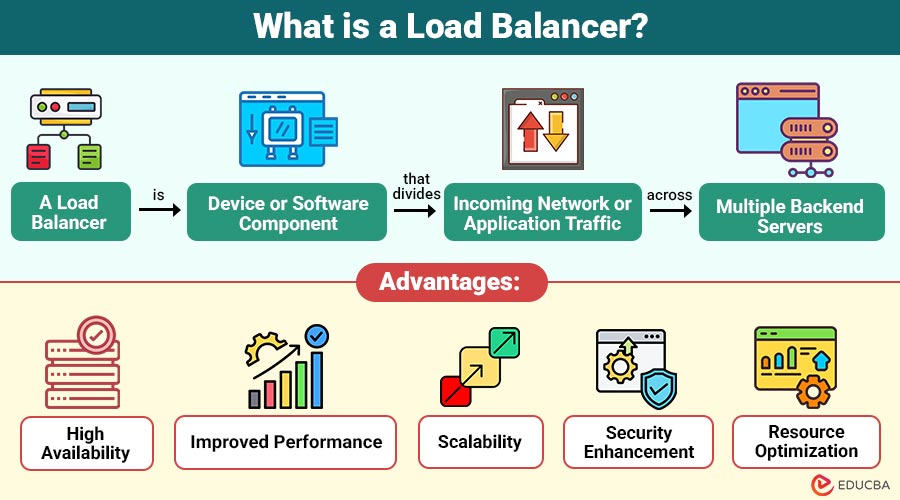
A load balancer is device or software component that divides incoming network or application traffic across multiple backend servers. Its primary function is to optimize resource use, maximize throughput, minimize response time, and prevent server overload.
Key Functions:
- Traffic Distribution: Directs incoming requests to the least busy or most appropriate server.
- Fault Tolerance: Automatically reroutes traffic if a server goes down.
- Scalability: Enables the addition or removal of servers without downtime.
- Security: Often integrates with firewalls, SSL termination, and DDoS protection.
Table of Contents:
Key Takeaways:
- Load balancers efficiently distribute traffic across servers, improving performance and availability preventing server overload.
- They enhance scalability, allowing seamless addition or removal of servers without affecting system stability or user experience.
- Security features such as SSL termination, DDoS protection, and IP filtering help safeguard applications.
- Choosing the right type and algorithm ensures optimal resource utilization, fault tolerance, and a smooth user experience.
Types of Load Balancers
It can be classified based on deployment, traffic layer, or the algorithm they use.
1. Based on Deployment
- Hardware Load Balancer: A physical device installed in a data center. High performance but expensive.
- Software Load Balancer: Runs on servers or virtual machines. Flexible, cost-effective, and easy to update.
- Cloud-Based Load Balancer: Hosted by cloud providers. Auto-scalable and easy to configure.
2. Based on the Traffic Layer
- Layer 4 (Transport Layer): Balances TCP/UDP traffic using IP addresses, ports, and protocol info. Commonly used for gaming servers and VoIP.
- Layer 7 (Application Layer): Balances HTTP/HTTPS traffic and inspects content, cookies, and headers. Ideal for web apps and e-commerce sites.
3. Based on the Algorithm
- Round Robin: Distributes traffic sequentially across servers.
- Least Connections: Requests are sent to server with the fewest active connections.
- IP Hash: Uses the client’s IP to determine the server for consistent routing.
- Weighted Algorithms: Assigns more traffic to more powerful servers.
How Does a Load Balancer Work?
The process is straightforward but critical for smooth operations:
1. Request Arrival
A client initiates communication that requires appropriate distribution for efficiency by sending a request to the application or website.
2. Traffic Inspection
Examines server health, current load, and request type to ensure optimal handling and routing of requests.
3. Server Selection
Using a configured algorithm such as round-robin or least connections, the load balancer determines the most suitable server for processing requests.
4. Forwarding
After selecting the appropriate server, the load balancer forwards the client’s request, maintaining reliability, speed, and consistent system performance.
5. Response Delivery
The server swiftly and precisely delivers the response to the client after processing the request and sending it back via the load balancer.
Advantages of Using a Load Balancer
Implementing provides multiple benefits for businesses and developers:
1. High Availability
Automatically redirects traffic from failed or unresponsive servers, reducing downtime and ensuring uninterrupted access for users.
2. Improved Performance
Greatly enhance response times and overall application performance by dividing incoming requests equally among several servers.
3. Scalability
Allows seamless addition of new servers, accommodating growing traffic without negatively affecting system stability or user experience.
4. Security Enhancement
They provide security features like SSL termination, DDoS mitigation, and IP filtering to protect applications from potential threats effectively.
5. Resource Optimization
Prevent servers from becoming idle or overwhelmed, consistently maximizing utilization, efficiency, and cost-effectiveness across the infrastructure.
Real-World Use Cases
Load balancers are integral in many modern applications and IT infrastructures:
1. E-Commerce Platforms
During high-traffic events like Black Friday, load balancers prevent server crashes and ensure smooth, reliable checkout experiences for customers.
2. SaaS Applications
CRM and other SaaS systems rely on load balancers to maintain uninterrupted service for global users efficiently across multiple regions.
3. Streaming Services
Video streaming platforms use load balancers to deliver high-quality content consistently, minimizing buffering even during peak viewership periods worldwide.
4. Gaming Servers
Distribute players across multiple game servers, ensuring low latency, smooth gameplay, and balanced performance during heavy online traffic.
Common Load Balancer Tools
Here are some popular tools:
1. AWS Elastic Load Balancer
A cloud-based load balancer offering auto-scaling and support for HTTP, HTTPS, TCP, and UDP protocols.
2. NGINX
A software load balancer functioning as a reverse proxy with Layer 7 balancing and SSL termination capabilities.
3. HAProxy
A high-performance software load balancer providing TCP and HTTP balancing, completely free and open-source.
4. F5 BIG-IP
A hardware load balancer featuring advanced traffic management, DDoS protection, and SSL offloading for enterprise-level applications.
5. Azure Load Balancer
A cloud-based solution offering high availability, auto-scaling, and Layer 4 traffic balancing for scalable applications.
Challenges in Load Balancer
While it offer immense benefits, they are not without challenges:
1. Configuration Complexity
Setting up advanced routing rules requires careful planning, technical expertise, and constant monitoring to avoid misconfigurations.
2. Cost
High-end hardware can be expensive to purchase, deploy, and maintain, especially for large-scale enterprise infrastructures.
3. Single Point of Failure
All services may be affected if the load balancer malfunctions, even if redundancy methods are frequently used in contemporary implementations.
4. Session Persistence
Applications needing sticky sessions require careful management to ensure users remain connected to the correct server without disrupting functionality.
Final Thoughts
A load balancer is crucial for modern applications, ensuring high availability, reliability, and performance. Whether hardware, software, or cloud-based, it efficiently distributes traffic, supports fault tolerance, and enables scalability. For businesses handling heavy traffic or aiming for seamless user experiences, a robust load-balancing strategy is essential. Proper deployment optimizes performance, minimizes downtime, and enhances overall user satisfaction.
Frequently Asked Questions (FAQs)
Q1. What is main purpose of a load balancer?
Answer: It distributes network traffic across multiple servers to ensure optimal performance, availability, and fault tolerance.
Q2. Can load balancers improve security?
Answer: Yes. They often include SSL termination, DDoS protection, and IP filtering.
Q3. Is cloud load balancing better than hardware load balancing?
Answer: It depends on the requirements. Cloud load balancers offer flexibility and scalability, while hardware provides high performance and control.
Q4. What is session persistence in load balancing?
Answer: It ensures a client continues to connect to the same server throughout a session for consistent data handling.
Recommended Articles
We hope that this EDUCBA information on “Load Balancer” was beneficial to you. You can view EDUCBA’s recommended articles for more information.


