


What is Job Shadowing?
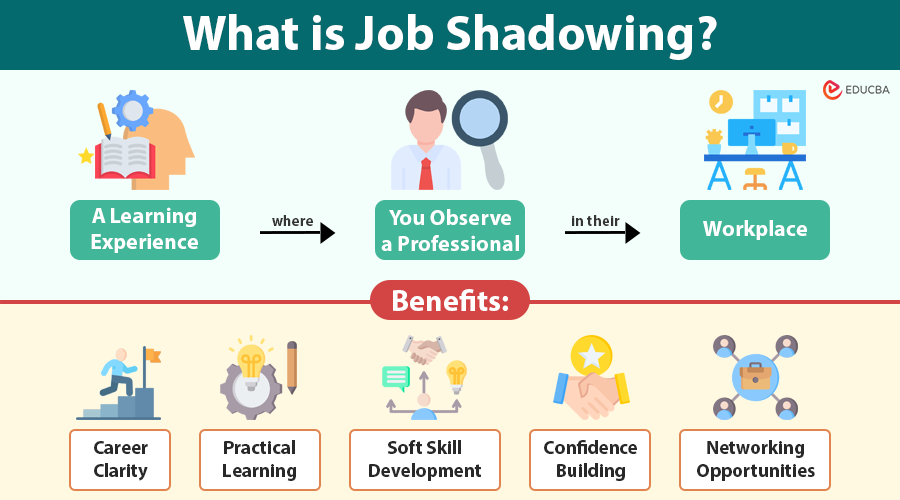
Job shadowing is a structured learning experience where an individual spends time observing a seasoned professional in their work environment. The “shadow” follows the mentor through their daily tasks, meetings, client interactions, and decision-making processes.
You aim not just to see what the job entails but also to understand how professionals do it, the pace of work, their problem-solving styles, the workplace culture, and the real-life challenges they face.
Job shadowing can occur in different contexts:
- Students exploring potential career paths.
- Graduates preparing for their first professional role.
- Career changers assessing new industries.
- New hires are learning company-specific processes faster.
Unlike traditional classroom learning or online courses, job shadowing offers immersive, real-time insight into a career. It is essentially a “day in the life” learning experience, making it highly valuable for informed career decisions.
Why is Job Shadowing Important?
Job shadowing serves as a bridge between theory and practice. While education and training teach concepts, job shadowing reveals the application of those concepts in real-world scenarios.
Its importance lies in:
- First-hand exposure: You see real problems and solutions unfold before you.
- Role clarity: It removes misconceptions about certain jobs, helping you avoid costly career mistakes.
- Industry familiarity: You become aware of industry jargon, workflows, and cultural norms.
- Confidence boost: Reduces “first-day jitters” when you start a similar role.
Employers also value job shadowing as part of their onboarding or recruitment process, as it ensures new hires align with job expectations before committing long-term.
Key Benefits of Job Shadowing
1. Career Clarity
Many people choose a career based on assumptions, only to realize later that it is not what they expected. Job shadowing removes this uncertainty by showing you the realities of the role, the workload, work hours, stress levels, and required skills.
2. Practical Learning
Reading about a job can only go so far. Observing professionals lets you see how they approach tasks, handle clients, and use tools or software specific to the industry.
3. Soft Skill Development
By observing team meetings and client presentations, you acquire valuable skills such as communication tone, negotiation techniques, and leadership styles that formal training often overlooks.
4. Confidence Building
When you eventually step into a similar role, you will already know what to expect. This familiarity reduces anxiety and helps you perform better from day one.
5. Networking Opportunities
Job shadowing naturally puts you in contact with professionals in your chosen field. These connections can lead to mentorship, internships, or even job offers in the future.
Types of Job Shadowing
1. Observation-Only
You quietly follow the mentor through their workday, focusing on learning by watching. This is ideal for highly technical or confidential roles where hands-on work is not possible.
2. Hands-On Shadowing
Here, the participant is allowed to assist with small tasks under supervision, such as data entry, drafting simple reports, or organizing documents. This is common in creative, tech, and administrative fields.
3. Virtual Job Shadowing
Especially popular after the rise of remote work, virtual shadowing uses live video calls, pre-recorded task walkthroughs, or interactive webinars. It is ideal for global learners or people unable to attend in person.
4. Reverse Job Shadowing
In this less common format, the mentor observes you performing certain tasks, offering feedback and coaching. Companies often use it for internal promotions or skill development programs.
How Job Shadowing Works?
Step 1: Identify the Opportunity
Start by reaching out to schools, universities, career centers, or industry contacts. Many companies have formal job shadowing programs you can apply for, while others may arrange it informally through networking.
Step 2: Set Clear Goals
Identify ahead of time what you want to learn, such as how you perform daily tasks, use industry tools, or determine if the job is right for you.
Step 3: Match with a Mentor
Choose someone with both experience and a willingness to teach. The best mentors explain their thought process, not just their actions.
Step 4: Prepare Beforehand
Research the company, industry trends, and job role. Prepare intelligent questions like “What skills are most essential for success in this role?” rather than generic queries.
Step 5: Observe and Engage
Be attentive, take notes, and participate in discussions where appropriate. Show curiosity but avoid interrupting critical tasks.
Step 6: Follow-Up
Always send a thank-you email or note. Summarize what you learned and express appreciation for their time. This leaves a strong professional impression.
Best Practices for a Successful Experience
- Dress appropriately: Match the workplace dress code to make a professional impression.
- Arrive early: Punctuality shows respect for the mentor’s time.
- Limit phone use: Keep devices on silent and avoid distractions.
- Ask specific questions: “How do you approach deadlines?” is better than “Tell me about your job.”
- Take notes: Document observations, tools used, and tips shared.
- Reflect afterwards: Review your notes to identify skills you want to develop further.
Industries That Commonly Offer Job Shadowing
- Healthcare: Hospitals often allow students to shadow doctors, nurses, and lab technicians to understand patient care and medical procedures.
- Education: Aspiring teachers observe classroom management, lesson planning, and student engagement strategies.
- Technology: Job shadowing in tech roles provides exposure to coding practices, software tools, and agile workflows.
- Finance: Accountants, auditors, and analysts often host shadowing sessions to demonstrate compliance and reporting processes.
- Creative industries: Designers, journalists, and filmmakers let shadows see the creative process from brainstorming to final delivery.
Real-Life Examples of Job Shadowing Success
Job shadowing can be transformative for career decisions. Here are a few inspiring examples of how it has helped individuals achieve clarity and growth:
1. From Classroom to Operating Room
A pre-med student shadowed a surgeon for three days, observing patient consultations, surgeries, and post-operative care. This experience confirmed her passion for surgery and gave her a competitive edge in her medical school application.
2. Marketing Career Pivot
A graphic designer considering a career shift shadowed a digital marketing manager for a week. Through her involvement in campaign planning, analytics review, and client meetings, she discovered her strength in creative strategy and successfully transitioned into a marketing role.
3. Internal Promotion Pathway
An entry-level HR assistant shadowed the HR director during key policy discussions and recruitment drives. This insider view helped him understand leadership responsibilities, leading to a promotion to HR coordinator within six months.
4. STEM Inspiration
A high school student shadowed an aerospace engineer, gaining first-hand exposure to prototype testing and software simulations. This motivated him to pursue an engineering degree with a focus on aeronautics.
Difference Between Job Shadowing and Internship
| Aspect | Job Shadowing | Internship |
| Duration | 1 day to 1 week | Weeks to months |
| Role | Primarily observation | Hands-on project work |
| Goal | Learn by watching | Learn by doing |
| Compensation | Usually unpaid | May be paid or unpaid |
| Outcome | Career clarity, skill awareness | Work experience, portfolio building |
Challenges and How to Overcome Them
- Limited time: Since shadowing periods are short, prepare in advance to absorb as much as possible.
- Restricted access: Some industries, like law, healthcare, and defense, may restrict what you can see due to confidentiality. Respect boundaries while still learning from discussions and explanations.
- Passive role: If you feel disconnected, focus on noting the workflow, decision-making, and teamwork dynamics. Ask for a short Q&A at the end of the day.
Final Thoughts
Job shadowing is more than just “watching someone work”; it is a strategic way to explore careers, gain practical insights, and connect with industry professionals. Whether you are a student, a career changer, or a new hire, shadowing provides clarity, confidence, and direction.
By approaching it with preparation, curiosity, and professionalism, you can transform a short-term observation into long-term career growth.
Frequently Asked Questions (FAQs)
Q1. How long should a job shadowing session last?
Job shadowing can range from a few hours to several days, depending on the complexity of the role and the program’s structure. Shorter sessions are ideal for getting a basic overview, while longer ones allow for deeper observation of projects, workflows, and team interactions.
Q2. How do you ask someone for a job shadowing opportunity?
The best approach is to send a concise, professional email or LinkedIn message explaining your interest in the role, what you hope to learn, and how much time you are requesting. Mention any mutual connections or relevant experience to increase your chances.
Q3. Do you get paid for job shadowing?
In most cases, job shadowing is unpaid because it is an observational learning experience rather than active employment. However, some companies may offer stipends, travel reimbursements, or perks for participants.
Q4. How can I make the most of a short job shadowing session?
Prioritize your top learning goals, observe actively, and ask high-impact questions during breaks. Even in a short session, focusing on workflows, problem-solving approaches, and essential tools can provide valuable insights.
Recommended Articles
We hope this guide on job shadowing was helpful. Explore related articles on career development strategies, workplace learning methods, and effective networking tips to boost your professional growth.


