
What is Investment Management?
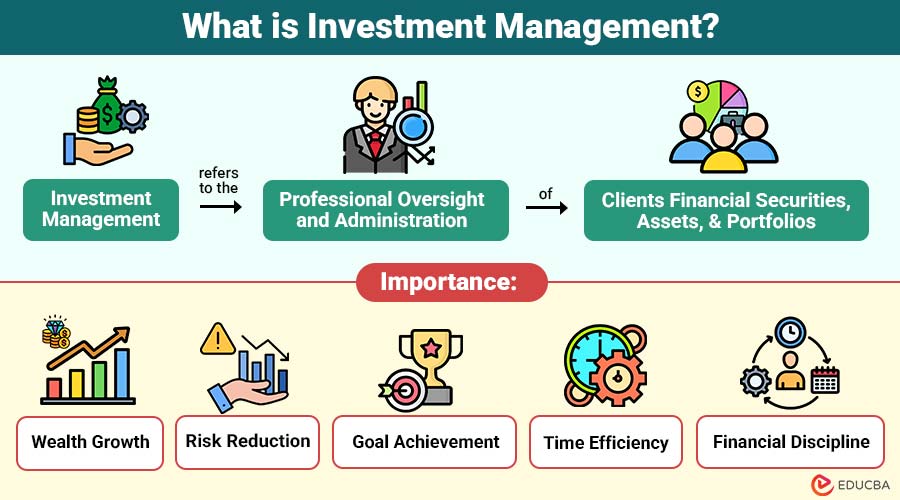
Investment management refers to the professional oversight and administration of clients financial securities, assets, and portfolios. The main goal is to meet specific financial objectives while efficiently managing risk.
It involves activities such as the following:
- Asset allocation: Deciding how to distribute investments among different asset classes.
- Portfolio management: Selecting individual investments within a portfolio to meet objectives.
- Risk management: Analyzing and mitigating potential risks associated with investments.
- Performance monitoring: Regularly reviewing investments and adjusting strategies to maximize returns.
Investment management is essential for both individual investors seeking personal wealth growth and for institutions managing large funds such as pensions, endowments, or mutual funds.
Table of Contents:
Key Takeaways:
- Investment management helps investors achieve financial goals through strategic planning, diversification, and disciplined portfolio monitoring over time.
- To balance returns and shield investments from market volatility, proper asset allocation and risk management are crucial.
- Regular portfolio review, clear objectives, and professional guidance improve long-term performance and ensure consistent financial stability.
- Diversification across asset classes, sectors, and regions reduces overall risk and improves portfolio stability during uncertain market conditions.
Importance of Investment Management
Following points highlight the key reasons why investment management is important for achieving long-term financial stability and growth.
1. Wealth Growth
Effective investment management helps grow capital over time by selecting high-potential assets, reinvesting returns, and following a consistent long-term strategy approach.
2. Risk Reduction
Investment management reduces risk through diversification, proper asset allocation, and careful analysis, helping portfolios remain stable during market fluctuations and uncertainty.
3. Goal Achievement
Investment management aligns financial decisions with specific goals such as retirement, education, home purchase, or business expansion, ensuring planned, systematic wealth creation.
4. Time Efficiency
Professional investment management saves time by allowing experts to research, monitor markets, and make decisions, while investors focus on personal or business priorities.
5. Financial Discipline
Structured investment management promotes regular investing, periodic review, and controlled decision-making, helping investors avoid emotional choices and maintain long-term financial stability.
Key Components of Investment Management
The main components of investment management include the following elements that help in planning, controlling, and optimizing investment performance.
1. Asset Allocation
To balance risk and return in line with investor objectives, asset allocation divides assets among stocks, bonds, real estate, and cash.
2. Portfolio Diversification
Portfolio diversification spreads investments across sectors, industries, and regions to reduce risk and improve stability during market fluctuations.
3. Risk Assessment
Risk assessment evaluates market volatility, inflation, interest rates, and global events to select investments that match the investor’s financial goals and risk tolerance.
4. Performance Measurement
Performance measurement tracks portfolio results using metrics such as ROI, alpha, beta, and the Sharpe ratio to ensure investments meet expected financial objectives.
5. Rebalancing
Rebalancing adjusts portfolio holdings periodically by buying or selling assets to maintain target allocation, manage risk, and keep strategy aligned.
Types of Investment Management
Investment management can be broadly categorized into the following types:
1. Active Investment Management
- Actively managed portfolios involve frequent buying and selling of securities to outperform market indices.
- Managers analyze market trends, company performance, and macroeconomic factors.
Example:
- Hedge funds and actively managed mutual funds often follow this strategy.
2. Passive Investment Management
- Passive management focuses on replicating market indices rather than outperforming them.
- It involves lower fees and minimal trading.
Example:
- Exchange-traded funds (ETFs) and index funds are common choices for passive investments.
3. Discretionary vs Non-Discretionary Management
- Discretionary: The investment manager makes decisions on the client’s behalf.
- Non-Discretionary: The manager provides advice, but the client retains final decision-making authority.
Example:
- Discretionary: Client allows the manager to buy or sell stocks without asking permission each time.
- Non-Discretionary: Advisor suggests stocks, but client approves before any investment is made.
Investment Management Strategies
Investment management strategies are tailored based on financial goals, time horizons, and risk tolerance. Some widely used strategies include:
1. Growth Investing
Growth investing focuses on companies with high future potential, accepting higher valuations today to achieve long-term capital appreciation and strong returns.
2. Value Investing
Value investing seeks to purchase stocks with solid fundamentals at a discount to help profit from market corrections over extended periods.
3. Income Investing
Income investing focuses on assets that generate regular cash flow, such as dividends, bonds, and interest-paying securities, ensuring stable income.
4. Balanced Investing
Balanced investing combines growth and income investments to maintain a moderate level of risk, offering both value growth and regular income for long-term stability.
5. Alternative Investments
Alternative investments that help diversify portfolios and reduce reliance on traditional assets for returns include hedge funds, commodities, real estate, and private equity.
Challenges in Investment Management
Despite its benefits, investment management faces certain challenges:
1. Market Unpredictability
Financial markets are highly unpredictable, and sudden economic changes, inflation, or crises can significantly affect returns and increase investment risk.
2. Regulatory Changes
Frequent changes in government policies, tax rules, and financial regulations can impact investment decisions, profitability, and overall portfolio performance over time.
3. High Competition
Intense competition among investors and financial institutions makes it difficult to consistently outperform overall market performance benchmarks.
4. Managing Client Expectations
Balancing client expectations with actual market performance is challenging, especially when investors have low risk tolerance but expect high investment returns.
5. Hidden Costs and Fees
Management fees, brokerage charges, and transaction costs can reduce overall returns, making it important to monitor expenses carefully during investment planning.
Real-World Examples
The following examples show how investment management is applied in different situations by individuals, institutions, and professional fund managers.
1. Individual Investors
John, a 35-year-old professional, invests in a diversified portfolio of stocks, bonds, and ETFs. His portfolio is actively monitored to align with his retirement goals and risk tolerance.
2. Institutional Investors
A university endowment fund allocates assets across equities, real estate, and alternative investments. Professional managers ensure the fund meets long-term financial obligations for scholarships and research.
3. Mutual Funds
Actively managed mutual funds like Fidelity Contrafund seek to outperform benchmark indices, while the Vanguard Total Stock Market Index Fund follows a passive strategy.
Tips for Effective Investment Management
The following tips help investors manage their portfolios efficiently and achieve long-term financial goals with controlled risk.
1. Set Clear Goals
Define investment objectives, time horizon, and risk tolerance clearly before investing to create a focused, realistic, and well-planned investment strategy.
2. Diversify Your Portfolio
To lower overall risk and shield the portfolio from abrupt market swings, distribute assets across several asset classes, sectors, and geographic regions.
3. Regular Monitoring
Review your investment portfolio frequently to evaluate performance, spot problems, and make the required adjustments if you want to stay on pace with your financial goals over time.
4. Control Emotions
Avoid making impulsive investment decisions during market volatility, and stay focused on long-term objectives to maintain stability and consistent financial growth.
5. Seek Professional Advice
Consult financial advisors or investment managers for expert guidance, better planning, and informed decisions based on experience, research, and market knowledge.
Final Thoughts
Investment management is essential for achieving financial goals by balancing risk and return through proper planning, diversification, and regular monitoring. It helps individuals and institutions make informed decisions using suitable strategies such as active, passive, or balanced investing. With discipline, clear objectives, and consistent review, effective investment management ensures long-term financial stability, growth, and security in changing market conditions.
Frequently Asked Questions (FAQs)
Q1. Is investment management only for wealthy individuals?
Answer: No. Investment management is applicable to all investors, including individuals, businesses, and institutions, regardless of portfolio size.
Q2. Can I manage my investments without a professional?
Answer: Yes, but professional managers bring expertise, access to research, and risk management tools that may improve returns and reduce stress.
Q3. What is the role of technology in investment management?
Answer: Technology, including robo-advisors and AI-based platforms, helps automate portfolio management, analyze risks, and provide real-time insights.
Recommended Articles
We hope that this EDUCBA information on “Investment Management” was beneficial to you. You can view EDUCBA’s recommended articles for more information.

