
Introduction
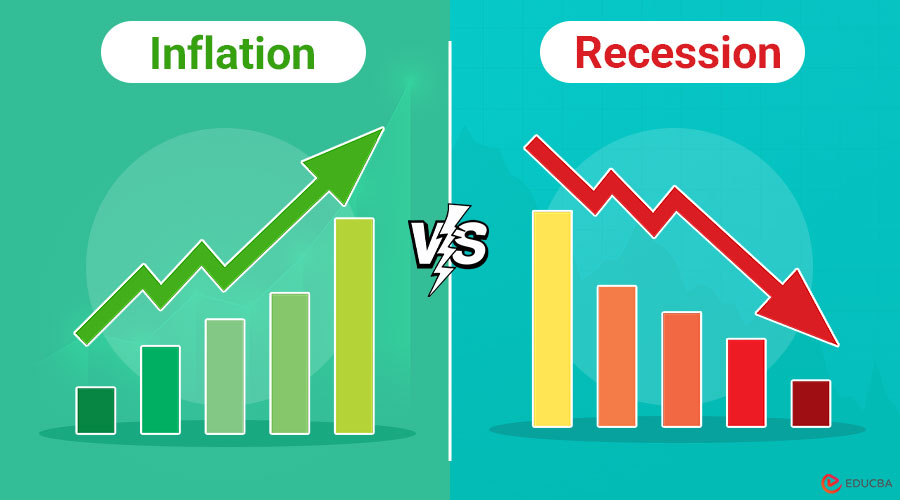
Inflation and recession are two of the most frequently discussed economic terms, yet they are often misunderstood or confused. Both significantly impact individuals, businesses, and governments, influencing purchasing power, employment levels, investment decisions, and overall economic stability. While inflation represents a rise in prices across an economy, a recession signals a decline in economic activity. Understanding the difference between inflation vs recession is essential for informed financial planning, policymaking, and strategic business decisions.
This article provides a comprehensive comparison of Inflation vs Recession, explaining their definitions, causes, key differences, real-world examples, and how governments attempt to manage them.
Table of Contents:
- Introduction
- What is Inflation?
- What is Recession?
- Key Differences
- Real-World Examples
- How Governments Manage Inflation and Recession?
- Impact on Individuals and Businesses
- Which is Worse?
What is Inflation?
Inflation is an economic condition characterized by sustained increase in general price level of goods and services over time. As inflation increases, people may purchase fewer products and services for the same amount of money because money’s purchasing power declines. Indicators like the Wholesale Price Index and the Consumer Price Index are commonly used to measure inflation.
Causes of Inflation:
- Demand-Pull Inflation: Occurs when consumer demand exceeds supply, pushing prices higher.
- Cost-Push Inflation: Results from rising production costs such as wages, raw materials, or energy prices.
- Monetary Inflation: Caused by excessive money supply growth in an economy.
- Imported Inflation: Occurs when currency depreciation drives up the price of imported goods.
What is Recession?
A recession is an economic downturn marked by significant decline in the economic activity across an economy for an extended period, typically two consecutive quarters of negative GDP growth. It reflects reduced consumer spending, lower business investment, rising unemployment, and declining industrial production.
Causes of Recession:
- Financial Crises: Banking failures or credit crunches can halt economic activity.
- High Interest Rates: Increased borrowing costs reduce spending and investment.
- Demand Shocks: Sudden drops in consumer confidence or spending.
- External Events: Wars, pandemics, or global supply disruptions.
Inflation vs Recession: Key Differences
Here is a clear comparison highlighting the fundamental differences between inflation and recession.
| Aspect | Inflation | Recession |
| Meaning | Rise in general price levels | Decline in economic activity |
| Economic Indicator | CPI, WPI | GDP growth rate |
| Impact on Prices | Prices increase | Prices may stagnate or fall |
| Employment | Often stable initially | Unemployment rises |
| Consumer Spending | Initially strong | Significantly reduced |
| Purchasing Power | Decreases | May increase if prices fall |
| Business Confidence | Mixed | Low |
| Policy Focus | Controlling prices | Stimulating growth |
Real-World Examples
Below are common real-world scenarios that illustrate how inflation and recession occur in practice.
1. Inflation
In periods of rapid economic recovery, increased consumer demand combined with supply chain disruptions can drive inflation. Rising fuel prices, food costs, and housing expenses often reflect inflationary pressures.
2. Recession
Global economic slowdowns caused by financial crises or external shocks have led to widespread recessions, marked by job losses, reduced industrial output, and declining GDP.
How Governments Manage Inflation and Recession?
Here are common policy measures governments use to manage inflation and recession.
Managing Inflation:
- Raising Interest Rates: Raising interest rates makes borrowing costlier, slows spending, reduces demand, and helps control rising prices and inflation.
- Reducing Money Supply: Reducing money supply limits excess liquidity, curbs consumer spending, slows economic activity, and stabilizes price inflation.
- Increasing Reserve Requirements: Increasing reserve requirements restricts banks’ lending capacity, reduces credit creation, and controls inflationary pressures effectively across economies.
- Reducing Government Spending: Reducing government spending lowers aggregate demand, mitigates overheating, limits fiscal deficits, and supports price-stability goals.
Managing Recession:
- Lowering Interest Rates: Lowering interest rates encourages borrowing, boosts investment, increases consumer spending, and stimulates overall economic growth recovery.
- Increasing Government Spending: Increasing government spending creates jobs, boosts demand, supports businesses, and accelerates economic recovery during downturn periods.
- Tax Cuts: Tax cuts raise disposable income, encourage consumption, improve business confidence, and help revive economic activity growth.
- Stimulus Packages and Welfare Programs: These programs provide financial support, protect livelihoods, increase demand, and mitigate the severity of the recession.
Impact of Inflation and Recession on Individuals and Businesses
Below are key ways inflation and recession affect individuals and businesses in real economic conditions.
Impact of Inflation:
- Higher Household Expenses: Inflation increases the prices of essentials, raising household expenses, reducing purchasing power, and significantly straining monthly budgets.
- Wage Pressures: Inflation creates wage pressures as employees demand higher pay to maintain living standards amid rising costs.
- Reduced Savings Value: Inflation erodes the purchasing power of savings over time, significantly undermining long-term financial security.
- Higher Input Costs for Businesses: These costs are reducing profit margins, raising prices, and challenging operational sustainability across industries.
Impact of Recession:
- Job Insecurity: Recessions increase job insecurity, as companies reduce hiring, freeze wages, or lay off workers.
- Lower Income Growth: Economic recessions slow income growth, limiting salary increases, bonuses, and overall earnings potential for many households.
- Business Downsizing: During recessions, businesses downsize operations, reduce staff, close units, and reduce production capacity to remain financially viable.
- Reduced Investment Opportunities: Recessions reduce investment opportunities as uncertainty rises, capital tightens, and risk appetite declines among individual investors.
Which is Worse?
Neither inflation nor recession is inherently worse; their severity and duration determine their impact.
- Moderate inflation is often manageable and even desirable for growth.
- Mild recessions can correct economic imbalances.
However, high inflation erodes living standards, while deep recessions can cause long-term economic damage. Policymakers aim to strike a balance between controlling inflation and maintaining economic growth.
Final Thoughts
Inflation and recession are contrasting economic challenges that require distinct policy responses and financial strategies. Inflation erodes purchasing power, whereas a recession signals an economic slowdown and rising unemployment. Understanding inflation vs recession helps individuals, businesses, and governments manage uncertainty, make informed decisions, and reduce financial risks. Achieving stable prices with sustainable economic growth remains the core objective of effective monetary policy.
Frequently Asked Questions (FAQs)
Q1. Can inflation lead to a recession?
Answer: Yes, prolonged high inflation can prompt aggressive interest rate hikes, slowing economic activity and potentially causing a recession.
Q2. Can a recession occur without inflation?
Answer: Yes, recessions can occur during periods of low inflation or even deflation.
Q3. What is stagflation?
Answer: Stagflation is a situation where inflation and recession occur simultaneously, along with high unemployment.
Q4. How can individuals protect themselves during inflation or recession?
Answer: Diversifying income sources, managing expenses, maintaining emergency savings, and making informed investment choices help mitigate economic risks.
Recommended Articles
We hope that this EDUCBA information on “Inflation vs Recession” was beneficial to you. You can view EDUCBA’s recommended articles for more information.


