


Updated June 11, 2026
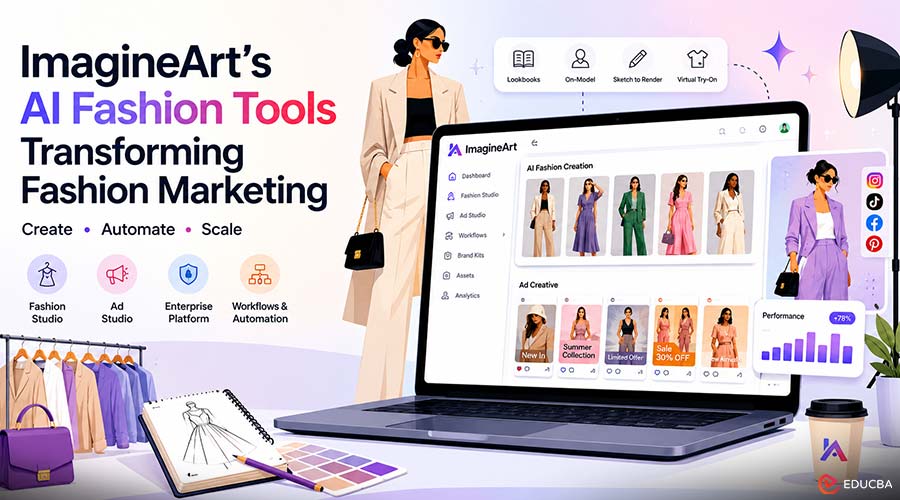
Fashion marketing has always been a content-intensive discipline. The gap between the volume of content a fashion brand needs to compete effectively and the volume a typical marketing team can realistically produce has been a defining challenge for fashion marketers at every level, from independent brand marketers to enterprise retail creative teams. In 2026, ImagineArt’s AI fashion tools are helping fashion marketers bridge the gap between creative vision and content execution.
By automating traditionally expensive and time-consuming production processes, marketers can create high-quality fashion content at a scale that was previously reserved for brands with large budgets and agency support. This is not about replacing creative judgment. Fashion marketing still requires a clear brand vision, a strong understanding of the audience, and a creative direction that makes a campaign distinct. What AI tools remove is the production overhead that sits between the creative direction and the finished, published asset: studio coordination, model booking, reformatting for each platform, and the agency brief-to-delivery cycle.
The Fashion Content Challenge Every Marketer Faces
Fashion marketing operates across more channels simultaneously than almost any other product category. A seasonal campaign requires on-model photography for the website, lifestyle imagery for editorial placements, short-form video for TikTok and Reels, static ad creative for paid social across multiple platforms, email campaign imagery, lookbook content, and Pinterest-optimized product shots. That is before localization, adapting content for different markets, or producing UGC-style content for the paid social formats that consistently outperform polished brand creative in feeds.
The production cycle for traditional fashion content is also slower than the pace at which social and paid media environments move. A studio shoot booked weeks in advance, post-production added on top, review and revision cycles further extended, by the time the content is ready, the trend it was designed to capture has moved on. Fashion marketers need content that can be produced at the speed the market moves, not at the pace of a traditional production company. AI creative production tools address both the volume and velocity challenges. Fashion marketers who have built AI production into their workflow are not producing less content; they are producing it thoughtfully. They are producing more content consistently and getting it to market faster.
Core ImagineArt’s AI Fashion Tools Transforming Fashion Marketing
Here are the key capabilities within Core ImagineArt’s AI fashion tools Transforming Fashion Marketing that power scalable content creation and campaign execution.
1. Fashion Studio: AI Fashion Content at Scale
ImagineArt Fashion Studio is a dedicated AI fashion creative environment for fashion content production, helping marketers expand output without increasing shoot budgets or production complexity. It generates lookbooks, AI runway sequences, ghost mannequin-to-on-model conversion, campaign photography, and lifestyle imagery. Marketers can set visual parameters such as model aesthetic, lighting, environment, and color story once, ensuring consistent output across all assets. A key use case is lookbook creation. Instead of coordinating full shoots with models, locations, and post-production, marketers can generate complete seasonal lookbooks directly from a creative brief. This reduces production time from weeks to days while maintaining editorial quality.
Another major feature is ghost mannequin-to-on-model conversion. Brands often use mannequin or flat-lay photography due to cost, even though on-model visuals perform better commercially. Fashion Studio converts these images into on-model outputs at scale, eliminating the need for individual model shoots across product lines. It also supports AI-generated fashion models, enabling diverse representation without traditional casting constraints, making global campaigns easier to execute while keeping costs under control. For early product marketing, Sketch-to-Render converts design sketches into photorealistic garments in minutes, allowing campaigns to begin before samples are produced. Virtual try-on visuals further improve e-commerce by helping customers better understand fit and appearance, increasing confidence and reducing returns.
2. Ad Studio: For Paid Social Creative That Performs
Paid social advertising is a critical acquisition channel for fashion brands, where creative quality directly impacts performance. Ad Studio focuses on improving both the speed and the effectiveness of ad creation. It generates ad creatives from a product URL using multiple AI-driven layers. Product Intelligence highlights key selling points, Trend Intelligence identifies high-performing visual formats, and Competitor Intelligence analyzes active ads, including Meta Ad Library data.
Based on this, it produces 5–10 platform-ready ad creatives per run, formatted for Instagram, Facebook, TikTok, and Pinterest. This significantly reduces reliance on external agencies and shortens production timelines from weeks to same-day output. For fashion marketers, the biggest advantage is increased testing capacity. More creative variations mean faster learning cycles, better optimization decisions, and improved return on ad spend. It also helps reduce creative fatigue by continuously supplying fresh variations, preventing performance drops caused by repetitive ads.
3. ImagineArt Enterprise: The Platform Behind the Production
ImagineArt Enterprise is a governed creative production platform that unifies Fashion Studio, Ad Studio, and additional AI tools into a single system designed for large-scale operations. It supports end-to-end content creation, including image generation, video production, AI voiceovers, and multilingual audio content. It also supports UGC-style content creation through an AI Influencer system that generates consistent virtual personas for ongoing social media content.
This reduces dependency on multiple tools by centralizing workflows for images, videos, ads, and audio within a single platform. The AI Influencer system is particularly useful for producing UGC-style content at scale, which often performs better than polished brand creatives in social advertising environments. Enterprise also includes role-based access controls, allowing teams across regions and departments to work within the same system while maintaining brand governance. This ensures consistency while still enabling distributed production across larger organizations.
4. Workflows: Building a Fashion Content System
Modern fashion marketing increasingly relies on structured production systems rather than isolated content creation. Workflows enable this shift by automating content pipelines from input to output. Workflows serve as a visual automation system that integrates briefing, generation, editing, formatting, and delivery into a single continuous pipeline. Once configured and validated against brand standards, they can be reused repeatedly for ongoing campaigns. For seasonal collections, workflows use product images, color variations, and campaign details to generate complete content sets, including product photos, lifestyle visuals, social creatives, and platform-specific formats.
This compresses production timelines from weeks to hours. Brand Kits ensure visual consistency by embedding logos, typography, color palettes, and reference assets directly into the workflow. This maintains brand alignment across all generated outputs without manual review at every stage. Workflow outputs can be turned into Team Apps, allowing non-technical users to create approved content without accessing the underlying system. This expands production capacity while keeping creative control centralized.
What Fashion Marketers Need to Know in 2026?
The capabilities offered by ImagineArt’s AI fashion tools are not experimental concepts. They are practical solutions that fashion marketers are already using to accelerate production, reduce costs, and increase content output. The skills that make AI creative production tools most effective for fashion marketers are the same skills that make any creative production effective: a clear brand vision, strong creative direction, and a precise understanding of the audience the content is designed for. What changes is the production layer. The brief that previously took three weeks to execute through a traditional production cycle executes in hours. The creative direction that sets those parameters remains the human skill that determines whether the output is good.
Fashion marketers who develop fluency with AI creative platforms, understanding what Fashion Studio, Ads Studio, ImagineArt Enterprise, and Workflows can do and how to configure them for their specific brand requirements, are building a production capability that compounds over time. More and better content, produced faster and at lower cost, with greater brand consistency than manual production can maintain at scale. The production gap between well-resourced fashion brands and lean marketing teams is closing. The tool set that closes it is available to any fashion marketer who chooses to build on it.
Final Thoughts
ImagineArt’s AI fashion tools bring fashion marketing closer to a production model built for speed, scale, and consistency. Instead of relying on slow, resource-heavy shoots and fragmented tools, marketers can now generate, test, and deploy content across every channel from a unified system. Fashion Studio, Ad Studio, Enterprise, and Workflows each solve a different layer of the content challenge from creation and advertising to collaboration and automation. Together, they remove traditional production bottlenecks and allow fashion teams to focus more on creative direction and strategy rather than execution logistics. As content demands grow across platforms, AI-driven production systems are reshaping how fashion brands plan and scale their marketing.
Recommended Articles
We hope this guide to ImagineArt’s AI fashion tools helps you scale your fashion content creation. Check out these recommended articles for more insights and strategies.


