
What are Illiquid Assets?
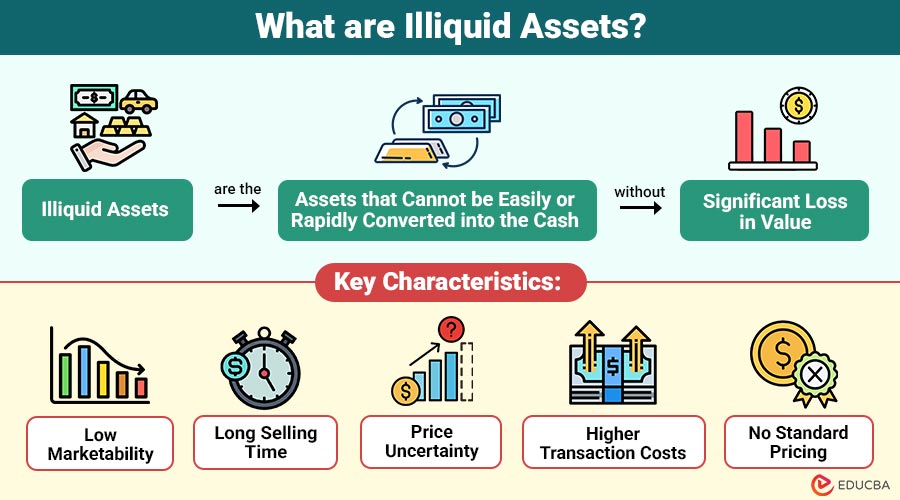
Illiquid assets are the assets that cannot be easily or rapidly converted into the cash without significant loss in value. Unlike liquid assets such as cash or stocks, these assets take longer to sell and may not always have an active market.
In simple terms, if selling an asset takes time, involves high transaction costs, or requires finding a specific buyer, it is considered illiquid.
Table of Contents:
- Meaning
- Key Characteristics
- Types
- Advantages
- Limitations
- Examples
- When Should you Invest in Illiquid Assets?
- Tips
Key Takeaways:
- Illiquid assets cannot be quickly converted into the cash without significant loss in value.
- They typically involve longer holding periods, higher costs, and limited buyers in the market.
- These assets offer diversification, stability, and higher returns but require patience and financial planning.
- Investing in illiquid assets suits long-term investors with strong finances and exit strategies.
Key Characteristics of Illiquid Assets
Below are the key characteristics that define illiquid assets and explain their unique nature in financial markets.
1. Low Marketability
Have limited buyers and sellers, making it difficult to quickly find interested parties in the market.
2. Long Selling Time
Selling illiquid assets often takes weeks, months, or even years due to complex processes and limited demand.
3. Price Uncertainty
The value of illiquid assets can fluctuate significantly because there are fewer transactions to establish consistent pricing benchmarks.
4. Higher Transaction Costs
Selling illiquid assets may incur legal fees, brokerage charges, and administrative expenses, significantly increasing the overall transaction cost.
5. No Standard Pricing
Due to the absence of set market prices, buyers and sellers typically negotiate their value.
Types of Illiquid Assets
Illiquid assets exist across various categories. Below are the most common types:
1. Real Estate
Property investments such as residential homes, commercial buildings, and land are classic examples of illiquid assets. Selling real estate requires time for listing, negotiations, and legal processing.
2. Private Equity
Investments in privately held companies are not traded on public stock exchanges, making them difficult to sell quickly.
3. Collectibles
Items like art, antiques, rare coins, and vintage cars fall into this category. Their value depends on niche buyers and market demand.
4. Fixed Deposits with Lock-in Period
Certain financial instruments restrict withdrawals before maturity, making them temporarily illiquid.
5. Retirement Accounts
Funds in retirement plans often have withdrawal restrictions or penalties, limiting immediate access.
6. Infrastructure Investments
Projects like highways, power plants, and large-scale developments are long-term and not easily tradable.
Advantages of Illiquid Assets
Below are the advantages that makes it valuable for long-term investment strategies.
1. Higher Return Potential
Illiquid investments often offer higher returns as investors are compensated for limited access and reduced liquidity flexibility.
2. Less Market Volatility
Experience fewer price fluctuations because they are not actively traded in daily financial markets.
3. Portfolio Diversification
Including illiquid assets helps spread risk across different investments, reducing dependence on highly volatile liquid asset classes.
4. Long-Term Wealth Creation
Many illiquid assets, such as real estate, tend to appreciate steadily over time, supporting long-term financial growth.
5. Reduced Emotional Trading
Investors are less likely to make rash or emotionally motivated judgments since it cannot be sold rapidly.
Limitations of Illiquid Assets
While beneficial, it come with certain limitations:
1. Limited Accessibility
It is challenging to obtain funds during financial crisis because illiquid assets are difficult to convert into cash.
2. Longer Selling Period
Selling takes significant time due to limited buyers, lengthy processes, and complex transaction requirements involved.
3. Pricing Challenges
Determining an accurate value is difficult because it lack frequent transactions and reliable market-based price benchmarks.
4. High Transaction Costs
Selling often entails legal fees, brokerage commissions, and administrative expenses, significantly increasing overall transaction costs.
5. Risk of Capital Lock-In
Funds invested remain tied up for long periods, limiting flexibility and immediate access.
Examples of Illiquid Assets
Here are some common examples that cannot be easily converted into cash quickly:
1. Residential Apartment
A residential apartment often takes months to sell due to legal processes, negotiations, and limited availability of buyers.
2. Startup Investment
A startup investment cannot be exited quickly, as shares are privately held and lack an active resale market.
3. Rare Painting
Selling a rare picture quickly at a good market price is challenging since it requires a skilled buyer.
4. Long-term Bonds
Long-term bonds with lock-in periods restrict early withdrawal, limiting access to funds before maturity or penalties.
5. Agricultural Land
Agricultural land in remote areas may take longer to sell due to location, demand, and infrastructure limitations.
When Should You Invest in Illiquid Assets?
Here are the key situations where investing in it can be a suitable financial decision:
1. Long-Term Investment Goals
Suitable for investors focused on long-term wealth creation rather than short-term liquidity needs and quick returns.
2. Stable Financial Position
Investors with strong financial stability and emergency funds can comfortably invest in assets that restrict immediate access to capital.
3. Diversification Strategy
Including it in a portfolio helps balance risk by reducing reliance on highly volatile and frequently traded investments.
4. High-Risk Appetite
Appropriate for investors willing to accept higher risks and delayed returns in exchange for potential gains.
Tips for Managing Illiquid Assets
Below are practical tips to help you effectively manage and reduce associated risks.
1. Maintain Emergency Fund
Always keep a sufficient emergency fund before investing in illiquid assets to handle unexpected financial needs without stress.
2. Avoid Over-Investing
Do not allocate excessive capital into illiquid assets, as it can limit financial flexibility and access to funds.
3. Diversify Assets
To lower risk and avoid becoming overly dependent on illiquid investment options, diversify your investments across a variety of asset classes.
4. Plan Exit Strategies
Always plan exit strategies to ensure smooth selling and avoid delays when liquidating illiquid assets.
5. Evaluate Holding Periods
Carefully assess the expected holding period of illiquid assets to align investments with your financial goals.
Final Thoughts
Illiquid assets play an essential role in long-term financial planning and wealth creation by offering stability and higher return potential. Although they lack quick cash conversion, they reward patience and discipline. A balanced investment approach combining liquid and illiquid assets helps investors maintain financial security, manage risks effectively, and achieve sustainable growth over time.
Frequently Asked Questions (FAQs)
Q1. Are illiquid assets risky?
Answer: Yes, they carry a higher risk due to limited marketability and delayed access to funds.
Q2. Why do investors choose illiquid assets?
Answer: They offer higher return potential, diversification, and long-term growth opportunities.
Q3. Can illiquid assets become liquid?
Answer: Yes, once sold, they convert into cash and become liquid assets.
Q4. Are illiquid assets suitable for short-term investors?
Answer: No, they are not suitable because they require long holding periods and lack quick access to cash.
Recommended Articles
We hope that this EDUCBA information on “Illiquid Assets” was beneficial to you. You can view EDUCBA’s recommended articles for more information.


