
What is HR Digitalization?
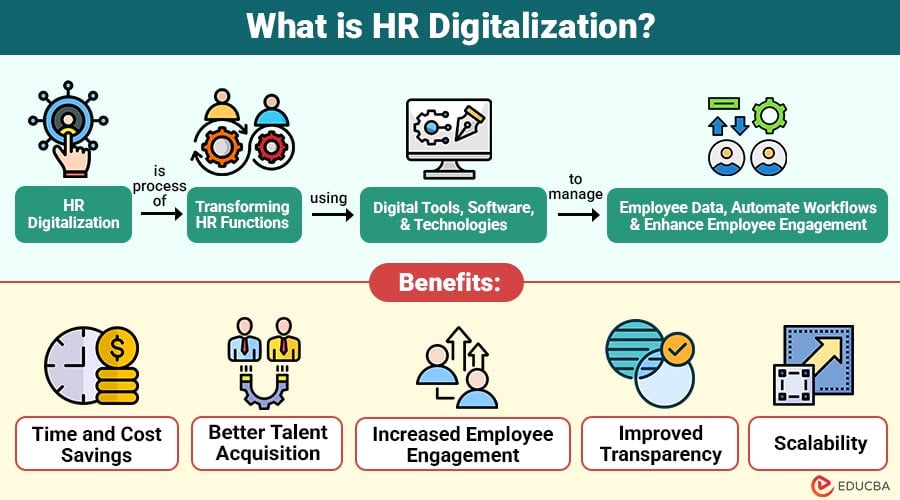
HR Digitalization is the process of transforming HR functions using digital tools, software, and technologies to manage employee data, automate workflows, and enhance employee engagement.
It covers the digital transformation of key HR activities such as:
- Recruitment and onboarding
- Payroll and benefits administration
- Performance management
- Learning and development
- Employee engagement and retention
Table of Contents:
- Meaning
- Evolution
- Key Components
- Importance
- Benefits
- Challenges
- Use Cases
- Role of AI and Automation
- Example
Key Takeaways:
- HR digitalization transforms HR into a strategic, data-driven function, improving agility, efficiency, and employee-centric decision-making capabilities.
- Automation across recruitment, payroll, performance, and learning significantly reduces costs, errors, and manual administrative workload burdens.
- AI-powered analytics enable predictive insights for hiring, retention, engagement, and workforce planning decisions across modern organizations.
- Successful HR digitalization requires strong change management, cybersecurity readiness, continuous upskilling, and thoughtful technology integration practices.
Evolution of HR: From Traditional to Digital
The shift from traditional HR to digital HR reflects how technology has transformed workforce management and employee experiences.
| Traditional HR | Digital HR |
| Paper-based records | Cloud-based employee databases |
| Manual recruitment | AI-driven recruitment platforms |
| Annual performance reviews | Continuous performance tracking |
| Reactive decision-making | Data-driven workforce planning |
| Limited employee engagement | Personalized digital employee experiences |
Key Components of HR Digitalization
Below are the key components that illustrate how organizations digitally transform and modernize their HR functions.
1. HR Management Systems
Centralized platforms efficiently manage employee data, attendance, payroll, benefits, compliance, reporting, and core HR operations.
2. Digital Recruitment and Onboarding
ATS, AI screening, video interviews, and onboarding portals streamline hiring, reduce time-to-hire, and improve candidate experience.
3. Employee Self-Service Portals
Employees can independently access payslips, leave management, benefits information, and personal records, significantly reducing HR workload.
4. Performance Management Software
Enables continuous feedback, goal alignment, OKRs, real-time performance tracking, and analytics, and replaces outdated annual appraisal systems.
5. Learning Management Systems
Delivers online training, skill development, certifications, personalized learning paths, progress tracking, and continuous employee upskilling.
Importance of HR Digitalization
Below are the key reasons organizations are adopting digital technologies in modern HR practices.
1. Improves Operational Efficiency
Automation reduces repetitive tasks such as payroll processing, attendance tracking, and documentation.
2. Enhances Employee Experience
Digital tools provide seamless interactions, faster responses, and personalized HR services.
3. Enables Data-Driven Decisions
HR analytics help organizations make informed decisions on hiring, promotions, training, and retention.
4. Supports Remote and Hybrid Work
Cloud-based HR systems enable workforce management from anywhere, supporting flexible work models.
5. Ensures Compliance and Accuracy
Automated systems reduce human mistakes and guarantee adherence to business and labor regulations.
Benefits of HR Digitalization
Below are the major benefits that demonstrate how digital HR transforms workforce management and organizational performance.
1. Time and Cost Savings
Automation significantly reduces manual effort, paperwork, administrative tasks, operational expenses, processing time, and HR overhead.
2. Better Talent Acquisition
AI-driven recruitment helps companies find the right candidates faster, reduces hiring time, and improves the quality of new hires.
3. Increased Employee Engagement
Digital feedback systems, pulse surveys, and engagement platforms strengthen communication, motivation, collaboration, and employee satisfaction.
4. Improved Transparency
Employees gain clear visibility into HR policies, performance metrics, compensation structures, and career growth opportunities.
5. Scalability
Digital HR systems scale seamlessly with organizational growth without proportional increases in HR workload.
Challenges of HR Digitalization
Below are the key challenges organizations commonly face while implementing digital transformation in HR.
1. Data Security and Privacy
Handling sensitive employee data requires robust cybersecurity measures and compliance with data protection regulations.
2. Change Management
Workers and HR specialists may be reluctant to embrace new technology because they are unfamiliar with it or are afraid of losing their jobs.
3. Integration Issues
Integrating new HR tools with existing systems can be complex and time-consuming.
4. Skill Gaps
HR teams need digital skills to use advanced HR technologies and analytics tools effectively.
HR Digitalization Use Cases
Below are practical use cases that show how digital technologies are applied across various HR functions.
1. Recruitment
- AI-based resume screening
- Chatbots for candidate communication
- Video interviewing platforms
2. Onboarding
- Digital document submission
- Automated induction workflows
- Virtual onboarding sessions
3. Performance Management
- Continuous feedback tools
- Real-time goal tracking
- Performance dashboards
4. Learning & Development
- E-learning platforms
- Skill gap analysis
- Personalized training programs
Role of AI and Automation in HR Digitalization
Artificial intelligence plays a important role in modern HR digitalization by enabling:
1. Predictive Analytics for Attrition and Retention
Predictive analytics forecasts employee turnover risks, identifies retention drivers, and supports proactive workforce planning strategies.
2. Intelligent Chatbots for HR Queries
Intelligent chatbots provide instant HR support, answer employee questions, automate requests, and improve service responsiveness.
3. Bias Reduction in Recruitment
AI reduces hiring bias by using fair, consistent criteria and focusing on skills, experience, and data instead of personal opinions.
4. Personalized Learning Recommendations
AI delivers personalized learning recommendations based on roles, skills, performance data, and career development goals.
Real-World Example
A multinational IT company implemented a cloud-based HRMS integrated with AI recruitment and performance analytics. As a result:
- Hiring time reduced by 40%
- Employee engagement scores increased by 25%
- HR operational costs decreased significantly
This demonstrates how HR digitalization drives measurable business outcomes.
Final Thoughts
HR digitalization is no longer optional—it is a strategic necessity for modern organizations. By embracing digital technologies, HR functions can transform from administrative support units into strategic partners that drive business growth, employee satisfaction, and organizational agility. Businesses will be better able to draw in, hold on to, and develop people in the future if they engage in HR digitization now.
Frequently Asked Questions (FAQs)
Q1. Is HR digitalization suitable for small businesses?
Answer: Yes, cloud-based HR tools are scalable and affordable for small and medium-sized businesses.
Q2. Does HR digitalization replace HR jobs?
Answer: No, it shifts HR roles from administrative work to strategic, people-focused responsibilities.
Q3. What skills are required for digital HR?
Answer: Data analysis, digital literacy, change management, and understanding HR technologies.
Q4. How long does HR digital transformation take?
Answer: It depends on organization size, readiness, and scope, typically ranging from a few months to several years.
Recommended Articles
We hope that this EDUCBA information on “HR Digitalization” was beneficial to you. You can view EDUCBA’s recommended articles for more information.


