


What is a Hiring Freeze?
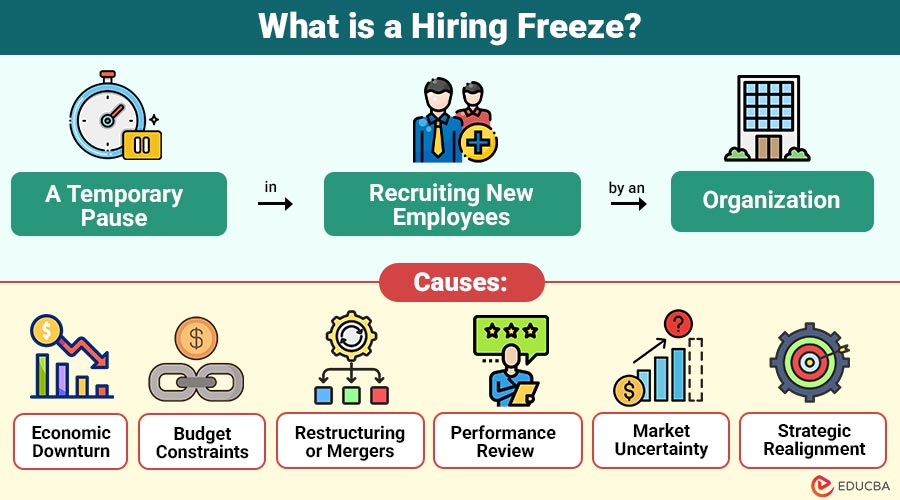
A hiring freeze is a deliberate, temporary pause in recruiting new employees by an organization. During this period, the company often leaves open positions unfilled and postpones the creation of new roles. The company continues ongoing projects with the existing workforce and pauses all new hiring until it officially lifts the freeze.
Hiring freezes are often part of a strategic workforce planning approach. They allow companies to carefully evaluate their current staffing needs, control costs, and navigate uncertain business conditions without resorting to layoffs immediately.
Table of Contents
Key Features of a Hiring Freeze
- Temporary or indefinite suspension of recruitment.
- Can apply to all departments or selectively to certain divisions.
- May affect both external hiring and internal promotions.
- Often part of broader financial, operational, or strategic planning.
- Typically communicated internally to avoid confusion among employees.
Causes of a Hiring Freeze
Organizations impose hiring freezes for several strategic and situational reasons. Some of the most common causes include:
- Economic downturn: Recessions, inflation, or market instability can prompt organizations to pause hiring. When revenues decline or uncertain economic forecasts emerge, halting recruitment helps conserve cash.
- Budget constraints: Companies with tight budgets often freeze hiring to reduce costs associated with salaries, benefits, onboarding, and training. This ensures financial stability while maintaining current operations.
- Restructuring or mergers: During mergers, acquisitions, or internal restructuring, hiring freezes allow companies to assess staffing needs, avoid redundant roles, and reorganize departments efficiently.
- Performance or productivity review: Organizations may pause hiring to assess how employees are utilizing the current workforce. This can identify skills gaps, inefficiencies, or overlapping responsibilities before adding new employees.
- Market uncertainty or industry-specific challenges: Shifts in regulations, supply chain disruptions, or technological changes can trigger a temporary halt in hiring as companies adjust to new conditions.
- Strategic realignment: Sometimes, companies use a hiring freeze to realign business priorities, focus on automation, or redirect human resources toward higher-value activities.
Effects of a Hiring Freeze
A hiring freeze can have wide-ranging effects on companies and employees.
Effects on Companies
- Cost Reduction: Immediate financial relief by avoiding additional salary and benefits expenses.
- Operational Challenges: Increased workload on existing staff may slow down project timelines.
- Talent Gaps: Essential roles may remain vacant, affecting innovation and customer service.
- Impact on Growth: A limited workforce can delay long-term expansion plans.
Effects on Employees
- Increased Workload: Existing employees may need to cover additional responsibilities, leading to stress or burnout.
- Limited Career Growth: Fewer promotions or lateral moves reduce opportunities for skill development and advancement.
- Employee Morale and Retention: Uncertainty can cause anxiety, impacting engagement and productivity.
- Recruitment Market Perception: A hiring freeze may signal caution to potential candidates, making talent attraction harder once hiring resumes.
How Companies Manage Hiring Freezes?
Organizations adopt multiple strategies to manage the impact of hiring freezes while maintaining productivity:
- Prioritizing Critical Roles: Certain essential positions, such as roles related to compliance, safety, or revenue generation, may still be filled even during a freeze.
- Internal Promotions and Transfers: Promoting existing employees or transferring them to critical departments ensures skill utilization while keeping morale high.
- Temporary or Contract Staffing: Freelancers, consultants, and temporary workers can fill short-term gaps without long-term hiring commitments.
- Workload Redistribution: Managers may reorganize team responsibilities, cross-train employees, and optimize workflows to maintain efficiency.
- Enhanced Communication: Clear, transparent communication regarding the reasons for the freeze, its expected duration, and its impact on teams reduces uncertainty and builds trust.
- Investment in Automation: Companies may leverage technology and process automation to compensate for workforce limitations during the freeze.
- Retention Strategies: Offering incentives, training, and engagement programs can help retain key talent during periods of hiring restraint.
Hiring Freeze vs. Layoffs
It is essential to distinguish a hiring freeze from layoffs:
| Aspect | Hiring Freeze | Layoffs |
| Definition | Temporary suspension of recruitment | Termination of existing employees |
| Goal | Cost control and workforce reassessment | Immediate reduction in expenses |
| Impact on Jobs | No direct job loss | Direct job loss for affected employees |
| Employee Morale | Can increase uncertainty but preserves jobs | Often lowers morale and increases anxiety |
| Duration | Temporary | May be permanent for affected roles |
While a hiring freeze does not involve letting go of employees, it can indirectly increase pressure on current staff due to workload shifts and limited promotion opportunities.
Final Thoughts
A hiring freeze is a strategic measure that organizations adopt to manage financial constraints, workforce efficiency, or market uncertainties. While it helps reduce costs and stabilize operations, it can increase employee workload, limit growth opportunities, and affect overall morale. Effective management through prioritization, internal promotions, temporary staffing, and transparent communication ensures organizations navigate hiring freezes successfully without compromising long-term productivity and employee engagement.
Frequently Asked Questions (FAQs)
Q1. Who decides to implement a hiring freeze?
Answer: Usually, senior leadership or the board of directors decides on a hiring freeze based on recommendations from finance and HR departments. The decision often ties directly to how leaders manage costs, assess revenue performance, or execute larger business transformation plans.
Q2. Does a hiring freeze apply to replacements for employees who resign?
Answer: In most cases, yes. Companies generally do not replace departing employees during a hiring freeze unless the role is deemed critical. However, companies may make exceptions for essential positions that directly impact operations, compliance, or revenue.
Q3. Can a hiring freeze affect future recruitment efforts?
Answer: Yes. Extended freezes may delay hiring pipelines, reduce employer brand appeal, and make it harder to attract top talent once hiring resumes. To mitigate this, HR departments often maintain candidate engagement and communicate openly about future opportunities.
Q4. What are the early warning signs that a company might announce a hiring freeze?
Answer: Signs may include slowed recruitment activity, budget cuts, reduced project funding, leadership communication about cost-saving, or market uncertainty. Employees might also notice delayed replacement hiring after resignations.
Q5. What should job seekers do if their target company has announced a hiring freeze?
Answer: They can stay connected with recruiters, express continued interest, and apply once hiring resumes. Meanwhile, job seekers should network, enhance their skills, and explore opportunities in companies or industries not affected by freezes.
Recommended Articles
We hope this guide on Hiring Freeze helped you understand its meaning, causes, effects, and management strategies for businesses and employees. Explore our related articles on:

