


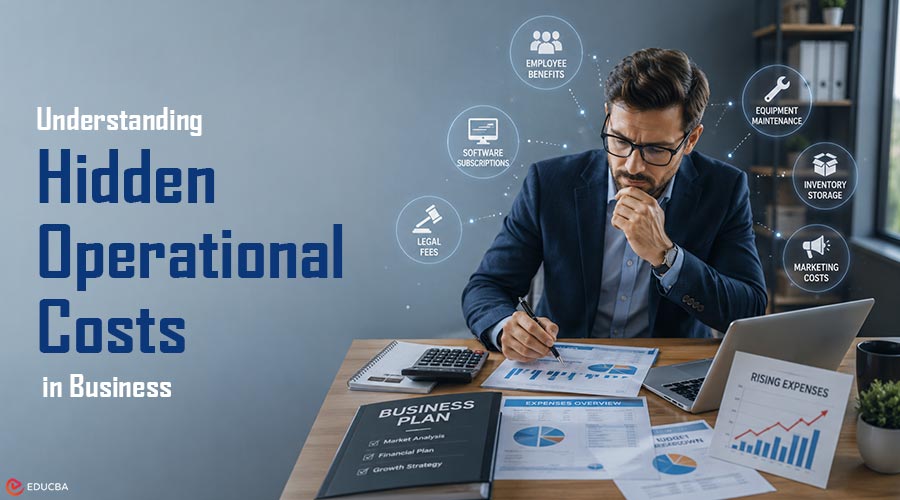
People tend to assume that most businesses fail for obvious reasons, such as running out of capital, poor marketing, or failing to gain market share. More often than not, even solid business plans fail due to operational inefficiencies and hidden costs that were never included in the original budget.
Most entrepreneurs are focused on two things. How to make the product more popular and how to grow faster. They create products, run ads, and chase customers to build up their brand as soon as possible.
While they are fighting to make it in the market, they forget that their invested capital is running out, even before they can break even. When founders are struggling to chase the dream, hidden costs accumulate in the background.
The problem with the most well-thought-out business plan is not that it’s not good; it is that it does not account for hidden operational costs and other unexpected expenses that arise over time. Here are the operational costs people often overlook when creating their business plan.
The Secret Costs of Building a Venue
Most business plans include a basic construction cost that covers only the materials and labor required.
What they miss while making the budget is that the charges also include site preparation, engineering fees, inspections and permits, weather delays, insurance, bonds, change orders, site supervision, material waste, and labor overruns.
One of the most overlooked costs is post-construction cleaning; it’s often an afterthought, but can be surprisingly expensive if not handled professionally. Budgets are heavily affected by changing site conditions, expanding project scope, and rising material prices.
As the overheads increase, there are generally no plans in place to cover them. This is why it is crucial to understand whether construction is involved in the business plan; you need to create a contingency reserve to cover you when needed.
Similarly, smart planning is needed, such as segmenting the construction into phases: pre-construction, construction, closeout, and maintenance.
Hidden Operational Costs of Hiring Employees
Most founders think that hiring employees means your only expenditure on them is the salary you pay. But the reality is not that simple, because that’s just the starting point.
When you add things like basic equipment, payroll taxes, healthcare contributions, paid leave, insurance, and retirement benefits, the actual cost of hiring just one employee can rise by 35% to almost 50%.
So, a $40,000 salary can easily rise to $60,000 in expenses. Then you have to consider the cost of onboarding, including training, lost productivity during the learning phase, and the time senior employees invest in training. These all add up to the financial burden of hiring someone new, but are rarely considered in early budgets, making them among the highest hidden operational costs for growing businesses.
Replacing an employee increases expenses further, as it can cost anywhere from half to twice their annual salary. This cost will include recruitment, training, and lost productivity during the time required to fill the vacancy.
Especially for small teams, even a single departure can severely disrupt operations and increase the overall costs. When founders think these costs won’t affect them, they underestimate the capital required to build a team, which leads them to underprice the service, hire quickly, and run out of operating funds faster than expected.
Administrative Overhead and Hidden Operational Costs
Administrative work may not appear expensive, but it adds up quickly and often becomes one of the most hidden operational costs as a business scales.
In the early stages, founders often handle these tasks themselves, and while it may feel manageable at first, it becomes harder as the business grows and the volume increases.
More transactions mean more tracking, more employees mean more coordination, and more customers mean more records to maintain.
Even if headcount stays the same, labor costs rise because employees spend more hours on low-value tasks, which is something most businesses don’t plan for. If founders assume operations will scale smoothly without accounting for the growing administrative burden, it can even cause them to go bankrupt, simply because of the hidden costs of productivity.
Technology as a Growing Hidden Operational Cost
When you plan a business, you don’t think much about the software and tools you need to buy. They do not seem like major expenses. But any business these days requires a variety of tools, each with its own cost, creating hidden operational expenses that many entrepreneurs fail to anticipate.
You need CMS (customer management systems), accounting platforms, communication tools, design software, security services, and analytical dashboards, but none of these are one-time buys; they require subscriptions.
So, as standalone investments, they seem inexpensive; however, when you consider them all, the costs add up and create a heavy monthly expense. And as the team grows, so do licensing costs: more users mean more paid seats, and features that were once optional become necessary, leading to upgrades and higher-tier plans.
There is also a less visible cost: inefficiency between tools. When systems do not integrate well, employees spend time switching between platforms, duplicating data, or fixing errors, which slows down work and reduces overall productivity.
Unused subscriptions are another common issue, as businesses often unknowingly continue paying for tools they no longer need due to lack of active review, leading to higher costs.
Compliance and Legal Requirements
Founders often treat legal and compliance costs as one-time startup expenses. After they register a business and obtain initial permits, they assume the work is done.
In reality, compliance is ongoing, and these recurring obligations often become hidden operational costs that can strain a company’s finances.
As the business grows, these requirements often become more complex, as you may plan to expand into new locations or markets or introduce additional regulations. Even hiring employees adds payroll compliance and labor law obligations.
These costs are unpredictable: fees can increase, regulations can change, and new requirements can emerge. If a budget does not include these costs, they can create unexpected financial strain.
Equipment Maintenance and Hidden Operational Costs
Many business plans include the initial cost of equipment but ignore ongoing maintenance and replacement, creating hidden operational costs that affect long-term profitability.
Repairs, servicing, and upgrades keep operations running smoothly. Some equipment requires regular calibration or cleaning, while other equipment requires technicians to replace parts.
People eventually replace everything, and if they do not plan for it, businesses face sudden, large expenses that disrupt cash flow. This is why they must consider the equipment lifecycle; otherwise, they will underestimate costs, and actual costs will be much higher than predicted.
Inventory and Waste Reduction Efficiency
For businesses that manage inventory, hidden operational costs can take many forms, including storage, spoilage, damage, and obsolescence.
Even service-based businesses face waste in different ways, such as unused materials, inefficient processes, and time spent on non-productive work, all of which represent lost value. Even when these costs are not visible, they directly affect profitability.
Hidden Marketing Costs That Increase Operational Expenses
Marketing budgets often focus on advertising spend, but additional hidden operational costs sit behind every campaign, including content creation, analytics, and campaign management.
Sales processes also involve ongoing expenses such as follow-ups, customer relationship management, and commissions, which increase the cost of acquiring and retaining customers.
These supporting costs can exponentially increase the total cost of operations, and failing to consider them can come as a harsh surprise.
Final Thoughts
Even the most thorough business plans can fail when entrepreneurs underestimate hidden operational costs that quietly accumulate over time. Founders need to maintain a contingency reserve to cover hidden operational costs and other unexpected business expenses. When people decide to start a business, they often do so with many hopes and dreams. Underestimating costs can become a serious financial burden once a business is operational. This often causes unwarranted trouble. That is why it is crucial to handle these matters thoroughly.
Recommended Articles
We hope this guide on hidden operational costs helps you build a more realistic business plan and avoid unexpected financial challenges. Explore these recommended articles for additional insights and strategies to improve cost management, operational efficiency, and long-term business sustainability.


