

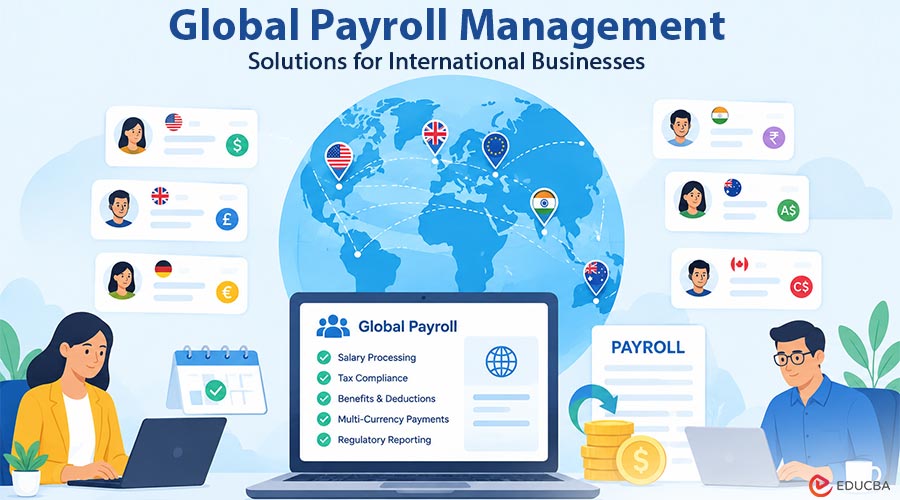
As companies expand into international markets, paying employees across multiple countries quickly becomes one of the more complex parts of running the business. Each pay cycle must account for local tax withholding, social security contributions, statutory benefits, employment records, and reporting deadlines, and each country sets its own rules. Since each country has its own regulations, global payroll management requires careful planning, consistent processes, and a clear understanding of local employment requirements.
A well-planned payroll strategy helps businesses manage that complexity while keeping pay accurate, on time, and transparent. Rather than treating payroll as a routine back-office task, growing companies should see it as a core part of managing a global workforce. Employees judge an employer by whether they are paid correctly and on time, and tax authorities judge it by whether the filings are correct.
Understanding the Challenges of Global Payroll Management
Every country has its own employment laws, tax system, reporting requirements, and payment practices. Pay frequencies differ, statutory deductions differ, and some countries require additional payments, such as a thirteenth-month salary. Businesses operating across borders need to understand these differences, so employees receive the right pay at the right time. Currency fluctuations add another layer. When employees are paid in different currencies, finance teams need reliable processes to convert payments, account for exchange rates, and keep financial records accurate.
Consistency is a third challenge. When a company relies on a different payroll vendor or internal system in each country, reports often arrive in different formats and on different timelines, which makes it hard for leadership to compare costs or track total workforce spend. These challenges grow as a company expands. Processes that work for a small team in two countries often break down once headcount spreads across five or ten markets.
Why Centralized Payroll Management Matters?
Centralizing payroll data gives companies clearer visibility across their international operations. A consistent framework lets finance and HR teams work from reliable data, monitor payroll costs, and catch discrepancies before they become bigger problems. Centralization does not mean running an identical payroll process in every country. Local requirements still apply. Instead, it means setting consistent internal standards for approvals, data, cutoff dates, and reporting while letting each location meet its specific legal obligations.
Companies should define clear responsibilities for collecting employee data, approving salary changes, reviewing deductions, and releasing payments. Documented processes make it easier for teams in different countries to work together and stay accountable. Regular reporting matters as much. Consolidated payroll reports help decision-makers understand labor costs, spot unusual changes, and plan future hiring budgets.
Using Technology to Improve Payroll Accuracy
Technology can remove much of the repetitive work from payroll administration. Automated calculations, digital employee records, and integrated reporting tools reduce manual data entry and make processes more consistent. Automation alone cannot eliminate every payroll risk, though. Systems depend on accurate employee data, correctly configured rules, and timely updates when tax rates, legislation, or employment arrangements change. That is why businesses should pair technology investment with strong review procedures.
Payroll teams should verify unusual payments, check employee classifications, and investigate discrepancies before finalizing each payroll cycle. Data security deserves attention too. Payroll systems hold highly sensitive information, including compensation details, bank account data, and personal identification. Access controls, secure data transfers, and appropriate retention policies help protect it, and many jurisdictions have data protection laws that govern how this information is stored and transferred across borders.
When Should Businesses Consider Payroll Outsourcing?
Managing payroll in-house can be practical when a company operates in a single market with a relatively small workforce. As the organization expands, however, the administrative workload can grow quickly. Consider outside support when a business enters new countries, faces repeated payroll errors, or finds its HR and finance teams spending too much time coordinating payments and compliance tasks. Exploring international payroll solutions can help businesses understand how specialist providers support cross-border payroll administration.
The right arrangement depends on the countries involved, workforce size, reporting requirements, and the level of support needed. It also helps to understand the main service models. A payroll outsourcing provider typically processes payroll for a company that already has a legal entity in that country. Where a company wants to hire in a country without setting up an entity, an employer of record (EOR) becomes the legal employer and handles payroll, tax, and employment compliance on the company’s behalf. Businesses should compare these options carefully rather than assuming every provider offers the same scope of service.
How to Evaluate a Global Payroll Provider?
Choosing a payroll provider takes more than comparing fees. Businesses need to know whether a provider can support their current workforce and keep pace with future expansion. Geographic coverage is a key consideration. Companies should confirm that the provider has real, in-country experience in the locations where their employees work and understands the local requirements that apply there. Service scope should be clearly defined. Companies need to know which tasks the provider will manage, which will stay with the business, and how the provider will handle exceptions, corrections, and payroll queries.
Technology and reporting capabilities also matter. Dependable reporting helps companies reconcile payroll costs, maintain financial records, and communicate effectively across departments. Finally, businesses should review data security measures, service levels, implementation timelines, and contract terms. A transparent agreement helps both parties understand their obligations and reduces the risk of misunderstandings.
Preparing for International Workforce Growth
Payroll planning should begin before a company enters a new market. Reviewing employment requirements, payment practices, expected labor costs, and administrative obligations early helps businesses identify potential obstacles and plan around them. HR, finance, and legal teams should work together when evaluating new locations.
Their combined expertise helps companies understand the implications of hiring internationally and put the right processes in place before the first employee joins. Businesses should also review their payroll arrangements regularly. Expansion plans, headcount changes, new reporting requirements, and evolving technology can all affect whether an existing setup still fits.
Final Thoughts
Effective global payroll management depends on accurate data, consistent processes, the right technology, and a solid understanding of local employment requirements. Companies that build these foundations are better positioned to manage international teams while maintaining financial visibility and employee confidence.
As businesses enter more markets, they should periodically assess whether their internal processes can keep up with their changing needs. A carefully chosen payroll arrangement can reduce administrative pressure, improve reporting accuracy, and free HR and finance teams to focus on broader business priorities.
Recommended Articles
We hope this comprehensive guide to global payroll management helps you simplify international payroll operations and support your business expansion. Check out these recommended articles to streamline your global workforce management.