


What is a Furlough?
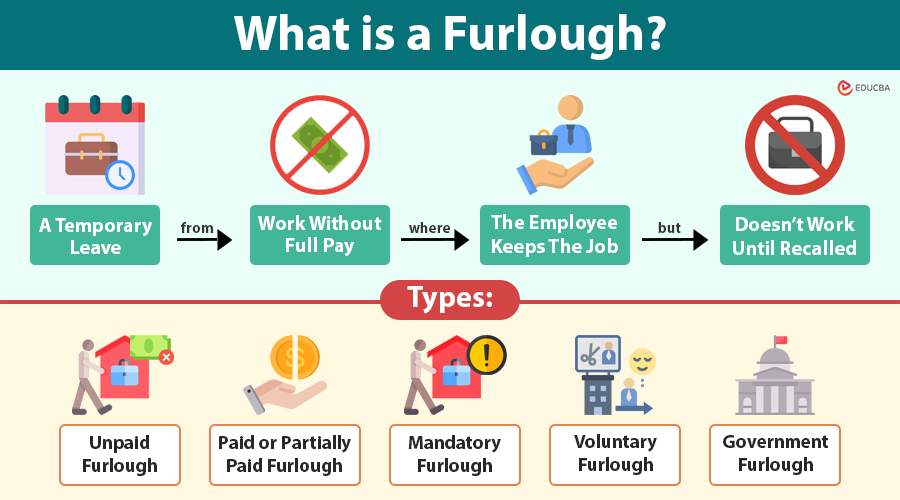
A furlough is a pause in employment. Employees are not actively working, and in many cases, not being paid, yet they remain on the company’s books as official staff.
For example, during the U.S. federal government shutdowns, non-essential staff were furloughed but technically remained federal employees. Similarly, airlines like Lufthansa and Delta used furlough to reduce costs during COVID-19 without losing skilled flight crew permanently.
Table of Contents
- Meaning
- Key Characteristics
- Historical Background
- Types
- Furlough vs. Layoff vs. Sabbatical
- Legal and Regulatory Aspects
- Financial Implications
- Psychological and Social Impact
- During the COVID-19 Pandemic
- Best Practices for Employers
- Future
Key Characteristics
Key aspects include:
- Temporary nature: The assumption is that once conditions improve—budget approval in government, seasonal demand in retail, or financial recovery in corporations—employees return to their roles.
- Employment continuity: Workers retain their employee status, which often helps them keep benefits like healthcare or seniority, though wage accrual may halt.
- Employer flexibility: Employers can impose furloughs broadly (entire departments) or selectively (non-essential roles) depending on operational needs.
- Employee uncertainty: While technically employed, furloughed workers face wage loss and an indefinite timeline for return, creating financial and psychological strain.
Historical Background of Furlough
The origins of furlough are deeply rooted in military history. In the 17th century, Dutch and later British and American militaries granted soldiers “furloughs” to visit family or recover from duty without formally ending their service. The concept represented a temporary break, ensuring continuity of service and loyalty to the institution.
- 19th century: Industrialization saw furloughs transition into factories, where seasonal or cyclical demand required temporary work stoppages without permanent dismissals.
- 20th century: During wars, governments sometimes furloughed non-essential civil staff to redirect funds toward military spending. The Great Depression also saw widespread furloughs in the public and private sectors.
- 21st century: The 2008 financial crisis triggered furloughs in industries like automotive and banking. However, it was the COVID-19 pandemic that globalized the practice, with millions of employees furloughed simultaneously across continents.
Thus, furlough evolved from a military leave to a modern labor-management strategy.
Types of Furloughs
1. Unpaid Furlough
Employees are placed on leave without pay, though they often remain eligible for certain benefits like healthcare.
- When used: During severe financial constraints or downturns.
- Example: U.S. state governments placed workers on unpaid furlough days after the 2008 crisis.
2. Paid or Partially Paid Furlough
The employer provides partial wages or stipends, sometimes with government wage subsidies.
- When used: To soften the impact on employees and maintain loyalty.
- Example: The UK’s Coronavirus Job Retention Scheme covered up to 80% of wages.
3. Mandatory Furlough
The employer enforces leave across departments or the workforce. Employees have no choice but to comply.
- When used: During budget shortfalls, economic recessions, or government shutdowns.
- Example: Nevada required state employees to take unpaid days during fiscal crises.
4. Voluntary Furlough
Employees volunteer to take unpaid leave, often to help the company cut costs while protecting colleagues’ jobs.
- When used: In unionized or team-oriented workplaces where staff collectively support cost-saving.
- Example: Airline workers opting for voluntary furloughs to prevent layoffs of junior staff.
5. Rotational or Reduced-Hours Furlough
Instead of halting work completely, employees work fewer hours or days per week.
- When used: To balance cost savings with operational continuity.
- Example: Germany’s Kurzarbeit system reduced working hours with state wage support.
6. Government Furlough (Shutdowns)
Specific to public sector employees, non-essential workers are furloughed when government budgets lapse.
- When used: During political deadlocks over budgets or spending bills.
- Example: U.S. federal government shutdown in 2018–19 furloughed around 800,000 workers.
Furlough vs. Layoff vs. Sabbatical
| Aspect | Furlough | Layoff | Sabbatical |
| Definition | Temporary suspension from work, usually unpaid, with expectation of return. | Permanent or indefinite termination of employment. | Extended leave of absence for personal, professional, or academic growth. |
| Employment Status | Employee remains on payroll but is not actively working. | Employment relationship ends. | Employee remains employed but on extended leave. |
| Pay/Compensation | Typically unpaid (sometimes partially paid or subsidized). | No pay; severance may be provided. | May be paid, partially paid, or unpaid depending on employer policy. |
| Duration | Short-term (weeks to months), tied to economic or operational needs. | Indefinite or permanent. | Pre-determined period (often 3–12 months). |
| Benefits | Some benefits (like healthcare) may continue. | Benefits usually end unless extended through COBRA or similar programs. | Benefits often continue, depending on the employer’s policy. |
| Reason | Cost-cutting, budget shortfalls, economic downturns, and seasonal slowdowns. | Financial crisis, restructuring, redundancy, and business closure. | Personal development, research, travel, rest, or family commitments. |
| Job Security | Moderate – job is preserved, but no guarantee of recall. | Low – no assurance of rehire. | High – return to the same or equivalent role after leave. |
| Employer Example | Airlines furloughing staff during COVID-19. | Mass layoffs occurred during the 2008 financial crisis. | Professors are taking a sabbatical for research or study. |
| Employee Example | Worker temporarily unpaid but retaining healthcare benefits. | Worker is permanently unemployed after downsizing. | Worker pursuing higher education with employer-approved leave. |
Legal and Regulatory Aspects
United States
- Governed by the Fair Labor Standards Act (FLSA).
- Exempt (salaried) employees must be furloughed in increments of a full workweek to avoid wage disputes.
- Employees may retain healthcare but lose access to retirement contributions.
- Unemployment benefits are usually available during furlough.
United Kingdom
- Furlough gained formal definition during the Coronavirus Job Retention Scheme (CJRS).
- Employers could “flexibly furlough” employees, with the government covering up to 80% of wages.
- Scheme protected millions of jobs but ended in 2021.
European Union
- Countries like Germany (Kurzarbeit) and France (activité partielle) provide wage subsidies for reduced working hours.
- Stronger state support compared to the U.S. model.
India
- Indian law does not explicitly recognize “furlough” in employment contracts.
- Instead, temporary closures and unpaid leave provisions under the Factories Act, 1948, or Shops and Establishments Acts apply.
Financial Implications of Furlough
For Employers
- Cost reduction: Immediate payroll relief without severance liabilities.
- Talent retention: Retains skilled workers, avoiding recruitment and training costs later.
- Reputation management: Seen as a softer measure than layoffs.
- Risks: Prolonged furloughs may demotivate staff and cause attrition.
For Employees
- Income loss: No or partial pay means budgeting challenges.
- Benefits retention: Many employers continue healthcare, but retirement and bonuses may be frozen.
- Unemployment eligibility: Provides some safety net where available.
- Career uncertainty: Extended furloughs may push employees to seek alternative permanent work.
Psychological and Social Impact
On Employees:
- Emotional stress from financial insecurity.
- Loss of professional identity and routine.
- Fear of eventual layoff.
On Employers:
- Risk of disengagement and reduced loyalty.
- Challenges in re-motivating furloughed workers upon return.
On Society:
- Furloughs increase the burden on unemployment insurance and welfare programs.
- A reduction in consumer spending slows economic recovery.
Studies show that furloughed employees experience similar anxiety levels as unemployed workers, highlighting the importance of support programs.
Furloughs During the COVID-19 Pandemic
- United States: Airlines furloughed tens of thousands; theme parks like Disney sent workers on unpaid leave.
- United Kingdom: Over 11 million employees supported through CJRS between 2020–21.
- Germany: Over 7 million workers placed under Kurzarbeit, heavily subsidized by the government.
- India: Several IT and manufacturing firms adopted informal furloughs by placing workers on indefinite unpaid leave.
The pandemic showed furloughs could be scaled globally and highlighted the role of governments in cushioning both businesses and workers.
Best Practices for Employers Implementing Furloughs
- Clear communication: Explain the reasons, expected duration, and future outlook.
- Legal compliance: Respect labor laws, contracts, and union agreements.
- Maintain benefits: Continue healthcare where possible to support employee wellbeing.
- Offer reskilling: Provide online training so employees return with stronger skills.
- Allow flexibility: Permit secondary employment to ease financial strain.
- Transition planning: Develop reintegration strategies for gradual return, refresher training, and morale-building.
Future of Furloughs
- Increased use: With economic shocks becoming more frequent, furloughs may remain a preferred workforce tool.
- Government role: States may develop permanent furlough schemes similar to Germany’s Kurzarbeit.
- Hybrid work influence: Remote and flexible work models may reduce the need for large-scale furloughs by allowing cost-saving alternatives.
- Automation risk: As automation grows, furloughs could sometimes act as precursors to permanent layoffs if jobs become obsolete.
Final Thoughts
Furloughs sit at the crossroads of economic necessity and social responsibility. They allow businesses to navigate crises without immediately abandoning employees while offering workers hope of reemployment. However, their effectiveness depends heavily on implementation, clear communication, legal compliance, and government support, which can mean the difference between a humane solution and a prolonged hardship.
In an uncertain world, furloughs are likely to remain an essential part of the labor toolkit, bridging gaps between downturns and recoveries.
Frequently Asked Questions (FAQs)
Q1. Can furloughed employees work another job during their furlough?
Answer: This depends on employer policies and local labor laws. In many cases, employees can take up temporary or part-time jobs while furloughed, provided there is no conflict of interest with their primary employer.
Q2. Do furloughed employees continue to earn seniority or accrue vacation time?
Answer: Not usually. Most furloughs freeze accrual of benefits like paid time off and retirement contributions, though employees retain their seniority and job title.
Q3. Can furloughed employees be permanently laid off later?
Answer: Yes. Furloughs are meant to be temporary, but if conditions do not improve, employers may eventually convert them into layoffs.
Q4. Do furloughs affect credit scores or loan eligibility?
Answer: Indirectly, yes. A furlough itself does not appear on a credit report, but reduced income may make it harder for employees to keep up with bills or qualify for loans.
Q5. How do furloughs affect part-time or contract workers?
Answer: Employers may also furlough part-time employees, but they typically do not furlough contract workers (freelancers, consultants) since these workers are not on payroll. Instead, employers pause or terminate their contracts.
Recommended Articles
We hope this guide on furloughs was helpful. Explore related articles on layoffs, sabbaticals, and workforce management to gain deeper insights into employment practices and workplace strategies.

