


What is ESG Investing?
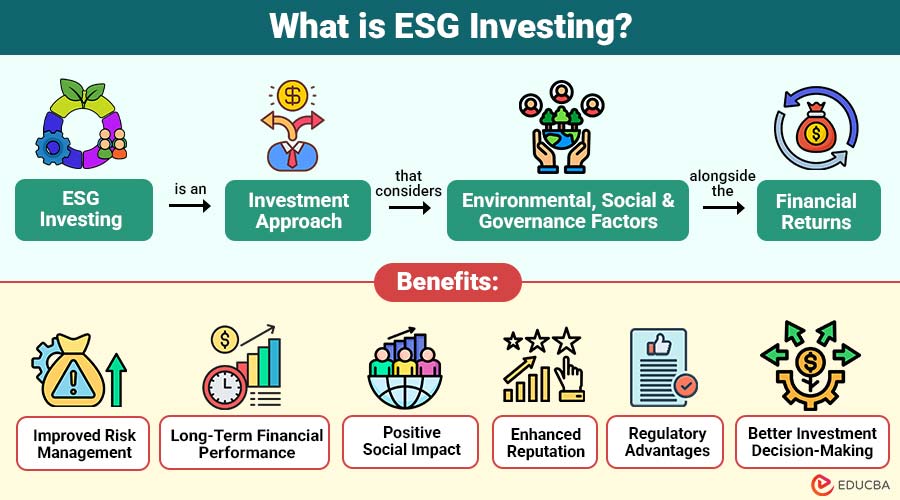
ESG investing is an investment approach that considers environmental, social and governance factors alongside the financial returns. Investors use ESG criteria to assess how companies manage risks and opportunities related to the sustainability and ethical practices.
Unlike traditional investing, which focuses solely on profitability, ESG investing emphasizes responsible decision-making. It seeks to assist companies that make a positive impact on society while steering clear of those that might damage the environment or use unethical business methods.
Table of Contents:
Key Takeaways:
- ESG investing integrates environmental, social, and governance factors into financial decision-making to support sustainability and financial stability.
- ESG investing improves risk management, enhances long-term returns, and supports responsible, sustainable business practices.
- ESG investing is widely adopted by institutions, retail investors, corporations, and governments worldwide today.
- ESG investing helps investors align financial goals with ethical values, promoting responsible wealth creation and sustainable long-term impact.
Key Components of ESG Investing
Here are the main key components that explain how ESG investing evaluates companies based on environmental, social, and governance criteria.
1. Environmental Factors
Environmental criteria evaluate how a company impacts the natural environment. These factors are increasingly important as climate change and resource scarcity become global concerns.
Key considerations include:
- Carbon emissions and climate policies
- Energy efficiency and renewable energy usage
- Waste management and pollution control
- Water conservation practices
Companies with strong environmental practices are often better positioned to adapt to regulatory changes and environmental risks.
2. Social Factors
Social criteria focus on how a company manages relationships with employees, customers, suppliers, and communities.
Key considerations include:
- Employee welfare and labor practices
- Diversity and inclusion initiatives
- Customer satisfaction and product safety
- Community engagement and social impact
Organizations that prioritize social responsibility tend to build stronger brand loyalty and long-term customer trust.
3. Governance Factors
Governance relates to how a company is managed and controlled. It ensures accountability, transparency, and ethical leadership.
Key considerations include:
- Board structure and independence
- Executive compensation
- Shareholder rights
- Anti-corruption policies
Strong governance reduces the risk of fraud, scandals, and mismanagement, making companies more attractive to investors.
How ESG Investing Works?
ESG investing involves integrating sustainability factors into investment decision-making. Investors use ESG ratings, reports, and data provided by specialized agencies to evaluate companies.
The process typically includes:
- Screening Investments: Screening investments involves excluding companies engaged in harmful industries like tobacco, weapons, or fossil fuels to align with values.
- ESG Integration: ESG integration incorporates environmental, social, and governance factors into financial analysis to identify risks, opportunities, and long-term sustainability performance.
- Impact Investing: Impact investing focuses on allocating capital to businesses or projects that deliver measurable positive environmental and social outcomes alongside returns.
- Active Ownership: Active ownership means investors engage with companies through voting, discussions, and advocacy to improve ESG policies, transparency, and accountability.
Types of ESG Investing
Here are the different types of investors that use ESG principles in investment decision-making.
- Negative Screening: Negative screening excludes companies failing ESG criteria, avoiding investments in industries linked to unethical practices, environmental harm, or governance issues.
- Positive Screening: Positive screening identifies companies that demonstrate strong ESG performance relative to peers, emphasizing sustainability leadership, ethical practices, and responsible governance standards.
- Impact Investing: Impact investing allocates funds to projects or companies aiming to create measurable social and environmental benefits alongside financial returns.
- Thematic Investing: Thematic investing focuses on ESG themes, aligning portfolios with sustainability.
- ESG Integration: ESG integration combines environmental, social, and governance factors with traditional financial analysis to enhance decision-making and manage investment risks.
- Best-in-Class Approach: Best-in-class approach selects top ESG-performing companies within industries, focusing on leaders with strong sustainability and governance practices.
Benefits of ESG Investing
Here are the key benefits that show how ESG investing creates value for investors, businesses, and society.
- Improved Risk Management: Companies with strong ESG practices effectively manage environmental, social, and regulatory risks, reducing uncertainty and enhancing long-term stability.
- Long-Term Financial Performance: ESG-focused companies often deliver stable, consistent returns over time, supported by sustainable practices and better strategic decision-making approaches.
- Positive Social Impact: Investors support solutions to global challenges like climate change, inequality, and unethical practices, creating meaningful societal and environmental impact.
- Enhanced Reputation: Strong ESG performance helps businesses attract customers, employees, and investors, effectively building trust, brand value, and long-term competitive advantage.
- Regulatory Advantages: Adhering to ESG regulations ensures compliance with evolving global standards, reducing legal risks, and offering competitive advantages in regulated markets.
- Better Investment Decision-Making: Integrating ESG factors enhances company analysis, enabling informed investment decisions and identifying sustainable long-term growth opportunities.
Challenges of ESG Investing
Here are the key challenges investors and organizations face when implementing ESG-based investment strategies.
- Lack of Standardization: Absence of standardized ESG frameworks makes comparing companies difficult, as methodologies and metrics lead to inconsistent evaluations across markets.
- Data Reliability Issues: ESG data from various providers lacks consistency and transparency, leading to rating discrepancies, reducing investor confidence, and affecting the accuracy of decision-making.
- Greenwashing: Companies engage in greenwashing by overstating sustainability initiatives, misleading investors, and failing to implement genuine environmental, social, and governance improvements.
- Limited Awareness: Many investors lack awareness and understanding of ESG principles, limiting adoption and preventing them from leveraging sustainable investment opportunities.
- Potential Trade-Offs: Focusing on ESG criteria may restrict investment choices, sacrificing short-term returns or diversification in favor of long-term sustainability goals.
- High Research and Implementation Costs: ESG analysis increases costs, requiring resources, tools, and expertise.
Use Cases of ESG Investing
Here are the key areas where ESG investing is actively applied across different types of investors and organizations.
- Institutional Investors: Pension funds and insurance companies integrate ESG factors into portfolios to enhance risk management, ensure long-term stability, and achieve sustainable returns.
- Retail Investors: Individual investors incorporate ESG principles to align portfolios with personal values, supporting ethical companies while pursuing financial growth and responsible investment outcomes.
- Corporations: Businesses adopt ESG strategies to attract investors, strengthen brand reputation, improve stakeholder trust, and ensure sustainable operations aligned with regulatory expectations.
- Governments: Governments encourage ESG adoption through policies, regulations, and incentives, promoting sustainable development, environmental protection, and socially responsible economic growth across industries.
- Asset Management Firms: Asset managers integrate ESG criteria into investment strategies, offering sustainable funds and portfolios to meet growing investor demand.
Real-World Examples
Here are practical examples that show how ESG investing is applied across different industries and sectors globally.
- Renewable Energy Investments: Investors allocate capital to companies that produce solar, wind, and other clean energy solutions, supporting decarbonization efforts and long-term environmental sustainability goals.
- Sustainable Agriculture: Investments focus on eco-friendly farming practices, reducing chemical use, conserving water resources, and enhancing food security while minimizing global environmental damage.
- Social Impact Funds: Funds direct investments toward education, healthcare, and poverty alleviation projects, generating measurable social benefits alongside financial returns for responsible investors.
- Green Buildings and Real Estate: Investors fund energy-efficient buildings that reduce carbon emissions, optimize resource usage, and promote sustainable urban development.
Final Thoughts
ESG investing represents a shift toward responsible and sustainable financial decision-making, balancing profit with purpose. By integrating environmental, social, and governance factors, investors can manage risks, drive positive impact, and support ethical businesses. Despite challenges, ESG investing continues to gain momentum as a powerful strategy for long-term value creation and global sustainability.
Frequently Asked Questions (FAQs)
Q1. Is ESG investing profitable?
Answer: Yes, ESG investing can be profitable, especially over the long term, as sustainable companies often perform consistently.
Q2. How do I start ESG investing?
Answer: You can start by investing in ESG mutual funds, ETFs, or companies with strong ESG ratings.
Q3. Are ESG investments risk-free?
Answer: No investment is risk-free, but ESG investing helps manage risks related to sustainability and governance.
Q4. Do ESG investments limit diversification?
Answer: ESG investing may limit diversification by excluding certain industries, but it still offers enough assets to build diversified portfolios.
Recommended Articles
We hope that this EDUCBA information on “ESG Investing” was beneficial to you. You can view EDUCBA’s recommended articles for more information.

