


How Energy Stocks React to Market Volatility?
The energy sector stands out as one of the most dynamic and unpredictable segments of the global economy. Political, technological, and economic factors significantly influence energy companies, whether in the oil, gas, or renewable energy sectors. This unique positioning makes energy stock performance highly sensitive to market volatility. When global markets fluctuate due to inflation fears, interest rate changes, or unexpected geopolitical events, investors often look to energy stocks as both a risk and a refuge.
Understanding how these stocks react to uncertainty can help traders and investors manage their portfolios more effectively. Whether you are following oil majors, renewable innovators, or diversified energy ETFs, recognizing how volatility shapes their performance is essential in a rapidly changing world.
The Relationship Between Energy Stocks and Market Volatility
Energy stocks respond quickly to global market shifts because commodity prices, production costs, and demand cycles directly shape their revenues and profits. Unlike consumer goods or tech firms, their valuations often move in tandem with trends in raw materials. During periods of high uncertainty, such as recessions, wars, or policy shifts, the correlation between volatility and the performance of energy stocks becomes especially pronounced. Historically, the energy sector has seen some of the most dramatic gains and losses during turbulent market conditions.
For instance, in 2020, when global oil demand collapsed due to COVID-19 lockdowns, energy stocks plunged alongside crude futures, which briefly turned negative. Conversely, in 2022, a rebound in global demand coupled with the Russia-Ukraine conflict caused an energy price surge, lifting energy equities to record highs. That is why sharp moves in oil prices can lead to significant fluctuations in energy sector valuations. This ripple effect can influence everything from individual stock prices to entire national indices.
Key Factors Influencing Energy Stock Performance
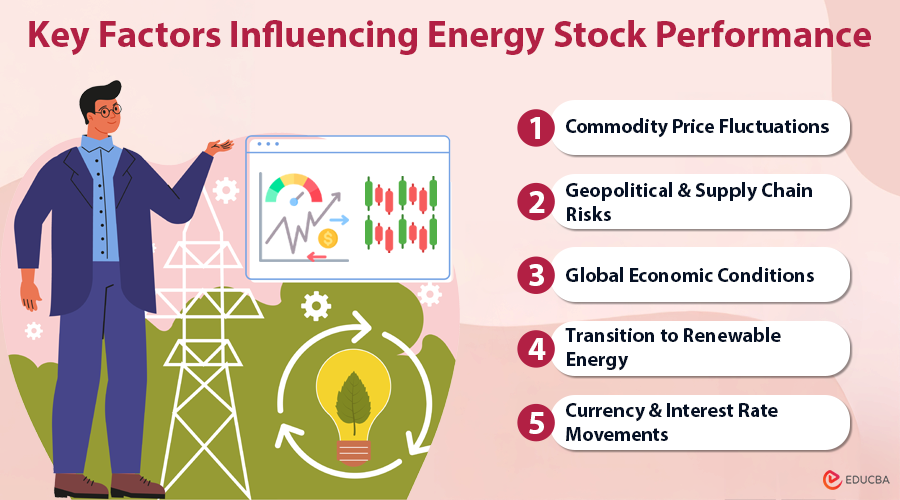
Here are some key factors that significantly influence energy stock performance and shape the sector’s response to market changes:
1. Commodity Price Fluctuations
At the heart of the energy market lies the volatility of commodities like crude oil, natural gas, and coal. Global supply and demand balances, production quotas, and speculative trading behavior determine these prices. When oil prices rise, upstream producer companies involved in exploration and drilling benefit immediately through higher sales margins. Midstream operators (those handling storage and transport) also gain from increased throughput.
However, downstream companies, such as refiners and petrochemical producers, can suffer due to increased input costs. In contrast, when commodity prices fall, investors often rotate away from the sector, fearing reduced profitability. Thus, energy stock performance closely mirrors commodity price cycles, underscoring the importance of monitoring both spot and futures market trends for informed investment decisions.
2. Geopolitical and Supply Chain Risks
Geopolitics deeply influences energy markets. Conflicts, sanctions, and OPEC+ decisions often act as catalysts for price shocks. For example, tensions in the Middle East or sanctions on major producers, such as Russia or Iran, can disrupt supply chains, thereby tightening availability and pushing prices upward.
Supply chain challenges such as refinery shutdowns, shipping bottlenecks, or pipeline leaks further add to volatility. Even logistical issues, such as port congestion or labor strikes, can ripple through the system, amplifying uncertainty and complexity. As a result, investors closely monitor both geopolitical developments and financial indicators when evaluating the performance of energy stocks.
3. Global Economic Conditions
The global economy has a direct influence on energy demand. During periods of robust growth, industrial production, transportation, and construction activity increase, resulting in higher consumption of oil, gas, and electricity. Consequently, energy companies enjoy stronger revenues and higher valuations.
Conversely, during economic contractions, energy demand tends to decline, resulting in inventory buildup and price drops. The 2008 crisis and the 2020 pandemic showed this pattern. For investors, tracking GDP forecasts, manufacturing indices, and transportation data provides vital insight into the trajectory of energy stock performance.
4. Transition to Renewable Energy
The global shift toward clean energy introduces both challenges and opportunities for investors. Traditional oil and gas firms face pressure to decarbonize, while renewable energy companies attract capital through innovation and government incentives. However, the renewable transition can also create volatility. Policy changes, subsidy removals, and technology bottlenecks can impact profitability.
For instance, while solar and wind power firms often surge during climate summits or green investment booms, they may underperform when fossil fuel prices rebound or subsidies are reduced or lapse. The evolving balance between conventional and renewable energy sectors is now one of the defining features shaping long-term energy stock performance.
5. Currency and Interest Rate Movements
Since traders price oil in U.S. dollars, changes in the dollar’s strength directly impact global energy markets. When the dollar strengthens, oil becomes more expensive for foreign buyers, which can reduce demand and decrease the revenues of energy exporters.
Likewise, rising interest rates can tighten liquidity and increase borrowing costs for capital-intensive energy projects, such as exploration or infrastructure expansion. Conversely, lower rates can fuel investment in energy innovation and production capacity. Understanding how monetary policy intersects with commodity markets is key to forecasting energy stock performance.
Investor Strategies During Volatile Periods
Here are some effective strategies that investors can use to manage risk and make more informed decisions during periods of market volatility:
1. Diversification Across Energy Subsectors
One of the best ways to manage risk in volatile periods is by diversifying within the energy sector. Combining exposure to upstream (exploration), midstream (transportation), and downstream (refining) companies helps smooth out market fluctuations. Investors can also balance traditional oil and gas holdings with renewable energy stocks or clean technology ETFs.
2. Focusing on Dividend-Paying Stocks
Energy companies are known for their consistent dividend payouts, particularly during periods of stable prices. Giants like ExxonMobil, Chevron, and BP have historically rewarded shareholders even in downturns. Dividends provide a steady income that can cushion portfolio losses during market corrections.
3. Monitoring Supply-Demand Indicators
Investors should regularly check weekly updates from the U.S. Energy Information Administration (EIA), the International Energy Agency (IEA), and OPEC. Data on global inventories, refinery utilization, and production quotas provide valuable insights into future price movements that directly impact energy stock performance.
4. Using Technical and Fundamental Analysis Tools
Platforms like TradingView give investors real-time data and tools to analyze oil prices, trends, moving averages, and RSI. Coupled with fundamental metrics like price-to-earnings ratios, debt levels, and cash flows, these tools enable more informed decision-making in uncertain conditions.
The Long-Term Outlook for Energy Stock Performance
Despite short-term volatility, the long-term future for the energy sector remains strong. Global energy demand continues to rise as populations grow, industries expand, and digital infrastructure develops. Renewable energy is growing fast, but oil and natural gas will remain key parts of the global energy mix for many years. Investors with a long-term view should look beyond temporary market shocks.
The focus should be on companies that balance profitability with sustainability, those investing in cleaner technologies while maintaining robust cash flows from core operations. As economies shift toward decarbonization, adaptability will define the next phase of energy stock performance.
Final Thoughts
Volatility in the energy market is inevitable, but it also creates opportunity. Energy stocks are cyclical, sensitive to global events, and influenced by factors ranging from commodity prices to currency fluctuations. For savvy investors, understanding these dynamics is the key to navigating uncertainty with confidence.
In essence, sharp moves in oil prices will always echo through the energy sector, amplifying both risks and rewards. Staying informed, disciplined, and diversified remains the most effective way to weather turbulence and capitalize on the long-term potential of the global energy market.
Recommended Reading
We hope this article on ‘How Energy Stocks React to Market Volatility’ helps you understand how global forces influence the performance of energy stocks. Check out our related articles to explore more about commodity investing, stock market dynamics, and long-term portfolio strategies in the energy sector.

