


Employer of Record: Overview
Ten years ago, if a company in London wanted to hire a software developer in Brazil, the process looked something like this: engage a law firm, incorporate a local entity, register with tax authorities, open a local bank account, and hire a local accountant. The whole thing took months and cost tens of thousands of dollars before the new employee wrote a single line of code. Today, the same company can have that developer on payroll within two weeks, fully compliant with Brazilian labour law, without incorporating anything. The mechanism that makes this possible is called an Employer of Record.
The concept is not brand new, but its adoption has accelerated dramatically since 2020. What was once a niche payroll solution for multinationals has become mainstream infrastructure for companies of all sizes. The global EOR market is set to quadruple in the next decade, fueled by remote work, talent shortages in developed countries, and increasingly complex employment regulations worldwide.
Employer of Record: A Simple Definition
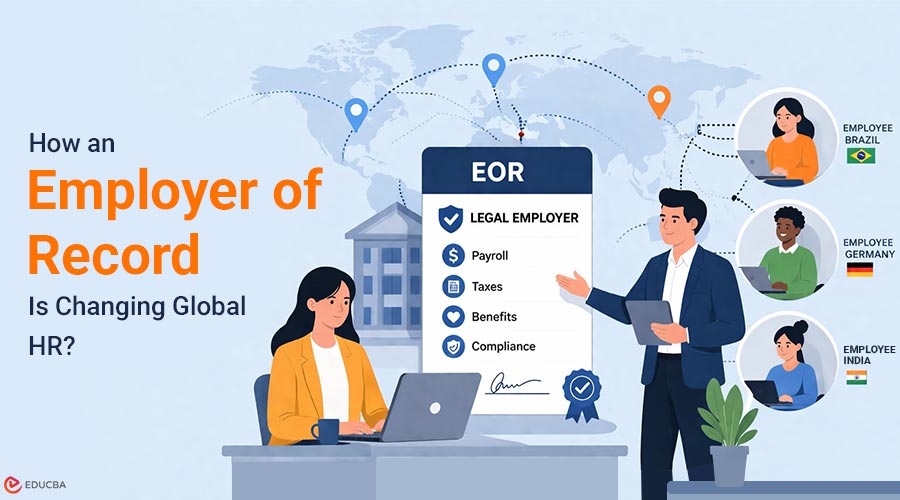
An Employer of Record (EOR) is a third-party organization that legally hires a worker in a specific country on behalf of another company. The EOR holds the local employment contract, runs payroll, withholds and remits taxes, administers statutory benefits, and ensures compliance with local labor law.
The client company maintains complete control over the employee’s daily tasks, responsibilities, and management. The EOR handles the legal and administrative employment infrastructure. Think of it as splitting the employment relationship into two halves: the operational side (what the person does) stays with you, while the legal side (how they are employed) sits with the EOR.
This arrangement exists because most countries require a registered local entity to employ someone. Without one, you cannot legally put someone on payroll, withhold the right taxes, or provide the benefits that local law requires. An EOR already has that entity in place, whether you are hiring in the Philippines, Germany, or looking for an Employer of Record in India, so you do not need to build one yourself.
How an EOR Engagement Works in Practice?
The process is more straightforward than most people expect. The client company identifies a candidate they want to hire in another country. They then engage an EOR that operates in that market. The EOR drafts a locally compliant employment contract, onboards the employee, sets up payroll, and begins managing the employment administration.
The employee reports to the client company’s managers, uses the client’s tools, attends the client’s meetings, and works on the client’s projects. But on paper, they are employed by the EOR’s local entity. The client receives a single monthly invoice covering the employee’s salary, employer-side contributions, and the EOR’s management fee. Most EOR providers can onboard a new employee within 5 to 14 days. Compare that to the weeks or months it takes to incorporate a foreign entity, and the speed advantage becomes obvious.
EOR vs. PEO: What is the Difference?
This is one of the most common points of confusion in the HR industry, and the distinction matters. A Professional Employer Organization (PEO) enters into a co-employment arrangement with your company. You and the PEO share employer responsibilities, but your company must already have a legal entity in the country where the employee works. PEOs are common in the United States, where they help small and mid-sized businesses pool benefits, manage payroll, and handle HR compliance.
An EOR is fundamentally different. The EOR becomes the sole legal employer. Your company does not need a local entity. This makes the EOR model the right choice for companies hiring in countries where they have no legal presence, which is the most common use case for international expansion.
In Short:
If you already have an entity in the country, a PEO can help you manage it. If you do not, an EOR is the only way to hire a full-time employee compliantly without setting one up.
Why the EOR Model is Reshaping HR?
The shift is not just about convenience. The EOR model is changing some of the fundamental assumptions that HR teams have operated under for decades. The first assumption it challenges is that international hiring requires international infrastructure. Historically, expanding into a new country meant months of legal work, significant upfront investment, and ongoing compliance overhead. That created a natural barrier, limiting international hiring to large enterprises with the budget and legal teams to support it. EOR has removed that barrier. A 20-person startup can now hire its first employee in Germany, the Philippines, or Brazil without any of that infrastructure.
The second assumption it challenges is that HR must own the full employment lifecycle in every jurisdiction. When a company uses an EOR, the EOR handles local employment contracts, payroll, tax filings, and statutory benefits. This does not make HR redundant. It changes what HR does. Instead of managing the administrative mechanics of employment in each country, HR shifts toward strategic oversight: making sure the employee experience is consistent, that performance management works across borders, and that the company’s people strategy scales internationally.
The third is the assumption that contractors are an acceptable shortcut. For years, companies hired international workers as independent contractors to avoid the complexity of foreign employment. That worked until tax authorities started cracking down. Misclassification penalties in countries such as Germany, Brazil, and India can include back-payment of all statutory benefits from the start of the engagement, as well as fines. The EOR model offers a compliant alternative that is nearly as fast to set up as a contractor arrangement but without the legal exposure.
What does an EOR cost?
EOR pricing typically has two components. The first is a monthly management fee, which is what the provider charges for the employment service. This usually ranges from a few hundred dollars per employee per month. The second is the total cost of employment: the employee’s gross salary plus mandatory employer-side contributions, which vary by country.
The employer-side costs are where most companies get caught off guard. Social insurance, pension contributions, health coverage, and mandatory bonuses can add anywhere from 10% to 40% to the gross salary, depending on the country. A hire that appears affordable on paper can end up costing significantly more once you factor in these obligations. Other costs to be aware of include currency conversion markups, offboarding fees, and early termination penalties. These vary between providers and are worth asking about before signing.
When Should a Company Use an Employer of Record?
The model makes the most sense in a few specific scenarios. The first is when a company wants to hire in a country where it has no legal entity and does not plan to set one up. This is the core use case and the reason EOR exists. The second is when speed matters. If a company has found the right candidate and cannot wait three to six months for entity incorporation, an EOR can have them employed in under two weeks.
The third is when the headcount in a single country is small. Setting up and maintaining a foreign entity for one or two employees rarely makes financial sense. Most companies find the EOR model is cost-effective up to about 10 to 15 employees in a single market. Beyond that, the economics of entity setup start to improve.
The fourth is when a company wants to test a new market before committing to permanent infrastructure. An EOR lets you hire locally, evaluate the talent market, and build a small team without the sunk costs of incorporation. If the market works, you can transition to your own entity later. If it does not, you can exit cleanly.
Risks and Limitations
EOR is not a silver bullet. There are legitimate risks that HR and finance teams need to understand. Permanent establishment risk is the most significant. If your employee in another country is signing contracts, making strategic decisions, or generating revenue on behalf of your company, tax authorities may determine that your business has a taxable presence in that jurisdiction, regardless of the EOR arrangement. This is a particular concern in countries like India, Germany, and Singapore.
Intellectual property ownership is another area that requires attention. The employment contract sits between the EOR and the employee, not between your company and the employee. If that contract does not include proper IP assignment clauses, you may not legally own the work your employee produces. Most reputable EOR providers address this, but it is worth reviewing the contract language before you sign.
Finally, not all EOR providers operate the same way. Some own their own legal entities in each country. Others rely on third-party partners to act as the legal employer. Both models can work, but the partner model adds an extra layer between you and the employer, which can affect response times, visibility into compliance, and costs.
Final Thoughts
The Employer of Record model has turned international hiring from a multi-month legal project into something that can happen in days. For HR professionals, it represents a fundamental shift in how companies think about global workforce strategy. Instead of asking whether the company can afford to hire in another country, the question is now which country offers the best combination of talent, cost, and compliance simplicity.
That shift is not slowing down. As remote work becomes permanent, talent shortages intensify in developed markets, and compliance requirements grow more complex, the EOR model is poised to become a standard part of how companies build teams. Markets like India are already seeing rapid adoption, with dozens of Employer of Record providers operating there alone, giving companies more choice and better pricing than ever before. Understanding the model now puts you ahead of the curve.
Recommended Articles
We hope this guide to understanding the Employer of Record helps you navigate international hiring with confidence. Check out these recommended articles for more insights and strategies to optimize your global workforce.

