


Overview
As scrutiny of candidate qualifications intensifies, education verification has become a critical component of modern hiring practices. From confirming degrees to identifying unaccredited institutions, employers increasingly rely on specialised screening providers to navigate a complex, often fragmented academic ecosystem. This 2026 overview examines the top education verification background check services, comparing their approaches, institutional coverage, and operational strengths. Each provider offers a distinct model, ranging from hands-on verification to automated workflows, addressing the ongoing challenge of ensuring candidates’ academic claims are accurate and legitimate.
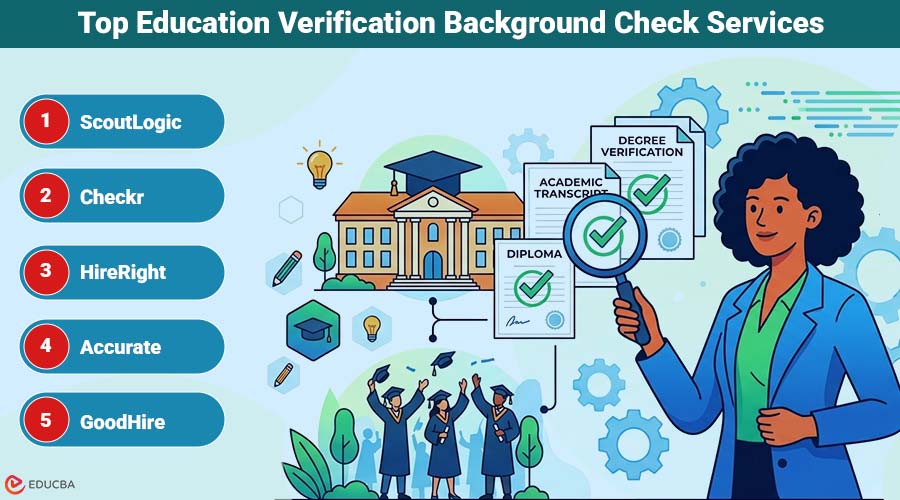
Top Education Verification Background Check Services in 2026
Here is a quick overview of the top education verification background check services, highlighting their key strengths and use cases.
1. ScoutLogic
ScoutLogic distinguishes itself through a detail-oriented, human-led approach to education verification. Rather than relying heavily on automation, the company assigns dedicated researchers to each case, who directly engage with institutions to confirm credentials and resolve inconsistencies. This method is particularly valuable for organisations operating in regulated industries or those where verification accuracy is non-negotiable. Its steady follow-up and hands-on approach help cut delays and reduce the risk of incomplete or wrong results.
Best For: Employers seeking highly accurate, research-driven academic verification.
Features:
- Direct outreach to universities, colleges, and training providers
- Verification of degrees, enrollment history, certifications, and program specifics
- Dedicated verification specialists per case
- Reliable performance with institutions lacking digital infrastructure
- Integration capabilities for streamlined workflows
Pros:
- High accuracy and low error rates
- Strong communication throughout the process
- Effective for high-volume or high-stakes hiring
- Proven ability to resolve complex institutional delays
Cons:
- Primary focus on North American institutions
- May be more comprehensive than needed for occasional checks
2. Checkr
Checkr’s platform-driven approach focuses on efficiency through automation and seamless user experience. Its system matches candidate data against known institution records and enables candidates to upload documentation directly, reducing administrative friction. For organisations with large or rapidly changing workforces, Checkr’s streamlined workflows can significantly accelerate hiring timelines.
Best For: High-volume hiring teams prioritising speed and automation.
Features:
- Automated education verification processes
- Candidate portals for document submission
- API integrations for modern HR systems
- Optimised digital workflows
Pros:
- Fast turnaround for widely recognised institutions
- Intuitive interface for employers and candidates
- Scales well for large hiring volumes
Cons:
- May require manual follow-up for less common institutions
- Less personalised support compared to research-led providers
3. HireRight
HireRight has strong experience in checking backgrounds for companies that hire across different countries, with access to many academic institutions around the world. Its system supports verification for universities, vocational schools, and training centers. Its detailed reports and compliance support make it a good choice for large organisations hiring in multiple locations.
Best For: Global organisations requiring broad international coverage.
Features:
- Global education verification coverage
- Hybrid workflows combining automation and manual checks
- Centralised compliance support
- Enterprise-level reporting systems
Pros:
- Strong international reach
- Established infrastructure and reputation
- Suitable for complex, multi-region hiring
Cons:
- Turnaround times can vary depending on the region
- The platform may feel complex for smaller teams
4. Accurate
Accurate focuses on clear rules and consistency, with verification processes that follow legal requirements. Its approach gives importance to proper records, making sure every step is clearly documented. This makes it a good choice for organisations that need transparency and to follow strict rules.
Best For: Employers focused on compliance and structured verification processes.
Features:
- Verification of degrees, attendance, and program details
- Compliance-focused workflows
- Detailed audit trails
- Scalable solutions for growing organisations
Pros:
- Strong compliance and documentation standards
- Clear, structured reporting
- Reliable verification processes
Cons:
- Manual checks can extend turnaround times
- Limited flexibility compared to more customised services
5. GoodHire
GoodHire offers a simple and easy-to-use platform. Its basic processes and clear reports make it a good fit for small to mid-sized businesses with simple verification needs. While it may not be as detailed as more advanced providers, it is a practical choice for organisations that value speed and ease of use.
Best For: Smaller organisations seeking simple, user-friendly verification tools.
Features:
- Basic education and enrollment verification
- Easy-to-use dashboard
- Built-in candidate communication tools
- Quick onboarding for HR teams
Pros:
- Simple and intuitive interface
- Clear, easy-to-understand reports
- Suitable for smaller hiring operations
Cons:
- Limited support for complex or international verifications
- Not ideal for high-risk or highly regulated hiring environments
How to Choose the Right Education Verification Background Check Services?
Selecting the right provider involves more than comparing feature sets. Employers should evaluate several key factors:
- Consistency Across Institutions: Not all academic institutions maintain accessible or digital records. Providers that combine technology with human verification tend to deliver more dependable results.
- Turnaround Reliability:Verification times can vary a lot. Clear updates and regular follow-ups are key to keeping hiring on track.
- Compliance and Data Handling: Providers must comply with data protection regulations and ensure the responsible handling of academic information.
- Operational Compatibility: Integrations and workflow automation can cut admin work, especially in high-volume hiring.
In the end, the best education verification services find a balance between accuracy and speed. Providers that use clear processes and work directly with institutions, such as ScoutLogic, are better able to deliver reliable and trustworthy results, especially as hiring becomes more complex.
Final Thoughts
As hiring risks evolve, education verification background check services have shifted from a routine step to a strategic necessity. The providers listed above reflect an industry focused on accuracy, transparency, and stronger institutional connections. Organisations that choose the right partner by balancing accuracy with speed can greatly reduce hiring risks and build a more reliable workforce. In 2026, services that combine strong checks with easy scaling are setting the standard for smarter, more confident hiring.
Frequently Asked Questions (FAQs)
Q1. How do background check providers verify academic credentials?
Answer: Most combine database searches, direct contact with institutions, and candidate-provided documentation. Direct registrar confirmation typically yields the most reliable results.
Q2. Can these services identify diploma mills?
Answer: Yes. Established providers assess accreditation status, flag unrecognised institutions, and investigate suspicious credentials to prevent fraudulent claims.
Q3. Do education checks slow down hiring?
Answer: Timelines vary by institution. Automated systems can be quick, but manual verification may take longer. Providers with dedicated follow-up processes tend to deliver more predictable turnaround times.
Recommended Articles
We hope this comprehensive guide to education verification background check services helps you strengthen your hiring processes. Check out these recommended articles for more insights and strategies to build a more reliable workforce.

