


Introduction to Decentralized Autonomous Organizations (DAOs) in the Crypto Space
Decentralized Autonomous Organizations (DAOs) are transforming decision-making and business operations in the crypto space. These organizations leverage blockchain technology to create transparent, democratic, and community-driven systems, eliminating the need for centralized control. DAOs enable members to participate in governance, making them an innovative alternative to traditional business structures.
This article explores the role of Decentralized Autonomous Organizations, their function, their impact on cryptocurrency, and their challenges.
How DAOs Function?
At the root of Decentralized Autonomous Organizations are smart contracts—self-executing agreements stored on the blockchain. These contracts define the rules of the DAO and automate decision-making processes. Members can propose changes, vote on key issues, and collectively manage operations.
Key Features of DAOs:
- Decentralization: No central authority controls the organization. Instead, members share decision-making power.
- Transparency: The blockchain publicly verifies all transactions and governance decisions.
- Community Governance: Members can make decisions, usually by holding governance tokens.
Types of DAOs
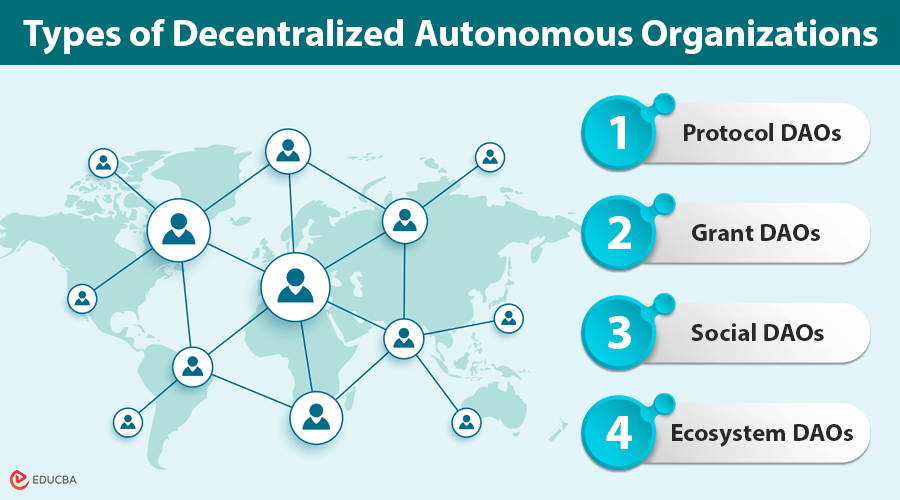
There are different types of Decentralized Autonomous Organizations, each serving specific purposes within the crypto ecosystem.
- Protocol DAOs: Protocol DAOs manage decentralized finance (DeFi) protocols and blockchain projects. Examples include Uniswap and MakerDAO.
- Grant DAOs: Distribute funds to projects and initiatives based on community voting. Gitcoin is a well-known example.
- Social DAOs: Social DAOs create online communities focused on shared interests, such as Friends with Benefits (FWB).
- Ecosystem DAOs: Support blockchain ecosystems by funding development and fostering innovation.
The Role of DAOs in the Crypto Ecosystem
1. Transforming Decision-Making
DAOs allow every member to vote on key issues, fostering a sense of ownership and accountability. Unlike traditional businesses, where decision-making is centralized, DAOs empower the community.
2. Ensuring Transparency
The blockchain records all activities within a Decentralized Autonomous Organization. This ensures trust and prevents corruption or mismanagement.
3. Encouraging Community Engagement
Members receive rewards for their contributions, motivating active participation. This fosters innovation and strengthens the DAO’s ecosystem.
Use Cases of DAOs
1. Fundraising and Investment
DAOs provide a decentralized way to raise and allocate funds. A notable example is Constitution DAO, where members pooled resources to bid for a rare copy of the U.S. Constitution.
2. Community Governance in Blockchain Projects
Projects like MakerDAO use DAOs to manage governance. MKR token holders vote on platform updates, ensuring decentralized decision-making.
3. Protocol Upgrades and Development
DAOs help improve blockchain protocols. Uniswap DAO allows users to vote on changes to the Uniswap exchange, adapting the platform to community needs.
4. Supporting Charitable and Social Initiatives
DAOs can also fund social impact projects. Gitcoin’s DAO, for example, supports open-source development through community-driven funding.
Challenges and Considerations
Despite their potential, Decentralized Autonomous Organizations face several challenges:
1. Legal Uncertainty
The legal status of DAOs varies by country. Some governments are working on regulations, but a clear global framework is still missing.
2. Security Risks
Since DAOs rely on smart contracts, they are vulnerable to cyberattacks and bugs. The 2016 DAO hack caused a $60 million loss, showing these risks.
3. Achieving True Decentralization
Although DAOs aim for full decentralization, governance power often remains concentrated among large token holders, reducing fairness.
The Importance of Crypto Events for DAOs
Participation in blockchain events helps DAO members network, discuss industry trends, and find solutions to challenges. Events like ETHGlobal hackathons and Devcon play a crucial role in DAO growth.
Future of DAOs in the Crypto Space
1. Growth and Expansion
As more people adopt blockchain, they will likely use DAOs beyond cryptocurrency. Potential applications include finance, art, and social impact projects.
2. The Changing Nature of Work
DAOs promote decentralized work structures, allowing global participation in projects without traditional employment contracts. Gitcoin DAO, for instance, funds freelance developers through community-driven grants.
3. Integration with Artificial Intelligence (AI)
Future DAOs may use AI to automate decision-making further, improving efficiency and reducing governance issues.
Final Thoughts
Decentralized Autonomous Organizations are revolutionizing governance and collaboration in the crypto world. By using smart contracts, DAOs create transparent, community-driven systems.
Despite challenges like legal uncertainty and security risks, DAOs continue evolving, offering new decentralized governance opportunities. Joining DAO communities and attending blockchain events helps people stay updated and get involved in this growing movement.
The future of DAOs is promising. They have the potential to reshape cryptocurrency governance and broader economic and social structures.
Recommended Articles
We hope this guide has been helpful. Check out these recommended articles for insights on blockchain governance, smart contract security, and the future of decentralized finance.

