
What is Debt Overhang?
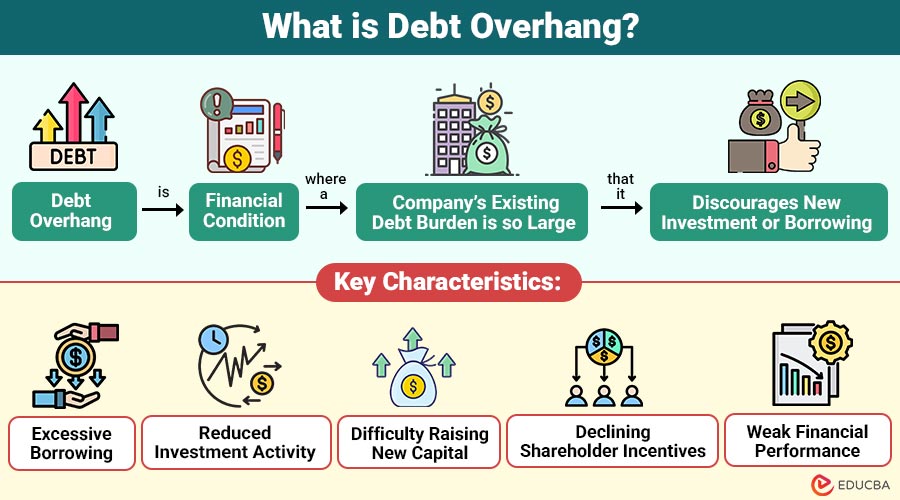
Debt overhang is a financial condition where a company’s existing debt burden is so large that it discourages new investment or borrowing. Companies facing a debt overhang may avoid profitable projects because the returns are likely to benefit lenders rather than shareholders.
In simple terms, debt overhang happens when:
- A company owes significant debt
- Future profits are expected to go mainly toward debt repayment
- Investors and shareholders lose motivation to invest further
- Growth opportunities are delayed or rejected
The problem is common during economic downturns, after aggressive expansion, or when businesses experience declining revenues while carrying large liabilities.
Table of Contents:
- Meaning
- Key Characteristics
- Causes
- Effects
- Impact
- Real-World Examples
- How Can Companies Reduce Debt Overhang?
- Advantages
- Challenges
Key Takeaways:
- Debt overhang discourages business investment because future profits accrue mainly to creditors rather than shareholders.
- Excessive borrowing, economic downturns, and rising interest rates commonly contribute to severe debt overhang situations.
- Debt overhang reduces growth opportunities, weakens investor confidence, and increases the risk of bankruptcy and financial instability.
- Companies can reduce debt overhang through restructuring, asset sales, cost control, and improved revenue generation.
Key Characteristics of Debt Overhang
Here are the common characteristics that indicate a company may be experiencing debt overhang and financial pressure.
1. Excessive Borrowing
The company carries debt levels exceeding its earnings, assets, and cash flow, creating serious financial pressure risks.
2. Reduced Investment Activity
Management delays expansion, innovation, and capital projects because financial obligations limit available resources for future business growth.
3. Difficulty Raising New Capital
Investors and lenders avoid providing funds due to concerns regarding repayment ability, profitability, and long-term financial stability.
4. Declining Shareholder Incentives
Shareholders lose motivation because future profits are expected to primarily benefit creditors rather than increase equity value.
5. Weak Financial Performance
Heavy interest obligations reduce company profits, restrict operational flexibility, and negatively impact overall long-term business performance.
Causes of Debt Overhang
Debt overhang can arise from multiple financial and economic factors.
1. Aggressive Expansion Through Borrowing
Companies borrow heavily to fund expansion, but weak revenue growth puts pressure on repayments and creates financial instability.
2. Economic Recession
Economic slowdowns reduce sales and cash flow, making existing debt obligations increasingly difficult to repay.
3. Poor Financial Management
Weak budgeting and inaccurate forecasting increase expenses, causing businesses to accumulate unsustainable debt levels over time.
4. Rising Interest Rates
Higher interest rates increase borrowing costs, creating repayment difficulties for companies that rely heavily on variable-rate loans.
5. Declining Asset Values
Falling asset prices reduce company value, significantly limiting borrowing capacity and increasing financial distress risk.
Effects of Debt Overhang on Businesses
Debt overhang can negatively affect companies in several ways.
1. Reduced Business Growth
Debt pressure forces companies to delay expansion, reducing innovation, competitiveness, operational efficiency, and long-term market growth opportunities.
2. Lower Investor Confidence
Excessive debt discourages investors, leading to declining stock prices, lower valuations, and difficulty securing additional funding for business.
3. Cash Flow Problems
Large debt repayments reduce operational cash flow, affecting salaries, supplier payments, marketing budgets, and research development activities.
4. Credit Rating Downgrades
Unsustainable debt levels lower credit ratings, increasing borrowing costs, and restricting future financing opportunities for business expansion.
5. Increased Bankruptcy Risk
Persistent inability to repay debts increases insolvency risks, potentially forcing businesses into bankruptcy or a complete operational shutdown.
Impact of Debt Overhang on the Economy
Debt overhang does not affect only individual companies. It can also influence the broader economy.
1. Reduced Economic Growth
Lower business investment significantly reduces production capacity, employment opportunities, innovation levels, and overall national economic growth.
2. Banking Sector Pressure
Banks holding risky corporate debt face financial instability, which reduces lending activity and weakens overall economic confidence.
3. Lower Consumer Confidence
Business financial distress creates market uncertainty, reducing consumer spending, investment activity, and overall confidence in economic stability.
4. Government Financial Burden
Governments may provide bailouts to indebted industries, increasing public spending and creating additional financial pressure on national budgets.
Real-World Examples of Debt Overhang
The following examples show how excessive debt can limit investment decisions, profitability, and long-term business growth across industries.
1. Corporate Sector During Financial Crises
After financial crises, declining revenues, and asset values discouraged companies from investing due to overwhelming existing debt burdens.
2. Real Estate Companies
Real estate developers who borrow heavily during booms struggle to repay loans when property demand declines and projects remain unfinished.
3. Telecom and Infrastructure Industries
Capital-intensive industries incur massive debt to fund expansion, while slower returns create financial stress and investment constraints over time.
How Can Companies Reduce Debt Overhang?
Businesses can adopt several strategies to manage or reduce debt overhang.
1. Debt Restructuring
Companies renegotiate loan terms, reduce interest rates, and extend repayment terms to improve financial flexibility and stability.
2. Asset Sales
Selling non-core assets generates immediate cash, helping businesses reduce outstanding debt and improve their liquidity.
3. Equity Financing
Issuing new shares raises capital without additional borrowing, though existing shareholders may experience ownership dilution afterward.
4. Cost Reduction Measures
Reducing unnecessary expenses and improving operational efficiency significantly strengthens profitability and overall financial stability.
5. Improving Revenue Generation
Launching profitable products and expanding into new markets increases cash flow, helping businesses manage debt obligations more effectively.
6. Government or Institutional Support
Governments and institutions provide financial assistance programs during crises to stabilize heavily indebted businesses and industries effectively.
Advantages of Responsible Debt Usage
Here are some major advantages of responsible debt usage that help businesses grow, improve operations, and strengthen financial performance.
1. Support Business Expansion
Properly managed debt provides capital for expansion, helping businesses enter markets and effectively increase operational capabilities.
2. Improve Operational Capacity
Debt financing helps companies upgrade equipment, infrastructure, and resources, significantly improving overall productivity and operational performance.
3. Finance Innovation
Businesses use debt funding for research, technology development, and innovation, supporting long-term growth and competitive market advantages.
4. Increase Shareholder Value
Strategic debt investments improve profitability and business growth, potentially increasing shareholder returns and the company’s overall market valuation.
5. Enhance Competitiveness
Responsible borrowing helps businesses expand more quickly, adopt technologies, and strengthen their competitiveness in rapidly changing global markets.
Challenges in Solving Debt Overhang
Here are some major challenges businesses commonly face in resolving debt overhang and restoring financial stability.
1. Creditor Resistance to Restructuring
Lenders may reject revised repayment terms, making debt reduction negotiations difficult and prolonging financial instability for businesses.
2. Loss of Investor Confidence
High debt levels discourage investors, reducing market confidence, lowering valuations, and limiting future funding opportunities significantly overall.
3. Reduced Earnings from Asset Sales
Selling valuable assets generates repayment funds but can considerably reduce future revenue potential and long-term business profitability.
4. Weak Economic Conditions
Poor economic conditions reduce demand and cash flow, making debt recovery and financial stabilization increasingly challenging for companies.
Final Thoughts
Debt overhang occurs when excessive existing debt discourages business investment, expansion, and profitability. It creates financial pressure, reduces investor confidence, and increases bankruptcy risks. Companies can manage debt overhang through restructuring, cost reduction, equity financing, and stronger financial planning. Proper debt management supports sustainable growth, stability, and long-term business success.
Frequently Asked Questions (FAQs)
Q1. How does debt overhang affect investors?
Answer: Investors may avoid investing because future profits are likely to go toward repaying creditors instead of generating shareholder returns.
Q2. Can debt overhang reduce business growth?
Answer: Yes. Companies often delay expansion, innovation, and new projects due to financial pressure from existing debt obligations.
Q3. How does debt overhang impact cash flow?
Answer: Large debt repayments and interest expenses reduce available cash for operations, salaries, marketing, and expansion activities.
Q4. How do rising interest rates worsen debt overhang?
Answer: Higher interest rates increase borrowing costs, making loan repayments more expensive and difficult to manage.
Recommended Articles
We hope that this EDUCBA information on “Debt Overhang” was beneficial to you. You can view EDUCBA’s recommended articles for more information –


