


De-escalation Skills Every Frontline Employee Should Learn
Frontline employees frequently serve as the first point of contact for customers, clients, and the public. Whether in retail, healthcare, hospitality, or security, these professionals frequently encounter high-pressure situations, emotional interactions, and unexpected challenges. In such environments, the ability to manage tension calmly and effectively is not just helpful, it is essential. De-escalation skills empower employees to handle difficult situations with confidence, reducing risk and improving overall outcomes.
That is why many organizations are investing in professional de-escalation training to equip their teams with the tools they need to respond to conflict safely and constructively. These programs help employees develop practical strategies to calm tense situations, improve communication, and prevent minor issues from escalating into serious incidents.
What Are De-escalation Skills?
De-escalation skills are methods used to calm conflicts or potentially tense situations. They involve a combination of communication, emotional intelligence, and situational awareness. The goal is to defuse tension, maintain safety, and guide interactions toward a positive resolution. These skills are especially important for frontline employees, who often deal directly with frustrated or distressed individuals.
Why De-escalation Skills Matter?
In customer-facing roles, a single negative interaction can have lasting consequences. Poorly handled situations can lead to complaints, reputational damage, or even safety risks. On the other hand, effective de-escalation can turn a challenging encounter into a positive experience.
Key benefits include:
- Improved Safety: Reduces the risk of conflict escalating into physical or verbal harm.
- Better Customer Experience: Builds trust and satisfaction, even in difficult situations.
- Increased Confidence: Employees feel more prepared to handle challenges.
- Stronger Workplace Culture: Promotes respect, empathy, and professionalism.
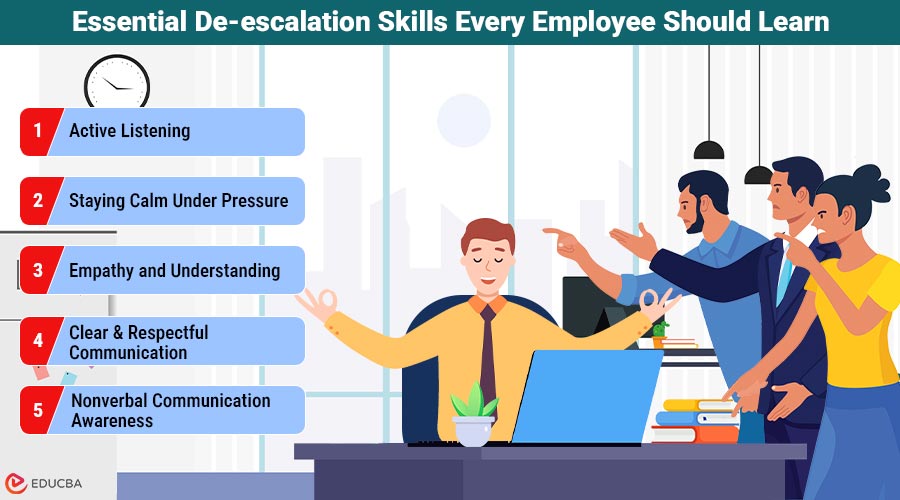
Essential De-escalation Skills Every Employee Should Learn
Here are the key de-escalation skills every employee should focus on.
1. Active Listening
Listening is one of the most powerful tools for de-escalation. When people feel heard, they are more likely to calm down. Employees should focus on understanding the other person’s perspective without interrupting or becoming defensive.
2. Staying Calm Under Pressure
Maintaining composure is critical. Remaining calm can reduce tension and prevent situations from escalating. Employees need training to manage their emotions, even during stressful interactions.
3. Empathy and Understanding
Showing empathy helps build connection and trust. Acknowledging someone’s feelings, even if you do not agree, can make a significant difference in how the situation unfolds.
4. Clear and Respectful Communication
Using simple, respectful language helps avoid misunderstandings. Employees should avoid jargon, maintain a neutral tone, and communicate clearly to ensure their message is understood.
5. Nonverbal Communication Awareness
Body language, facial expressions, and tone all affect communication. Using open, non-threatening body language helps foster a sense of safety.
6. Setting Boundaries
While empathy is important, employees must also know how to set clear and respectful boundaries. This helps maintain control of the situation and ensures safety.
7. Problem-Solving
Offering solutions can help redirect the conversation toward a positive outcome. Employees should learn to identify options and collaborate effectively to resolve issues.
8. Knowing When to Seek Support
You cannot resolve every situation on your own. Employees should know when to involve a supervisor, security, or additional resources.
Common Scenarios Where De-escalation Is Critical
Frontline employees encounter a wide range of situations where de-escalation skills are essential, including:
- Handling customer complaints or dissatisfaction
- Managing long wait times or service delays
- Responding to misunderstandings or miscommunications
- Dealing with emotional or distressed individuals
- Addressing policy disputes or denied requests
In each of these scenarios, the ability to remain calm and communicate effectively can prevent escalation and lead to better outcomes.
How Organizations Can Support De-escalation Skills?
To ensure employees are prepared, organizations should take a proactive approach:
- Provide Training: Structured training programs help employees learn and practice de-escalation methods in a safe environment.
- Create Clear Policies: Guidelines for handling difficult situations provide employees with a framework to follow.
- Encourage a Supportive Culture: Employees should feel supported by management when handling challenging interactions.
- Use Role-Playing Exercises: Practicing real-world scenarios helps employees build confidence and improve their skills.
- Offer Ongoing Development: Reinforce de-escalation skills through continuous learning and feedback.
The Long-Term Impact of De-escalation Skills
Investing in de-escalation skills benefits both employees and organizations. Employees feel more confident and less stressed, while organizations experience improved customer satisfaction and reduced risk. Over time, practicing these skills creates a more positive and professional environment, where people handle challenges constructively and strengthen relationships.
De-escalation skills are no longer optional for frontline employees; they are a critical part of delivering safe and effective service. In fast-paced, often unpredictable environments, the ability to manage conflict calmly and professionally can make all the difference. Providing employees with proper tools and training builds a resilient workforce and fosters respect and better customer experiences.
Recommended Articles
We hope this guide to de-escalation skills helps you handle challenging situations effectively. Check out these recommended articles for more tips and strategies to enhance your conflict management skills.

