


Updated June 19, 2026
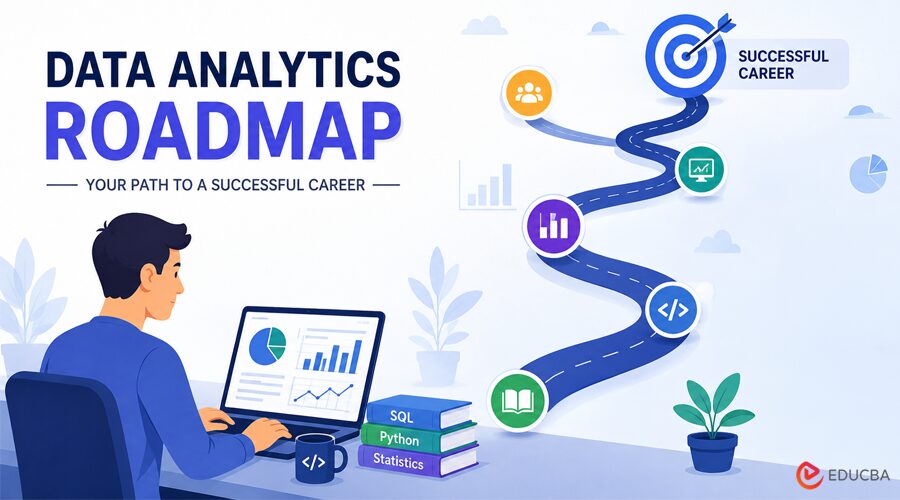
Thousands of talented graduates and capable professionals miss out on high-growth career opportunities every single year – not because they lack intelligence, but because they lack direction. The job market has shifted. Now, industries that used to value only degrees are looking for real, applied expertise. Data analytics shows the biggest change. Companies in finance, healthcare, retail, and tech desperately need professionals who can turn raw data into practical business decisions. Whether you are a recent graduate facing fierce competition or a professional looking to speed up career growth, joining a data analyst course might be the smartest career move you will make this year. But before you make any decision, understanding the right data analytics roadmap is essential to identifying the skills, tools, and steps that actually lead to success in this field.
Why Data Analytics is One of Today’s Most In-Demand Career Paths?
The world produces enormous volumes of data every day, but many organizations struggle to make sense of it. There is a big gap between having the data and understanding it. Skilled analysts fit right into this space. Right now, firms are ramping up hires to shrink that gap. The U.S. Bureau of Labor Statistics says data science and analytics jobs will grow 35% by 2032, way above average.
In India, the same story holds: these jobs are expected to grow rapidly. According to NASSCOM’s report, data and analytics are consistently among the leading digital skills boosting job growth across industries. On the other hand, Analytics India Magazine says that data analysts in India earn an average salary ranging from ₹7 LPA for beginners to ₹20+ LPA for experts with more experience and specific skills. This isn’t a temporary boom. It represents a fundamental change in how businesses operate, and it is already underway.
The Data Analyst Skills Recruiters Prioritize Right Now
When you begin creating your professional profile, it is more important to focus on which data analyst skills actually move the needle than to try to learn everything at once.
Core Technical Skills
- SQL: The backbone of data querying. Non-negotiable in almost every role.
- Python: Now the dominant tool for data manipulation, analysis, and automation.
- Excel: Still deeply embedded in most corporate workflows; don’t underestimate it.
- Visualization tools: Tableau, Power BI, or Google Looker Studio.
- Statistics: Regression, hypothesis testing, and probability distributions.
Soft Skills that Define Standout Analysts
- Clear, structured communication
- Business curiosity – understanding which questions are actually worth asking
- Critical thinking under time pressure
- Rigorous attention to detail
Most beginners make this mistake: communication is one of the core skills for data analysts, not merely a supplementary one. Analysts who can simplify complex data into clear insights are more successful. Technical analysis is vital, but when you can take the data and apply it in a way that aids in business decisions, that’s when your career really takes off. So, while you are looking for a data analyst course, you should choose one with both technical and non-technical components.
How to Choose the Right Data Analyst Course?
A fast online search gives hundreds of options – boot camps, certifications, postgraduate programs, self-paced MOOCs. The amount is staggering. Here’s a cleaner framework for determining which data analyst course is really worth your time and money:
1. Curriculum Relevance
Does it cover SQL, Python, statistics, and visualization? Is it updated to reflect what employers are actually hiring for right now – not what was relevant three years ago?
2. Real-world Application
A credible data analysis course isn’t just about theory. Search for courses that offer live projects, industry case studies, and portfolio development. Recruiters don’t want some certificate of completion; they want evidence of application.
3. Mentorship and Industry Access
Courses with active industry mentors dramatically reduce your learning curve. Real-world context from practitioners is something no textbook alone can replicate.
4. Career Support
Resume building, mock interviews, and placement aid should not be an afterthought. They should be embedded in the course right from the start.
5. Flexibility
For working professionals, weekend courses or part-time schedules can make or break a course. Flexibility is important for working individuals, as they may not always be able to put in the hours needed to complete the course.
Step-by-Step Data Analytics Roadmap for Beginners
Follow this structured data analytics roadmap to understand the essential skills, tools, and learning steps you need to start your journey in data analytics.
Step 1: Honestly Assess Your Starting Point
Figure out where you are. Have you used Excel a lot or written an SQL query? Knowing your true level helps you pick a program that is just right – not too tough to handle and not something you already know.
Step 2: Commit to a Structured Learning Path
Self-learning’s got its perks, but a structured data analyst course beats random tutorials. You get organized content, accountability, and mentor guidance – things that free learning sources can’t match.
Step 3: Build a Portfolio from Day One
Don’t wait until you have completed the course to begin documenting. Use Kaggle or government open data sites to run your own mini analyses. Put your research on GitHub or Tableau Public. This portfolio is usually what recruiters ask for first, so keep it up to date.
Step 4: Practice your Data Analyst Skills Actively
Use knowledge to tackle real-life situations (including informal situations). Look at your own spending habits, analyze data about your industry, or create a realistic scenario for a business you have heard about. You will become fluent much faster by practicing than by studying.
Step 5: Network with Intention
Network with practicing analysts on LinkedIn. Join data community webinars and virtual meetups. Be really curious in your conversations. Networks create many professional chances, not job boards.
Step 6: Apply with Strategy
Customize your CV for each job. Check out the particular data analyst skills being requested in each job description. A targeted application backed by a strong portfolio consistently outperforms a hundred generic ones.
How Imarticus Learning Prepares You for the Real World?
For learners serious about results, choosing the right data analyst course is only half the equation – the learning environment matters just as much. Named Best Institute to Study Data Science by the Economic Times, Imarticus Learning’s Postgraduate Program in Data Science and Analytics with GenAI has driven 15,000+ placements across 2,000+ hiring partners, with a highest recorded salary of 22.5 LPA and an average salary hike of 52%.
The curriculum includes over 300 hours of live instruction across more than 35 tools and projects, teaching core data analyst skills such as SQL, Python, machine learning, Power BI, and GenAI applications. Each student is guaranteed 10 interview opportunities, plus 40+ hours of personalized placement preparation, including resume workshops, simulated interviews, and aptitude training. This program is available in both weekday (6-month) and weekend (10-month) versions, making it highly accessible to young graduates and working professionals alike.
Final Thoughts
Data analytics is not a passing trend. It is a basic career path for the next decade or so. A well-defined data analytics roadmap helps you build the right skills, gain practical experience, and transition into a high-growth career path with confidence. The chance is there. The learning pathway is clear. All you have to do is decide to take the first intentional step. Invest in the right data analyst course, build your portfolio, and always commit to purposeful learning. If you are an ambitious learner, institutions such as Imarticus Learning offer industry-focused training, hands-on projects, and career assistance to help fill the learning-employment gap.
Recommended Articles
We hope this guide to the data analytics roadmap helps you understand the key steps for building a successful career. Check out these recommended articles for more insights and strategies to grow in data analytics.


