


Nine in ten US merchants say they would accept crypto payments if setting it up were as easy as adding a credit card. So the demand is there. The barrier is crypto payment integration services.
The old reality? Most crypto gateways require custom API work, weeks of testing, and ongoing maintenance. For an online business without a dedicated engineering team, that is enough to kill the project.
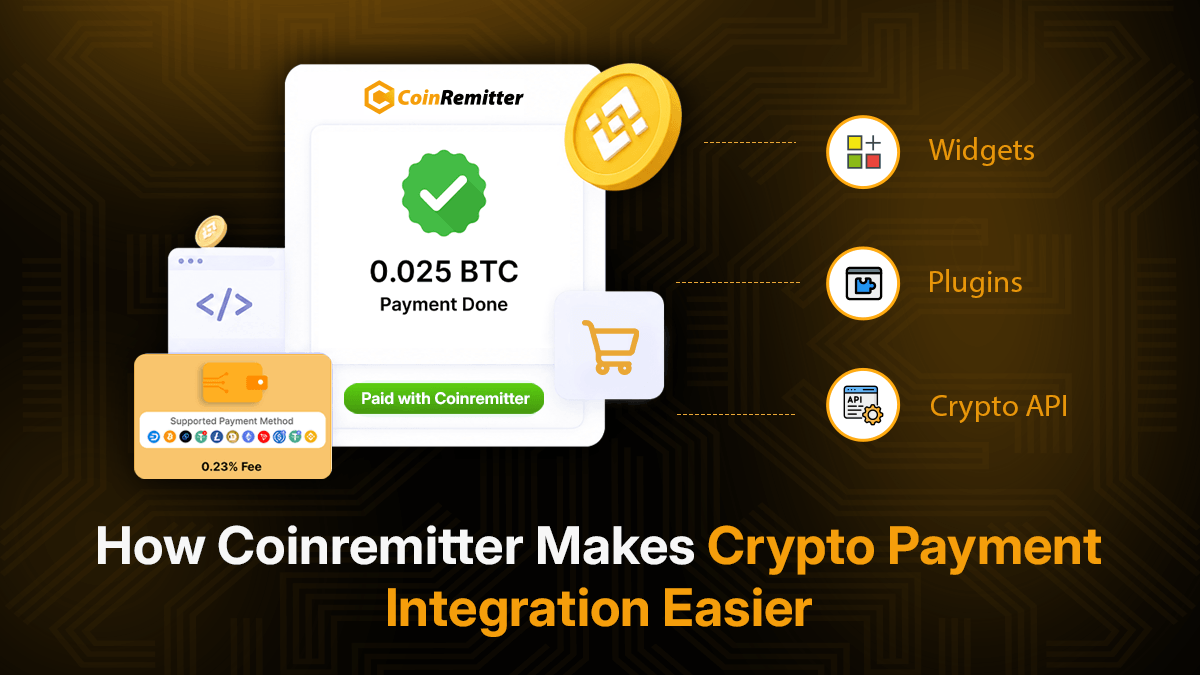
Coinremitter removes that friction. Sign-up takes 3 minutes, integration averages 12, and you have four different ways to go live depending on how technical your setup is. Here is how the platform actually makes it easier.
Why Crypto Payment Integration Feels So Complicated?
Crypto payment integration is not easy. It requires time and effort. Businesses have to go through complex coding and thorough testing. Independent estimates put the three-year cost of a custom integration around $60,000, including maintenance.
That is the price of a hired developer. Many small businesses do not have one. So crypto stays in the “someday” pile while customers keep asking for it.
This crypto payment gateway attacks this from both ends. You can start without touching code. Or you can use the crypto API for full control. The platform has many options. So you can choose the widget that fits your needs.
Coinremitter Solutions for Easy Integration
Crypto Payment Widgets to Avoid Manual Coding
Do not want the coding headache of accepting crypto payments? Do not worry; Coinremitter Widgets let you integrate crypto payments without manual coding. They serve different purposes. You can easily integrate any widget that fits your requirements. Below are the widgets and their purposes:
- Pricing Widget: For tiered pricing plans or subscription-based businesses.
- Presale Widget: For cryptocurrency presales or ICOs.
- Payment Button: For e-commerce and other business payments. For donations as well. Fixed amount only.
- Payment Page: For business payments as well as donations. Fixed and customer-entered amount options.
All the widgets provide easy configuration. You can create one from the configuration panel, and the system will generate code for your requirements. So, you can integrate the widget by copy-pasting the auto-generated code. No manual coding needed!
Exception: For the Payment Page, the system generates a URL instead of code.
Ready-Made Plugins for the Platforms You Already Use
If your store runs on any of the platforms mentioned below, then there is a faster route than writing anything from scratch:
- Magento
- OpenCart
- WooCommerce
- PrestaShop
- Laravel
- js
- PHP
Coinremitter’s crypto payment plugins install like any other extension. Download, configure your wallet credentials, and you are accepting Bitcoin, Litecoin, Dogecoin, and more through your existing checkout.
No crypto-specific code. No custom payment screens. Your storefront looks the same, just with a crypto option added. Most merchants go from plugin download to live payments in about 12 minutes. That is the whole timeline, not the research phase.
The API: Full Control Without the Friction
Custom-built sites get the same treatment, just with more flexibility. The crypto API is RESTful. It returns JSON responses. It also supports webhooks for real-time notifications. You can:
- Create addresses/generate invoices
- Track payments
- Make withdrawals
There are straightforward API calls. So, you do not have to struggle with an undocumented SDK.
The documentation does the heavy lifting that usually eats weeks of developer time. Need to verify a payment arrived? The API tells you. Want real-time updates? Webhooks handle it. There is even a test coin, so you are never testing against live funds.
Test Everything First Without Spending Real Crypto
Here is the part that surprises most teams. You do not go straight from development to accepting real payments. You test first, using Test Coin (TCN). This crypto payment gateway offers free testing cryptocurrency.
Create a test wallet, and 10 TCN are deposited automatically. You run the same payment flows, webhook callbacks, and confirmations as live coins, but nothing real is at risk. Test the integration, catch the bugs, train your team. When you are confident, swap in your live wallet credentials, and you are done.
For developers, that removes the scariest part of going live.
Start Accepting Crypto This Week
Crypto payment integration does not have to be a six-week engineering project. With plugins for the platforms you already run, a clean API for custom builds, and free Test Coins to de-risk the rollout, the path from signup to first payment is genuinely fast. About 12 minutes for most merchants.
The demand side is already solved. 84% of merchants expect crypto to be a common payment method within five years, and 90% say simple setup is all it would take for them to join in. The only question left is whether you will get there before your competitors.

