
What is Content Intelligence?
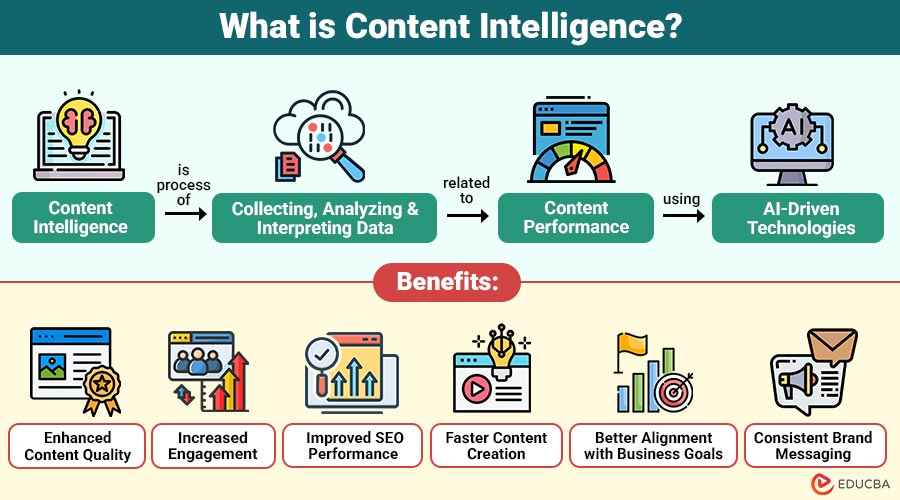
Content Intelligence is the process of collecting, analyzing, and interpreting data related to content performance using AI-driven technologies. It helps organizations understand how content impacts user engagement, conversions, brand perception, and revenue.
Unlike traditional analytics that focus on basic metrics such as page views or clicks, Content Intelligence goes deeper. It evaluates semantic relevance, sentiment, topic performance, buyer intent, and content gaps across the entire content lifecycle.
In simple terms, Content Intelligence answers key questions such as:
- Which content drives most engagement and conversions?
- What topics resonate most with specific audience segments?
- Why is certain content underperforming?
- How can existing content be optimized for better results?
Table of Contents:
- Meaning
- Why Content Intelligence Matters?
- Key Components
- Benefits
- Challenges
- Use Cases
- Real-World Examples
- Best Practices
Key Takeaways:
- Content Intelligence leverages AI and analytics to transform raw content data into actionable, performance-driven strategic insights.
- It enables organizations to understand audience intent, optimize engagement, and align content with measurable business goals.
- By moving beyond basic metrics, content intelligence delivers predictive recommendations that improve ROI and personalization at scale.
- Successful adoption requires high-quality data, cross-team collaboration, continuous optimization, and a balance between AI insights and human creativity.
Why Content Intelligence Matters?
Here are the key reasons why content intelligence is essential for driving smarter strategies, deeper audience connections, and measurable business growth.
1. Data-Driven Content Decisions
Uses analytics and behavioral insights to replace assumptions with evidence, enabling smarter content planning, optimization, and performance-driven decision-making.
2. Improved Audience Understanding
Reveals audience intent, preferences, and engagement trends, helping marketers create content that resonates, converts, and builds long-term loyalty.
3. Higher ROI on Content Investments
Prioritizes high-performing content, ensuring budgets, time, and effort are invested in initiatives that generate measurable business value.
4. Personalized Content Experiences
Enables targeted content delivery by matching user behavior, context, and journey stage with relevant, timely, and meaningful experiences.
5. Scalable Content Operations
Supports efficient content production, governance, and optimization across teams, channels, and markets without compromising consistency or quality.
Key Components of Content Intelligence
Here are the key components that make content intelligence effective for optimizing strategy, performance, and engagement:
1. Content Data Collection
Collects structured and unstructured content data from blogs, social platforms, emails, videos, and customer interactions across channels.
2. Content Performance Analytics
Tracks engagement, dwell time, conversions, bounce rates, and attribution to evaluate content effectiveness and business impact outcomes.
3. AI and Machine Learning
Applies AI and machine learning to identify patterns, predict outcomes, and recommend data-driven content optimizations at scale.
4. Natural Language Processing
Uses natural language processing to analyze tone, sentiment, keywords, readability, and user intent within content accurately and consistently.
5. Content Optimization Engine
Generates recommendations for headlines, formats, keywords, content length, and distribution channels to improve performance across marketing initiatives.
6. Reporting and Visualization
Presents insights through dashboards and reports, enabling stakeholders to make informed, timely, and strategic decisions with confidence.
Benefits of Content Intelligence
Here are the key benefits that content intelligence brings to businesses, helping drive engagement, performance, and measurable results:
1. Enhanced Content Quality
Identifies content gaps, redundancies, and underperforming assets to improve relevance, clarity, and overall effectiveness continuously.
2. Increased Engagement
Improves engagement by aligning content formats, topics, and timing with audience behavior, preferences, and interaction patterns.
3. Improved SEO Performance
Enhances search visibility through keyword insights, intent analysis, and optimization aligned with evolving search engine algorithms.
4. Faster Content Creation
Accelerates content creation by offering data-driven guidelines that minimize guesswork, rework, and unnecessary trial-and-error cycles.
5. Better Alignment with Business Goals
Aligns content strategies with lead generation, brand awareness, and conversion objectives to deliver measurable business outcomes.
6. Consistent Brand Messaging
Maintains a consistent brand voice by analyzing tone, sentiment, and language usage across all content channels effectively.
Challenges in Implementing Content Intelligence
Here are the challenges organizations face when adopting content intelligence solutions:
1. Data Silos
Content data scattered across multiple platforms complicates integration, visibility, and unified analysis across organizational content ecosystems.
2. Tool Complexity
Advanced content intelligence tools often require skilled teams, training, and technical expertise for effective implementation.
3. Quality of Input Data
Incomplete, outdated, or inaccurate data significantly reduces the reliability, accuracy, and usefulness of the insights.
4. Change Management
Teams may resist adopting data-driven content practices due to cultural inertia, habits, or limited confidence in analytics.
5. Cost Considerations
AI-powered content intelligence solutions may involve significant upfront, operational, and ongoing investment for organizations.
Use Cases of Content Intelligence Across Industries
Here are practical use cases of how content intelligence drives value across different sectors:
1. Marketing and Digital Media
Enables marketers to identify high-performing topics, optimize headlines and CTAs, and refine content distribution strategies.
2. E-Commerce
Personalizes product descriptions, recommends relevant content based on browsing behavior, and increases conversions through data-driven content insights.
3. SaaS and Technology
Improves onboarding and knowledge base content, reduces churn through targeted education, and strengthens product messaging clarity.
4. Banking and Financial Services
Ensures compliance-ready content, improves financial literacy materials, and optimizes customer communications using intelligent content insights.
5. Healthcare
Enhances patient education content, improves accessibility and clarity, and measures engagement to refine healthcare communication strategies.
Real-World Examples of Content Intelligence
Here are some real-world examples of content intelligence that have delivered measurable results in various industries:
1. Marketing Optimization
A global digital marketing firm used content intelligence to analyze blog performance. Within six months, they saw a 35% boost in organic traffic by finding high-converting topics and the best times to publish.
2. E-commerce Personalization
An online retailer leveraged AI-driven content intelligence to personalize product descriptions and recommendations, resulting in a 20% increase in conversion rates.
3. Customer Support Efficiency
A SaaS company analyzed support articles using NLP to identify confusing content. Updating these articles reduced customer support tickets by 25%.
Best Practices for Effective Content Intelligence
Here are best practices to maximize the impact and effectiveness of content intelligence initiatives:
1. Start with High-Impact Content
Begin the analysis with core assets such as landing pages, blogs, and email campaigns to deliver maximum impact.
2. Combine Human Creativity with AI Insights
Leverage AI-driven insights to inform creative decisions without replacing human judgment, originality, or strategic thinking.
3. Ensure Cross-Team Collaboration
Encourage marketing, sales, and product teams to share insights to align on and consistently deliver content strategies.
4. Continuously Optimize
Approach content intelligence as an ongoing cycle of measurement, learning, and improvement rather than one-time implementation.
5. Invest in Training
Train teams to understand insights, interpret data accurately, and take effective, timely, content-driven actions.
Final Thoughts
Content Intelligence empowers organizations to transform raw content into actionable insights, driving engagement, personalization, and measurable ROI. By combining AI, analytics, and human creativity, businesses can optimize strategies, close content gaps, and deliver relevant experiences at scale. Its adoption fosters data-driven decision-making, ensures alignment with business goals, and strengthens audience connections for sustained growth.
Frequently Asked Questions (FAQs)
Q1. Who should use Content Intelligence?
Answer: Marketing teams, content strategists, SEO professionals, product teams, and customer experience leaders.
Q2. Does Content Intelligence require AI?
Answer: While basic insights can be manual, advanced content intelligence relies heavily on AI and machine learning.
Q3. Can small businesses use Content Intelligence?
Answer: Yes. Many tools offer scalable solutions suitable for small and mid-sized businesses.
Q4. How long does it take to see results?
Answer: Initial insights can appear within weeks, while strategic impact is typically visible within 3–6 months.
Recommended Articles
We hope that this EDUCBA information on “Content Intelligence” was beneficial to you. You can view EDUCBA’s recommended articles for more information.


