


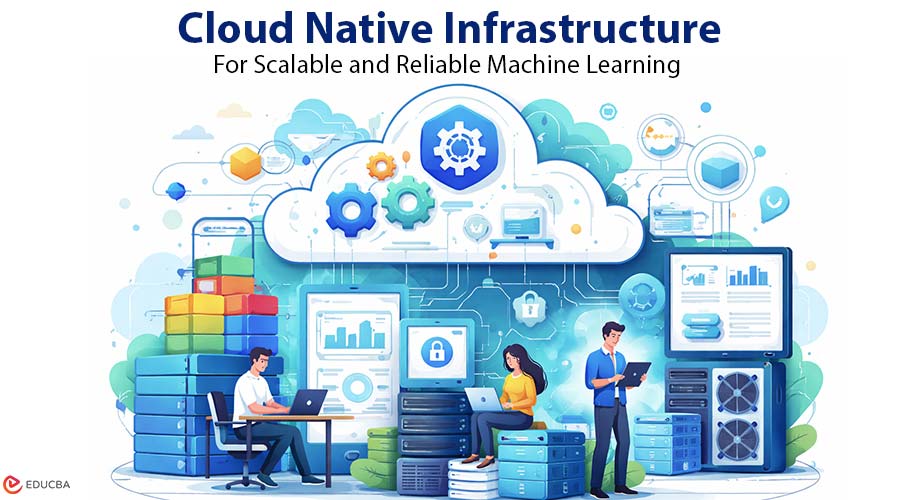
Scaling Machine Learning with Cloud Native Infrastructure
Scaling machine learning requires more than raw compute; it demands an architecture that can expand, adapt, and maintain reliability as models move from research notebooks into production services. Cloud native infrastructure provides the patterns and primitives containers, orchestration, immutable artifacts, and declarative APIs that let teams treat models as first-class, versioned software artifacts. When those patterns are applied thoughtfully, organizations can accelerate experimentation, improve reproducibility, and reduce the time between model development and business impact.
Building Blocks of a Cloud Native Infrastructure for ML
Containers encapsulate dependencies and create predictable runtime environments for model training and serving. Kubernetes handles scheduling, auto-fixing, and scaling for container workloads, letting teams run a range of jobs, from short data tasks to long training runs. Service meshes and API gateways add traffic management, observability, and secure service-to-service communication, which are critical when dozens of microservices interact during feature retrieval, preprocessing, model inference, and logging. Persistent storage and object stores separate data and model files from compute, letting teams scale storage on its own while keeping trackable model records.
Continuous Integration and Continuous Delivery for Models
You must extend traditional CI/CD practices for machine learning. Continuous training pipelines automate data validation, model training, and evaluation, while continuous delivery pipelines automate packaging models as services, running integration tests, and releasing to staging and production. Tools like Argo, Tekton, and GitOps workflows allow teams to declaratively manage pipelines and rollbacks. Versioning datasets, feature transformations, model code, and hyperparameters ensures you can trace a deployed model back to the exact inputs and configuration used during development. Canary releases and shadow testing provide safe ways to validate new models against production traffic before promoting them broadly.
Serving at Scale and Managing Latency
Serving infrastructure for inference must meet varying SLAs. Batch inference pipelines can exploit parallelism and cheap compute for throughput-oriented workloads, while online inference requires low-latency, highly available endpoints. Autoscaling policies driven by request rates, queue lengths, or custom metrics let services expand and contract elastically. For GPU-accelerated inference, careful bin-packing and model batching maximize hardware utilization. Model ensembling and A/B testing frameworks help compare multiple approaches in production, while adaptive routing can route traffic to specialized models depending on request characteristics.
Data Pipelines and Feature Stores
Reliable features are the lifeblood of production models. Data ingestion frameworks capture events and transform them as they flow into feature stores, which provide consistent, low-latency read paths for online inference and higher-throughput access for offline training. A cloud native approach uses event-driven systems and streaming platforms to decouple producers and consumers, enabling independent scaling. Ensuring idempotency, handling late-arriving data, and maintaining time-travel capabilities are essential for reproducibility and debugging.
Observability, Monitoring, and Explainability
Observability for ML extends beyond standard metrics. In addition to system-level telemetry, teams must collect model-level metrics, including prediction distributions, feature-drift signals, data-quality checks, and business KPIs correlated with predictions. Tracing pipelines from input to prediction helps diagnose performance issues and root causes for degraded model accuracy. Explainability tools integrated into serving paths provide insight into model decisions, supporting compliance and stakeholder trust. Alerting thresholds should be set for distribution shifts and data anomalies to enable automated remediation or quick escalation.
Cost and Resource Optimization
Cloud native platforms make it possible to treat compute as a variable cost, but inefficiencies can still accumulate. Spot instances, preemptible VMs, and node autoscaling reduce training costs when workloads are fault-tolerant. Right-sizing GPU and CPU assignments and using inference batching reduce per-request costs. Workload isolation through namespaces and resource quotas prevents runaway jobs from consuming shared resources. Chargeback models and tagging help teams attribute costs to projects and optimize resource allocation without sacrificing agility.
Security, Governance, and Compliance
Machine learning introduces unique governance needs because models can leak sensitive information and can be subject to regulatory scrutiny. Identity and access management must protect datasets and model artifacts, while network policies and encryption protect data in transit and at rest. Trackable pipelines, unchangeable logs, and policy as code help support proof-based compliance. Test models for privacy, bias, and adversarial robustness before promoting them.
Hybrid and Multi-Cloud Considerations
Many organizations deploy workloads across on-premises, public cloud, and edge environments. Cloud-native patterns help by providing consistent tooling and abstractions that run across different infrastructures. Kubernetes distributions, standardized container images, and portable CI/CD pipelines enable workload migration while minimizing vendor lock-in. Data gravity and latency constraints will often dictate where training and inference occur; hybrid architectures can keep sensitive datasets on-premises while leveraging cloud elasticity for bursty workloads. Interoperability layers and federated learning let models train across distributed datasets without centralizing sensitive data.
Organizing Teams and Workflows
Scaling ML is as much about people and processes as it is about technology. Clear ownership for data, features, models, and infrastructure prevents handoff friction. Cross-functional collaboration between data scientists, MLOps engineers, and platform teams streamlines productionization. Reusable components CI templates, feature pipelines, and model scaffolds cut duplication and let teams focus on innovation over infrastructure.
Practical Next Steps for Adopting Cloud Native Infrastructure
- Start by putting model workloads in containers and setting up simple, defined pipelines for training and deployment.
- Incrementally add observability around model outputs and data quality.
- Leverage orchestration and autoscaling primitives to experiment safely with production traffic through canary releases.
- As operational maturity grows, integrate feature stores, model registries, and automated governance checks.
- Many teams find that adopting managed services and frameworks accelerates progress, and some choose to use platforms that specialize in providing a unified ML lifecycle.
- For organizations balancing speed and control, a hybrid approach that combines managed services with cloud native patterns offers a pragmatic path forward.
Final Thoughts
Teams that adopt cloud native infrastructure for machine learning gain agility without sacrificing reliability. The same primitives that enable efficient microservice architectures scalability, observability, and declarative management also enable the management of complex model lifecycles at scale. Strategic investments in pipelines, tooling, and governance yield more predictable deployments and faster iterations, turning experimental models into sustained business capability for the long term. Embracing platforms and patterns that support collaboration, reproducibility, and cost transparency will position organizations to get the most value from their machine learning efforts in the cloud, including solutions built on AI cloud platforms.
Recommended Articles
We hope this guide to cloud native infrastructure helps you scale your machine learning workflows. Check out these recommended articles for more insights and best practices.


