


Updated July 4, 2026
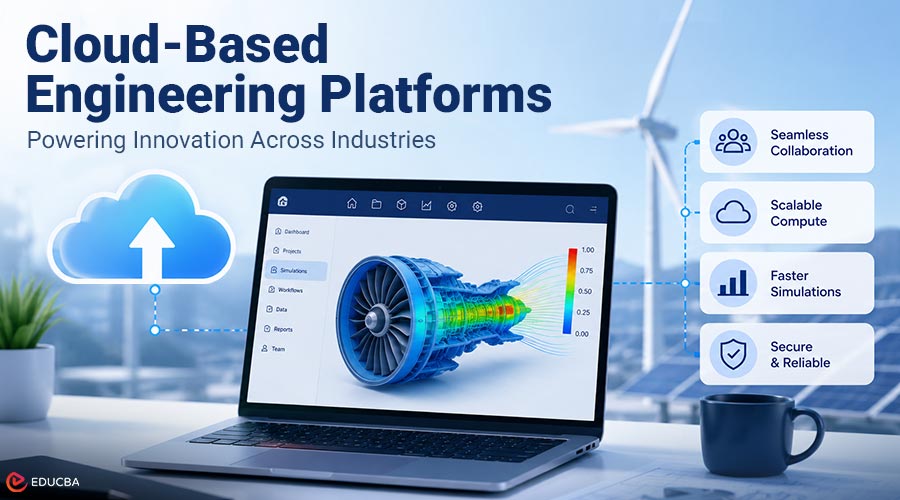
Innovation has never been solely about having great ideas. Success often depends on how quickly organizations can test concepts, solve technical challenges, and bring products to market. As industries face growing pressure to reduce development timelines while maintaining quality and compliance, engineering teams are looking for smarter ways to work. Traditional infrastructure, while effective in the past, can struggle to keep pace with the demands of modern product development. Cloud-based engineering platforms are helping bridge that gap. By providing scalable computing power, advanced simulation capabilities, and seamless collaboration tools, these platforms allow organizations to move from concept to execution more efficiently. Across industries such as aerospace, automotive manufacturing, healthcare, and energy, cloud technology is transforming the way organizations innovate, enabling teams to manage increasingly complex projects with greater speed and confidence.
Overcoming the Constraints of Traditional Engineering Resources
For many years, engineering organizations depended on on-premises hardware and dedicated computing clusters to run simulations and perform technical analyses. While these systems provided valuable capabilities, they often required substantial investments in equipment, maintenance, upgrades, and specialized support staff. As engineering projects became more sophisticated, infrastructure limitations frequently slowed progress.
Cloud-based digital engineering platforms, such as the Rescale platform, remove many of these barriers by allowing organizations to access computing resources on demand. Instead of being constrained by local hardware capacity, teams can scale their workloads to meet project requirements. This flexibility enables engineers to run more simulations, evaluate additional design alternatives, and explore solutions that were previously impractical due to resource limitations.
The result is a more efficient development environment in which the available infrastructure does not constrain innovation. Organizations can focus on solving technical problems and improving products rather than managing hardware limitations. This shift is particularly valuable for companies seeking to remain competitive in rapidly evolving markets where speed and adaptability matter.
Accelerating Simulation and Product Development Cycles
Simulation has become a cornerstone of modern engineering. Whether assessing structural integrity, thermal performance, aerodynamics, or fluid behavior, simulation allows teams to evaluate designs before investing in costly physical prototypes. However, the effectiveness of simulation often depends on how quickly results can be generated and analyzed.
Cloud computing significantly reduces the time needed to run complex simulations. By leveraging large-scale processing capabilities, engineers can run multiple analyses simultaneously and obtain results much faster than traditional systems may allow. Faster turnaround times mean design decisions can be made earlier, reducing delays throughout the development process.
This acceleration creates a significant advantage for organizations pursuing innovation. Instead of testing only a handful of design options, teams can evaluate a wider range of possibilities and optimize products more thoroughly. Industry leaders increasingly recognize that rapid iteration is a key driver of successful innovation because it enables continuous improvement and faster responses to changing market demands.
Enhancing Global Collaboration Through Cloud-Based Engineering Platforms
Modern engineering projects rarely involve a single department working in isolation. Product development often requires input from specialists across multiple disciplines, locations, and organizations. Effective collaboration is essential, yet traditional systems can create challenges when information is fragmented across different platforms and teams.
Cloud-based engineering environments provide centralized access to models, simulations, datasets, and project information. Cloud-based access allows team members to work with the same resources from any location, promoting consistency and improving collaboration. This shared environment improves coordination and allows stakeholders to make decisions using the most current information available.
The benefits extend beyond internal teams. Suppliers, manufacturing partners, and research institutions can participate more effectively when cloud platforms support secure information sharing. As remote and hybrid work models continue to evolve, the ability to collaborate seamlessly has become a critical factor in maintaining productivity and driving innovation across complex projects.
Supporting Advanced Technologies and Digital Transformation
Technologies like machine learning, artificial intelligence, digital twins, and advanced materials are creating new opportunities for engineering organizations. These technologies often require substantial computational resources to process data, run models, and generate actionable insights. Without scalable infrastructure, adoption can be challenging.
Cloud-based engineering platforms provide the computational foundation needed to support these advanced capabilities. Organizations can conduct large-scale analyses, train machine learning models, and perform optimization studies without investing heavily in additional hardware. This accessibility allows teams to experiment with innovative approaches while controlling costs and maintaining flexibility.
Many companies are incorporating solutions like the Rescale platform into their engineering workflows to support complex simulations and computational demands. Access to scalable resources enables organizations to explore emerging technologies more effectively while accelerating digital transformation initiatives. As engineering becomes more data-driven, cloud infrastructure is playing an important role in modern innovation strategies.
Driving Innovation in Highly Regulated Industries
Industries such as aerospace, healthcare, automotive, and energy operate within highly regulated environments where safety, reliability, and compliance are essential. Product development in these sectors requires extensive testing, validation, and documentation before solutions can reach the market. Meeting these requirements efficiently is often a significant challenge.
Cloud-based engineering platforms help organizations address these demands by enabling comprehensive simulation and analysis throughout the development lifecycle. Engineers can identify potential issues earlier, validate designs more thoroughly, and maintain detailed records of testing activities. This proactive approach helps minimize costly redesigns and streamlines the compliance process.
Leading engineering organizations increasingly rely on simulation-driven development because it improves both efficiency and confidence in design decisions. Professional engineering communities, research institutions, and industry experts continue to emphasize the importance of digital engineering practices as products become more sophisticated and regulatory expectations continue to evolve.
Final Thoughts
Cloud-based engineering platforms are transforming how organizations innovate by removing infrastructure constraints, accelerating simulations, improving collaboration, and supporting advanced technologies. Rather than being limited by local computing resources, engineering teams can access scalable capabilities that allow them to solve complex challenges more effectively. This flexibility helps organizations move faster while maintaining the quality and precision that modern markets demand.
As industries continue to advance their digital transformation efforts, cloud-enabled engineering will become an increasingly important driver of innovation. Organizations that adopt these platforms are better equipped to respond to evolving market demands, accelerate development, and deliver high-quality products more efficiently. In an environment where speed, agility, and technical excellence are critical, cloud-based engineering platforms are becoming a powerful catalyst for progress across industries.
Recommended Articles
We hope this guide to cloud-based engineering platforms has helped you discover how scalable cloud solutions are transforming engineering workflows. Explore these articles for more insights and strategies to stay ahead in digital engineering.


