


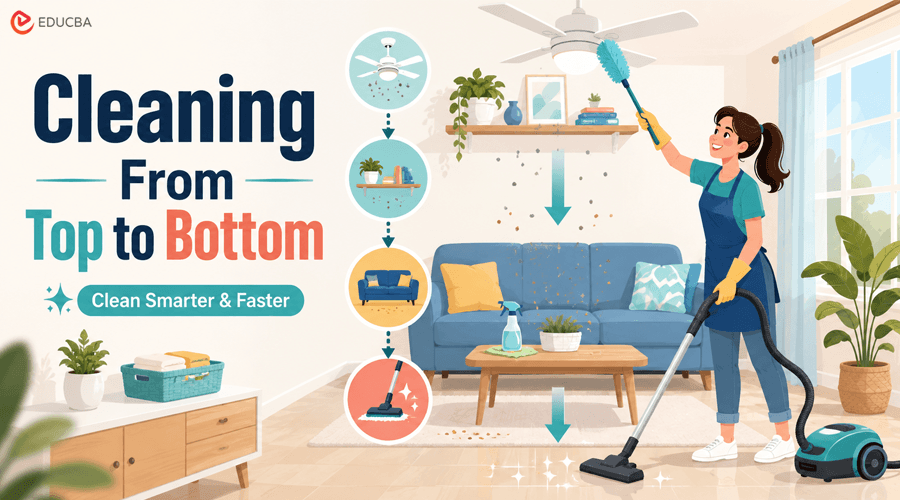
Cleaning From Top to Bottom matters because some cleaning tasks disturb areas that seem finished. Dusting a shelf can drop particles onto a table. Vacuuming sofa cushions can release crumbs onto the floor. Wiping cabinet fronts may send loose debris toward the baseboard.
The useful principle is broader than “dust falls downward.” Some cleaning jobs create temporary mess while you do them, while others should happen only after the disturbance stops.
A room becomes easier to finish when you do the tasks most likely to shed dust, hair, crumbs, or loose debris before the surfaces that should stay clean afterward. Cleaning from top to bottom reduces repeated work and makes the process more efficient.
Begin With Anything That Can Drop Debris
Ceiling fans, upper shelves, cabinet tops, light fixtures, tall furniture, and curtain hardware can all release debris while you clean.
Even a microfiber cloth that captures most dust will not catch everything.
A ceiling fan is an obvious example. Thick dust along the blade edge may break into small clumps as you wipe it. If the bed or floor beneath it has already been cleaned, you may have to repeat that work.
Handle these dust-producing jobs before spending time on lower furniture. This is one of the main reasons cleaning from top to bottom works so well.
Only reach surfaces you can clean safely. A difficult fixture is not worth balancing on unsuitable furniture to preserve a cleaning sequence.
Think About What Sits Directly Under Each Task
The object below a dusty surface often tells you what should happen next.
If a tall bookcase is being dusted, the desk beneath it should wait. When cleaning blinds, there is little reason to polish the sill first. Likewise, crumbs can be removed from a dining table before the rug below is cleaned.
CJM Cleaning can organize a room this way by considering which task may disturb the next surface rather than following an identical checklist in every space.
The sequence changes slightly depending on what the room contains.
Furniture Can Create Its Own Falling Debris
Tables and shelves are not the only sources of material.
Sofas, upholstered chairs, dining seats, and cushions may release hair, crumbs, lint, or small objects when you vacuum them.
Pulling cushions forward can send debris onto the floor even when the upholstery itself looks fairly clean.
Finish that work before vacuuming beneath the furniture. This keeps the cleaning from top to bottom process focused on preventing debris from returning to areas that are already finished.
The same applies to hard chairs with dusty crossbars or lower supports. Wiping those pieces after the floor is done can leave another trail of particles below them.
Kitchens Have Several Overlapping Levels
A kitchen rarely needs a single downward pass because food prep creates mess at several heights.
An upper shelf may be dusty, cabinet fronts can carry cooking film, counters hold crumbs, and lower cabinet edges collect marks from daily use.
Handle upper dust first.
Then move through sections that may shed crumbs or loose particles while you wipe. Finish countertops and tables before final floor care, especially if you lift appliances, trays, or containers during cleaning.
The point is not to clean every cabinet simply because it sits above the floor. Work on what actually needs attention while preserving the order of disturbance.
Bathrooms Benefit From Delaying the Floor
Bathrooms are small enough that it is tempting to clean the floor early because the task feels quick.
That usually creates unnecessary repetition.
Moving toiletries, wiping counters, cleaning around the sink, and handling towels can all send hair or small debris downward.
Finish those tasks first.
The same applies to the outside of the toilet, lower cabinet fronts, and any reachable trim that needs wiping.
Once those activities are over, you can clean the floor without people immediately dropping more material onto it. This makes cleaning from top to bottom especially useful in compact bathrooms where every surface is close together.
Dry Debris and Damp Cleaning Should Not Compete
Cleaning order also depends on whether the mess is loose or attached.
Dry hair, dust, crumbs, and grit are easier to collect before you introduce water.
Wiping a dusty baseboard with a wet cloth may leave streaks. Mopping a hard floor with crumbs left behind can leave dirty trails. Fine powder can collect in grout or seams once it becomes wet.
Remove loose material first, then decide whether you still need damp cleaning.
That is less about following a rigid rule and more about avoiding a situation where moisture makes simple debris harder to handle.
Baseboards Often Belong Near the End
Baseboards sit where material from several other jobs eventually arrives.
Dust from shelves may settle near the wall. Hair released from upholstery can collect at the perimeter. Small particles from blinds or window sills may end up in the same strip.
For that reason, baseboards often make more sense after furniture and upper surfaces are finished but before the final floor passes.
Vacuum loose material from the trim or floor edge first.
If marks remain, wipe the sections that actually need it rather than automatically washing every inch of baseboard in the room.
Know When the Room Is Ready for Its Final Floor Pass
The floor should not be treated as simply “the last item on the checklist.” Clean it once the jobs likely to disturb it are finished.
That distinction matters in rooms with several types of work.
If house cleaning services NJ are used for a room with dusty shelving, upholstered furniture, trim, and hard flooring, the floor can serve as the final collection point after those higher-debris tasks are done.
That gives the last vacuuming or mopping pass a clear purpose: collecting what the earlier work released rather than cleaning the same floor twice.
Not Every Room Needs the Same Exact Order
A bedroom with one dusty fan and a carpet needs a different sequence from a kitchen with open shelving, cabinet fronts, counters, and tile.
The useful question is always the same: which task is most likely to dirty something else?
In a bedroom, that may be dusting the fan, then furniture, and finally the carpet. In a living room, it may be shelves, upholstery, tables, baseboards, and then flooring.
CJM Cleaning can adapt that order to the room’s contents instead of forcing every space through an identical top-to-bottom pattern.
A good cleaning from top to bottom routine should reduce repeat work, not create another complicated system to remember.
Stop Creating New Mess Before Finishing the Room
Cleaning from top to bottom works because it gives disturbance somewhere to go.
Dusting, moving objects, vacuuming upholstery, and wiping trim can all release material while you work. Saving the most easily recontaminated surfaces until those jobs are finished prevents much of the backtracking.
The exact order can change from room to room.
What matters is that tasks which create loose debris happen before the surfaces that are supposed to remain finished. Once the room stops generating new mess, the final floor pass actually feels final.
Recommended Articles
We hope this guide helps you understand cleaning from top to bottom and reduce repeated cleaning work. Explore these recommended articles for more tips on house cleaning, dust removal, floor care, and efficient cleaning routines.

